
Career
More Nigerian Women Are Going Digital. Here's Why It Matters.
From coding and digital marketing to content creation and remote work, digital skills are becoming one of the fastest ways for Nigerian women to build careers, grow businesses, and earn more.
Across the country, government programmes and private organisations are helping close the digital skills gap, opening new opportunities for thousands of women.
Nigeria's digital economy is growing, and more women are becoming part of it.
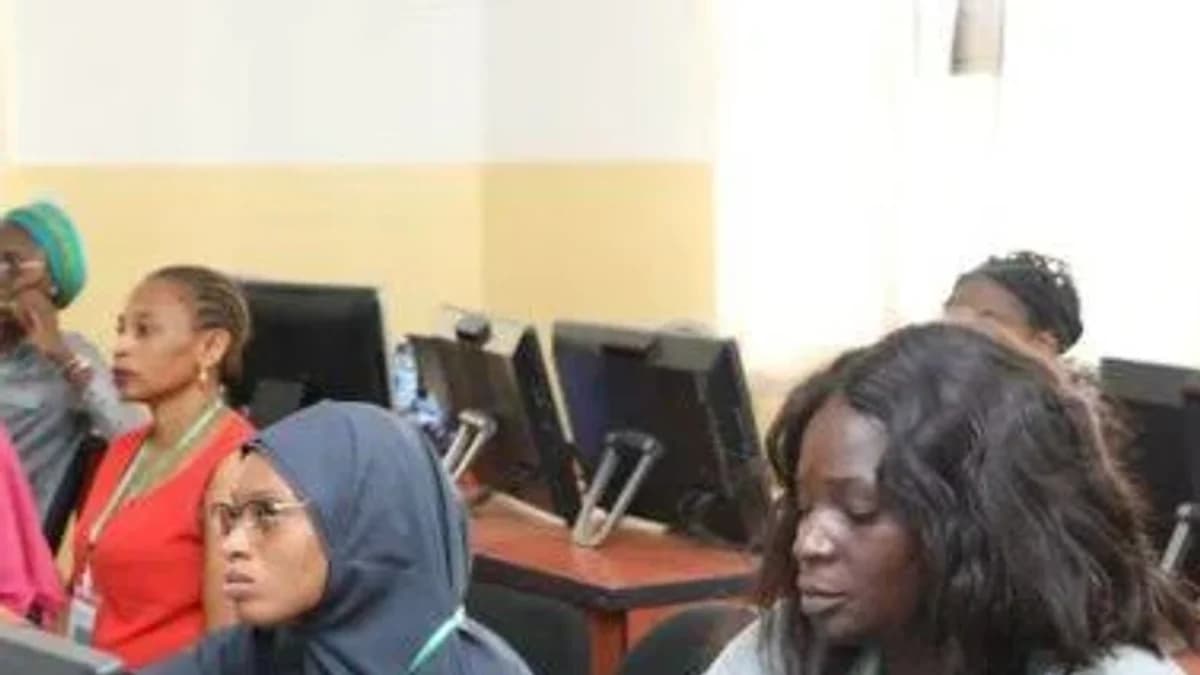
Over the last few years, there has been a stronger push to help women build practical digital skills through coding programmes, digital marketing training, mentorship, and entrepreneurship support. It's a shift that's giving more women access to opportunities that were once difficult to reach.
One of the biggest initiatives is the Federal Government's 3 Million Technical Talent (3MTT) programme, which aims to equip Nigerians with in-demand digital skills. Alongside it, organisations like She Code Africa, Women in Tech Nigeria, Women's Technology Empowerment Centre (W.TEC), and Beyond Limits continue to train thousands of women through coding bootcamps, mentorship programmes, and networking opportunities.
The push is also receiving support at the highest level.
Through the Renewed Hope Initiative, First Lady Oluremi Tinubu, in partnership with the Federal Ministry of Communications, Innovation and Digital Economy, has continued promoting digital literacy among women and girls, encouraging more participation in technology and innovation.
The impact goes beyond getting a tech job.
For many Nigerian women, digital skills are becoming a tool for financial independence.
A fashion entrepreneur who understands Instagram marketing can reach customers across Nigeria instead of relying on walk-in traffic. A virtual assistant can work remotely for clients abroad. A graduate with data analysis or digital marketing skills can qualify for opportunities that simply weren't available a few years ago.
Owning a smartphone alone is no longer enough.
Knowing how to use digital tools has become the real advantage.
That includes learning how to market products online, create content, use productivity software, protect personal information from online scams, and communicate professionally in digital workspaces.
Women are also beginning to break barriers beyond software.
One notable example is Adesuwa Imasekha, who became the first woman in Nigeria to own a Tier 5 Mobile Virtual Network Operator (MVNO) licence, showing that women are not only participating in the digital economy but also building the infrastructure behind it.
For anyone looking to start, there are more learning opportunities today than ever before.
Government programmes, organisations like She Code Africa and W.TEC, innovation hubs, YouTube, Coursera, and other online platforms continue to make digital training more accessible, often at little or no cost.
As Nigeria's economy becomes increasingly digital, it is becoming clear:
Digital skills are no longer just an advantage for women
They're quickly becoming an essential career skill for the future.
50