Art
What Kano’s Everyday Language Teaches Us About Trust, Respect, and Communication
In Kano, skipping "Sannu" costs a rider 50 naira in change. Language here is a social contract. Here are 3 real stories showing why greeting comes first in Kano.
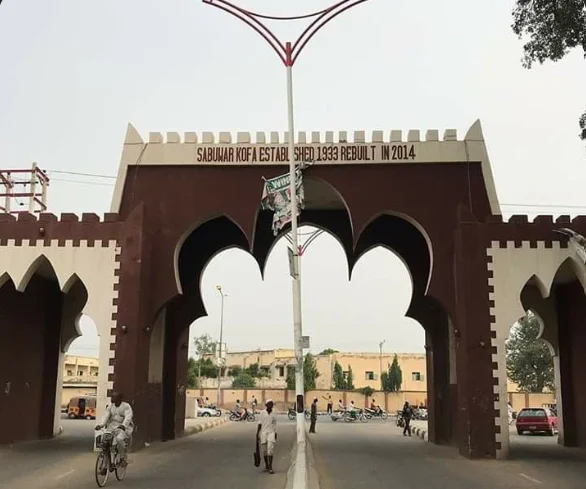
In many parts of Nigeria, politeness is treated as an optional extra. In Kano, language is the foundation of every human interaction.
Kano people expect a social contract first before any business happens.
Three incidents I witnessed made this undeniable.
The first happened inside a Keke. The driver dropped off a passenger, and they tried to find 50 naira in change for a 500 naira note. The driver insisted on keeping 450 naira, claiming he had no smaller bills.
I stepped in because the passenger was waiting eagerly, and I knew the driver had a 100 naira note in his box. After a brief conversation, I convinced the driver to give him the full 100 naira change.
A few steps down the road, the driver turned to me in Hausa and said: "Ni fa ban yi niyyar ba shi naira 100 nan ba, kawai saboda kai ne." (I had no intention of giving him that 100 naira. I only did it because of you.) I asked him why.
He replied: "Tun da ya hau mashin ɗin nan, ya wani kame waje ɗaya, ko magana bai yi ba. Misali, ko bai yi magana ba, ai ya kamata a ɗan gaisa." (Since he got on this bike, he just sat there silently without saying a word. Even if he had nothing to say, shouldn't he at least greet?)
Because the passenger acted as if the driver was invisible, the driver responded by being deliberately uncooperative.
The second incident almost cost a friend his vehicle.
He visited a neighborhood in Kano and saw a group of men sitting on a mat by the street. In Hausa society, this gathering is called a majalisa, a modern continuation of the traditional dandali where community members gather before work or at sunset.
My friend parked his motorcycle near them, gave a quick wave, and walked into the house he was visiting.
When he came back out, one of the elders called him over.
"Malam, ba haka ake ba a rayuwa," the man said. "Idan aka zo wajen mutane, gaisawa ake sannan a nemi a kula da abin hawa. Amma kai ka zo nan, kawai ka shige wuri. Yanzu da ka zo ka tadda an ɗauke mashin ɗin naka, me za ka ce?" (Sir, that is not how life works. When you meet people, you greet them first, then ask them to watch your vehicle. But you just rushed past us. If you returned and found your bike stolen, what would you say?)
My friend apologized immediately and thanked him for the lesson.
The third example is my former classmate, Daniel, at Yusuf Maitama Sule University.
Daniel was jovial and easygoing. He became widely known and respected across the campus community simply because of his habit of warmly greeting everyone he passed.
It was almost impossible for Daniel to walk past anyone without offering a greeting.
These three incidents prove one clear truth: Hausa culture runs on a social contract embedded in language.
Whenever you visit Kano, make an effort to be social. Simple words like "Barka dai" can solve major problems before they even start.
213