
Money
How POS Rendered ATMs Almost Useless
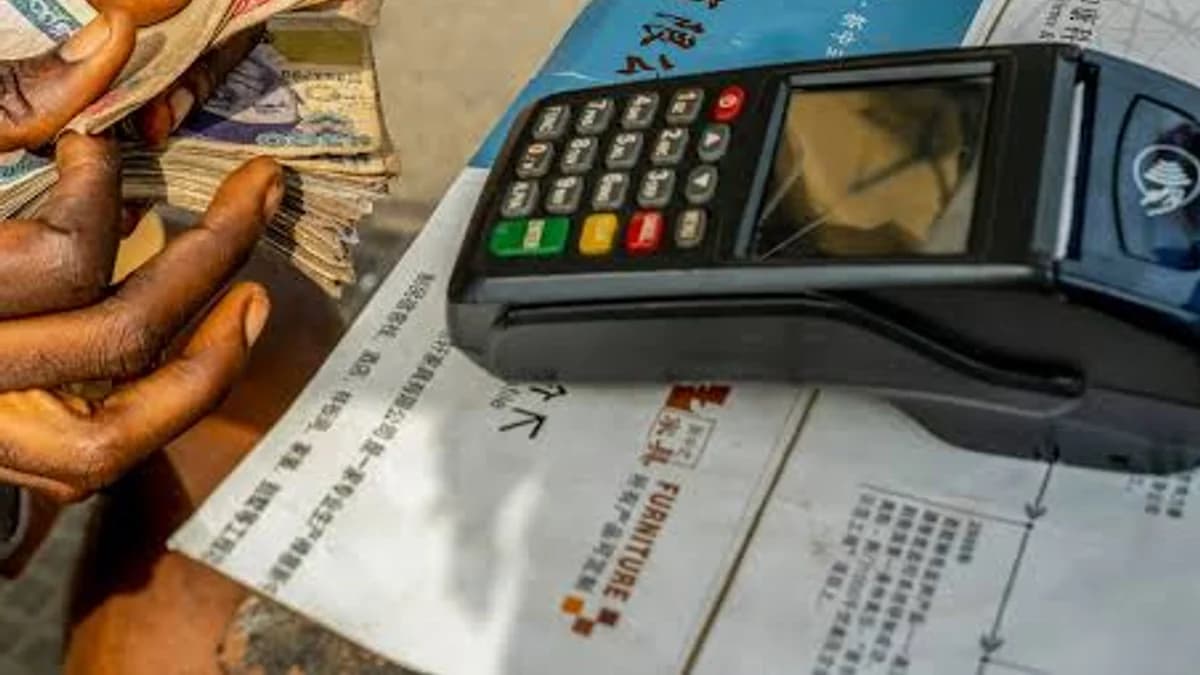
Getting cash no longer starts at a bank. POS agents are now closer, faster and often more reliable than ATMs, turning small roadside businesses into the country’s everyday cash points. But the convenience comes with higher fees and high fraud risks.
Walk through almost any Nigerian neighbourhood and there is a good chance you will find a POS agent before you find an ATM.
That simple difference says a lot about how Nigerians now access cash.
ATMs were built to take routine banking transactions away from crowded branches. But POS agents have taken that convenience further. They are in markets, beside provision stores, inside neighbourhoods and on busy streets where people actually need cash.
For someone who needs ₦10,000 quickly, the choice can be straightforward. Walk to a nearby POS agent, transfer the money and collect the cash. Finding an ATM may mean travelling farther, joining a queue or discovering that the machine is offline or empty.
Why Nigerians keep choosing POS
The biggest advantage is proximity.
Banks cannot place ATMs on every street, but POS operators can set up almost anywhere there is demand. The result is a much wider network of cash points, particularly outside major commercial areas.
Then there is reliability.
ATM users have become familiar with the frustrating routine: the machine is out of cash, the network is unavailable, the transaction fails or the account is debited without cash being dispensed. POS agents face network problems too, but their business model gives them a reason to keep cash available and find another way to complete transactions when one channel fails.
The experience is also less dependent on physical cards.
A customer can transfer money directly from a banking app to the agent and receive cash. That matters in a country where mobile banking has become a daily part of how people move money. The ATM card, once essential for withdrawing cash, is no longer required for many everyday transactions.
POS agents also offer something ATMs cannot: human flexibility.
A customer can explain what they need, ask about available denominations and complete the transaction with an actual person. That makes the POS point feel more like a tiny banking outlet than a payment terminal.
The cost of convenience
There is a catch.
POS withdrawals come with fees, and those charges can add up for people who depend on cash regularly. The customer is paying for convenience, proximity and access to cash without having to find a functioning ATM.
ATM withdrawals are not always free either. Since March 2025, the CBN has allowed charges for withdrawals from another bank's ATM, including a surcharge of up to ₦500 on certain off-site transactions. Withdrawals from a customer's own bank ATM remain free under the CBN's published rules.
That still leaves POS agents with a powerful selling point: they are often right where the customer is.
For many people, paying a fee to collect cash five minutes away is easier than spending more time and transport money looking for an ATM.
The bigger concern is security
The rapid growth of POS networks has also created a much larger surface for fraud and financial crime.
A roadside POS business is handling real money and financial transactions, often in places with limited physical security. Fraudulent transfers, stolen account details, unauthorised transactions and the movement of illicit funds are among the risks regulators have been trying to address.
The CBN has been tightening oversight of the agent banking and POS ecosystem. Its agent banking guidelines introduced new requirements around agent locations and exclusivity, while the regulator has also moved toward greater identification and monitoring of payment terminals.
The direction is clear: the POS network has become too significant to remain loosely monitored.
The CBN has also pushed measures aimed at reducing POS downtime. Licensed payment operators were directed to support dual connectivity between NIBSS and UPSL so transactions can switch channels when one network fails.
That is significant because the strength of POS banking has always been availability. If the network becomes unreliable, one of the biggest reasons customers prefer agents over ATMs disappears.
So, are ATMs becoming obsolete?
For everyday cash withdrawals, they are certainly facing a serious challenge.
ATMs still have a role. Banks need them, businesses use them and some customers will always prefer withdrawing directly from a bank-owned machine. The CBN itself continues to regulate and improve ATM infrastructure, including new rules covering deployment, security and independent ATM operators.
But the competition is no longer really about which machine is better.
It is about which cash network is closer to the customer.
POS agents have built a distributed cash infrastructure that banks never could through ATMs alone. A terminal can sit inside a small shop, beside a market stall or on a neighbourhood street and serve customers all day.
That has changed the economics of cash access in Nigeria.
The ATM may still be part of the banking system, but for millions of everyday transactions, the person behind the POS machine has become the more convenient cash point.
169