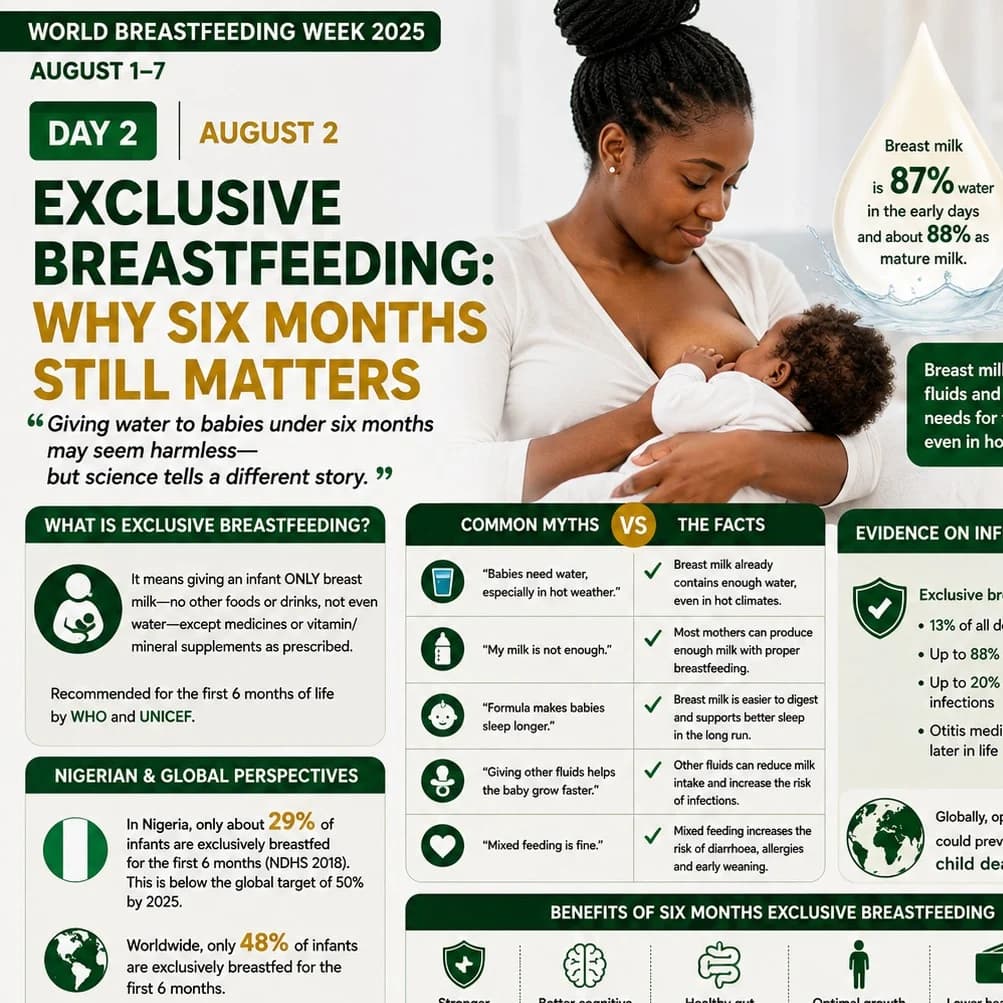
Exclusive Breastfeeding: Why Six Months Still Matters
"Giving water to babies under six months may seem harmless—but science tells a different story."
One of the most common questions I hear as a Dietitian is:
"It's very hot where we live. Doesn't my baby need water?"
It's a genuine concern, and many families ask it with the best intentions. But evidence tells us something remarkable:
Healthy breast milk already contains enough water to keep babies hydrated—even in hot climates.
According to the World Health Organization (WHO), exclusive breastfeeding means giving an infant only breast milk for the first six months of life—no water, herbal mixtures, pap, juice, or other foods, except prescribed medicines, vitamins, or mineral supplements when necessary.
So, why does this matter?
Breast milk is nature's first complete food. It provides:
🍼 All the water a baby needs.
🧠 Essential nutrients for healthy growth and brain development.
🛡️ Antibodies that strengthen the immune system.
🦠 Protection against diarrhoea, respiratory infections, and many other childhood illnesses.
Yet, across many countries—including Nigeria—certain myths continue to discourage exclusive breastfeeding.
Some of the most common include:
❌ "Babies need water because of the hot weather."
❌ "Breast milk alone is not enough."
❌ "Giving herbs or glucose water helps babies grow stronger."
Current scientific evidence does not support these practices for healthy infants under six months. Introducing water or other liquids too early can reduce breast milk intake and increase the baby's exposure to germs that may cause infections.
Despite growing awareness, exclusive breastfeeding rates remain below global targets in many parts of the world. Improving these rates requires more than educating mothers. It also requires supportive families, skilled healthcare professionals, breastfeeding-friendly workplaces, and policies that enable women to breastfeed successfully.
Exclusive breastfeeding is not simply about nutrition. It is an investment in healthier children, healthier mothers, stronger communities, and a healthier future.
This World Breastfeeding Week, let's continue replacing myths with evidence and ensuring every mother receives the support she deserves.
What breastfeeding myth is most common where you live? I'd love to hear your experiences and perspectives in the comments.
#WorldBreastfeedingWeek #Breastfeeding #ExclusiveBreastfeeding #MaternalHealth #ChildHealth #Nutrition #Dietitian #PublicHealth #GlobalHealth #EvidenceBasedPractice #WHO #UNICEF #Healthcare #NutritionScience #SupportBreastfeeding