A few years ago, I realized something uncomfortable about social media.
Most of us spend more time deciding what to wear than deciding whether the information we’re about to share is actually true.
With one tap, we can forward a message to hundreds of people on WhatsApp or repost something that reaches thousands on X. The problem is that speed has become more important than accuracy.
Over time, I developed a simple habit before sharing anything online.
I ask myself five questions:
1. Who originally posted this?
2. Can I find another reliable source confirming it?
3. Is the headline trying to inform me or provoke an emotional reaction?
4. Who benefits if people believe this?
5. Would I still share it if my name appeared next to it forever?
This habit has stopped me from sharing misleading stories several times.
I’ve also noticed that many viral posts are technically true but presented without important context. Others are completely fabricated, while some recycle old events as if they happened today.
The consequences are real.
False information has damaged reputations, caused unnecessary panic, influenced public opinion, and in some cases contributed to violence and financial loss.
Today, verifying information takes less than five minutes.
Repairing the damage caused by misinformation can take years.
Since adopting this habit, I’ve become much slower to repost breaking news, screenshots, or sensational claims. Surprisingly, I’ve also become more confident in the information I choose to share.
If you’re active on social media, this is one habit worth building.
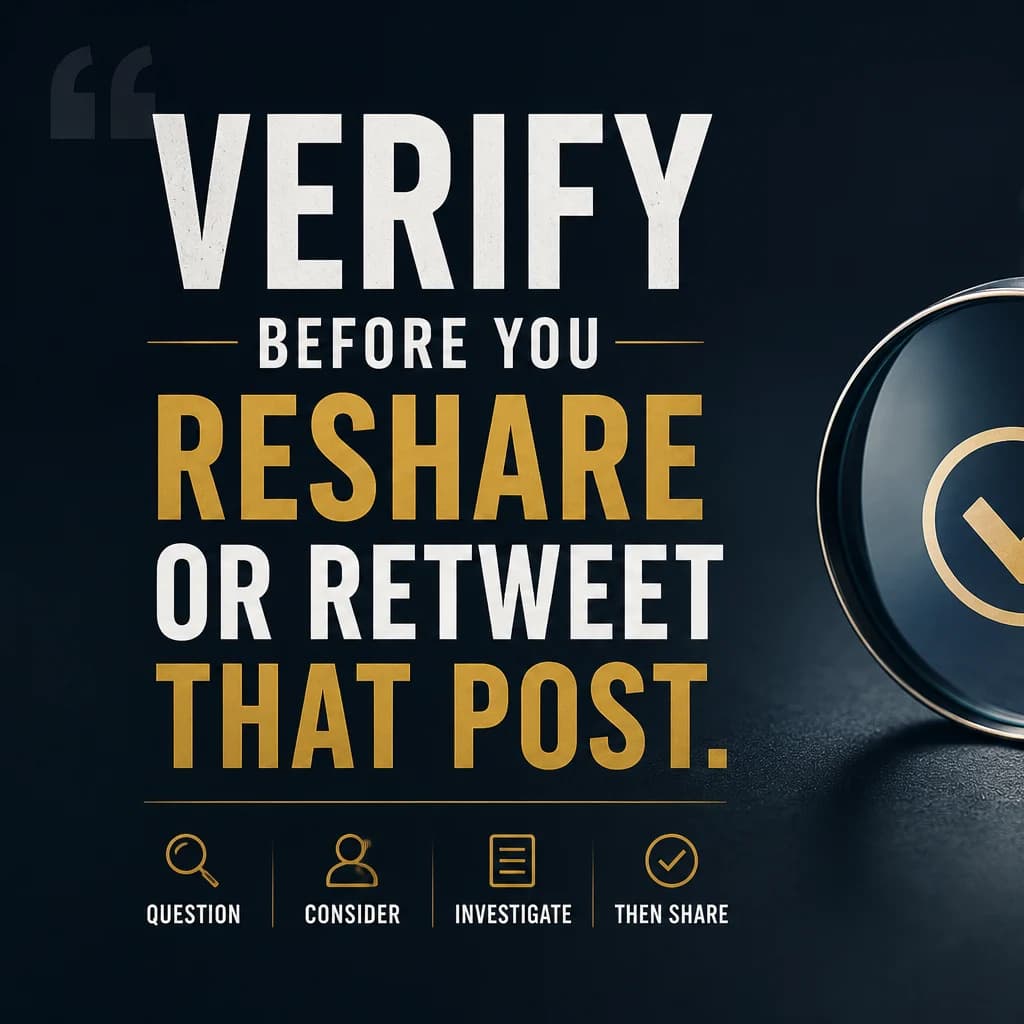
Verify first. Share second.
Have you ever discovered that something you shared later turned out to be false? What changed how you verify information today?