There is something uncomfortable about this conversation.
Everyone shouts “support local.”
Very few people actually do.
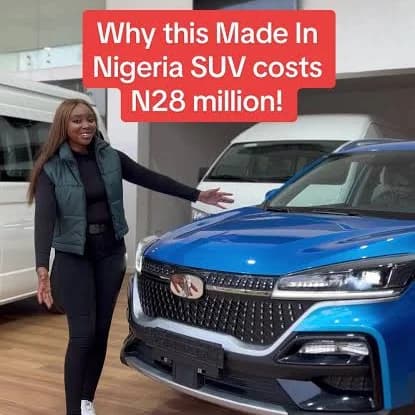
Take Nord Automobiles for example.
The design is clean. The SUVs look modern. The branding feels intentional. Showrooms look confident. On paper, it checks many boxes.
Yet when Nigerians with money are ready to buy a car, most still turn to Toyota, Lexus, Mercedes, Hyundai.
Why?
It is not only marketing. It is trust. Cars are not fashion. Cars are risk.
When someone spends millions of naira, they are not buying design. They are buying predictability.
Will it break down?
Are parts available?
Will mechanics understand it?
What is resale value after three years?
Is the engine tested long enough?
These questions matter more than sleek brochures.
Toyota did not win Nigeria with ads. Toyota won with durability reputation.
A Nigerian driver wants a car that survives bad roads, bad fuel, bad traffic, and irregular maintenance.
Brand loyalty here is survival based.
Another issue is ecosystem.
Buying a Toyota means:
• Spare parts everywhere
• Mechanics in every neighborhood
• Resale market guaranteed
• Knowledge already widespread
Buying a newer Nigerian brand means uncertainty.
Even if the vehicle performs well, the infrastructure around it is still growing.
Then comes perception.
For decades, Nigeria has been a consumer nation, not a manufacturing one. Imported often equals premium in the Nigerian mind. Local sometimes equals experimental. That perception takes years to break. Marketing can create awareness. It cannot manufacture trust overnight.
What would increase patronage?
Long term durability proof.
Aggressive after sales support.
Strong warranty backing.
Visible fleet adoption.
Government procurement consistency.
When Nigerians see banks, logistics firms, government fleets using local cars consistently for years, confidence shifts.
Resale market also matters deeply here. If a vehicle loses too much value quickly, adoption stays slow.
This is not about design failure.
It is about time and testing.
Most successful auto brands globally spent decades building trust before mass adoption.
Nord and similar companies are not fighting Nigerians.
They are fighting history.
If Nigeria truly wants a local auto industry, support must move beyond slogans. Policy protection. Procurement backing. Supply chain incentives. Technical training.
Local cars do not fail because Nigerians hate them.
They struggle because Nigerians cannot afford uncertainty.
Once uncertainty drops, buying local becomes rational.