This question keeps coming up because it feels illogical.
How can a 1-hour flight between two African countries cost more than a 6-hour flight to Europe?
How can it be cheaper to fly Lagos → London than Lagos → Accra or Nairobi → Kigali?
This is not a pricing glitch.
It’s a system failure — one that has existed for decades and survives because fixing it threatens too many interests at once.
Let’s unpack it.
⸻
1. Africa Doesn’t Have an Open Skies Market (In Practice)
On paper, Africa agreed to free air movement under the Single African Air Transport Market (SAATM).
In reality:
• Countries protect their “national carriers”
• Landing rights are tightly controlled
• Routes are negotiated politically, not competitively
• Bilateral agreements restrict frequency and pricing
So instead of:
• Airlines competing on the same routes
You get:
• Artificial scarcity
• Limited seats
• High prices
Europe fixed this with open skies decades ago.
Africa signed the idea — but never enforced it.
⸻
2. National Pride Is More Important Than Passenger Economics
Many African countries insist on having a flag carrier, even when:
• The airline is unprofitable
• Planes are few
• Routes are thin
• Service is inconsistent
Governments then:
• Block foreign African airlines from entering
• Protect weak national airlines
• Limit competition “to save jobs”
The outcome:
• Fewer flights
• No price pressure
• No incentive to improve service
Passengers pay for national pride.
⸻
3. African Airlines Don’t Operate Like Networks
Successful aviation markets are hub-and-spoke systems.
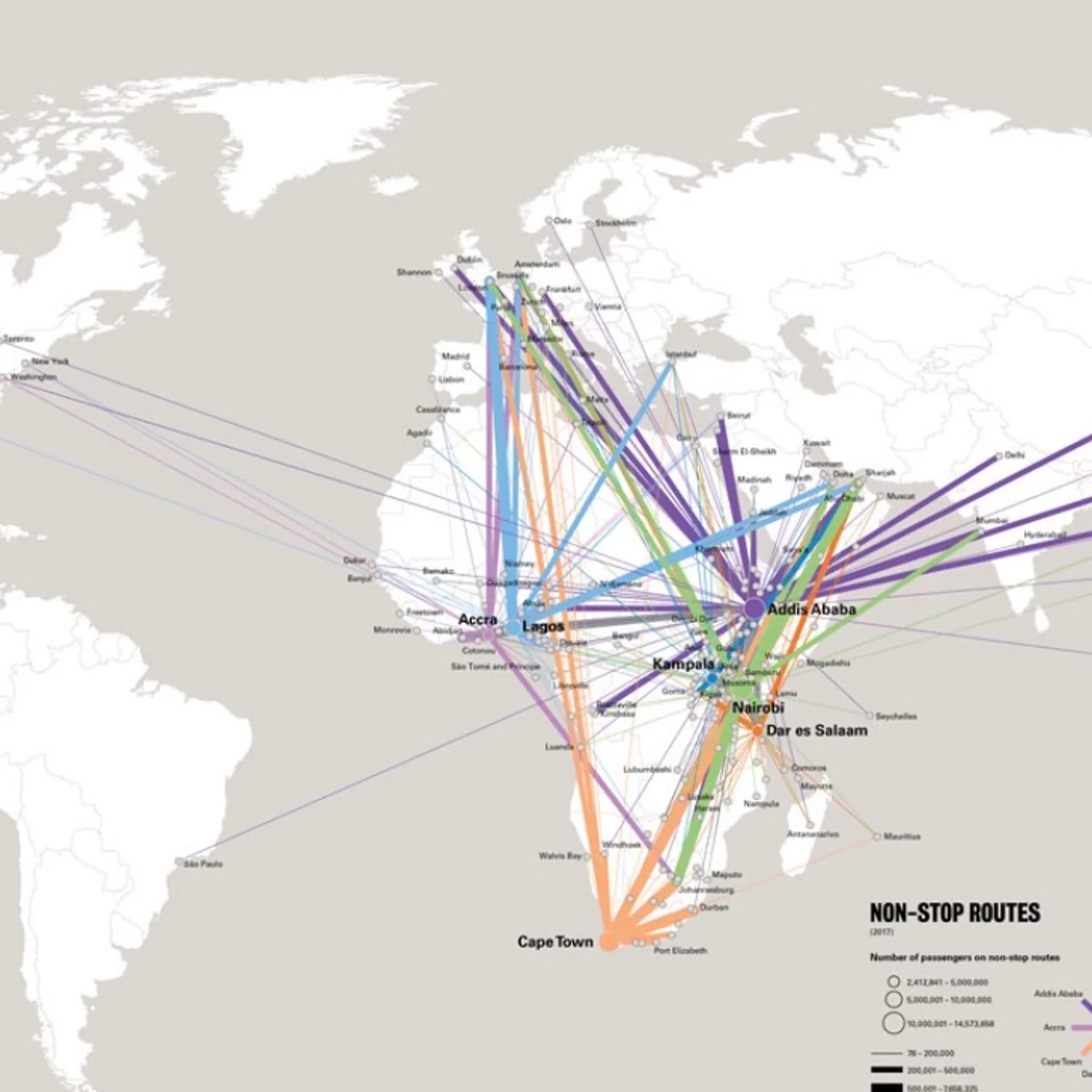
One reason airlines like Ethiopian Airlines work is because they:
• Built Addis Ababa as a serious hub
• Connected African cities through volume
• Invested long-term in fleet and routes
Most African airlines:
• Operate point-to-point
• Fly politically important routes, not economically efficient ones
• Lack scale to reduce per-seat costs
Low volume + high operating cost = expensive tickets.
⸻
4. Taxes, Fees, and Charges Are Quietly Crushing Prices
In many African countries:
• Airport taxes are extremely high
• Fuel costs are inflated
• Multiple agencies charge overlapping fees
• Airlines pay in dollars but earn in weak local currencies
In some cases:
Taxes and fees make up 40–60% of the ticket price.
So even before competition, the price is already broken.
No airline can discount its way out of that.
⸻
5. Visas Kill Demand Before Prices Even Matter
Here’s the part people ignore.
Even if flights were cheaper:
• Africans still need visas to visit other African countries
• Processing is slow
• Rules are unpredictable
• Approvals are uncertain
Low ease of movement means:
• Fewer travelers
• Lower demand
• Airlines can’t rely on volume
• Prices stay high
Europe didn’t just fix flights.
It fixed movement.
⸻
6. No One Owns the Problem — So No One Fixes It
This is the core issue.
Who should fix intra-African travel?
• Governments? → They benefit from control and fees
• Airlines? → They’re constrained and undercapitalized
• Regional bodies? → They lack enforcement power
• Passengers? → They have no leverage
So the system stays broken because:
• The pain is distributed
• The benefit of fixing it is long-term
• The cost of fixing it is political
Nobody wakes up every day losing their job because intra-African travel is expensive — so urgency never forms.
⸻
7. Europe Isn’t Cheaper Because It’s Richer — It’s Cheaper Because It’s Integrated
This is the uncomfortable comparison.
Europe:
• Standardized airspace
• Unified safety regulations
• Free movement of people
• High route density
• True airline competition
Africa:
• Fragmented airspace
• Duplicated regulators
• Restricted movement
• Thin routes
• Protected inefficiency
The price difference is structural, not economic.
⸻
The Hard Truth
Travel within Africa is expensive because:
• Borders are treated as revenue tools
• Airlines are treated as symbols
• Passengers are treated as afterthoughts
• Integration is discussed but not enforced
Until Africa decides that movement is infrastructure, not politics, nothing changes.