


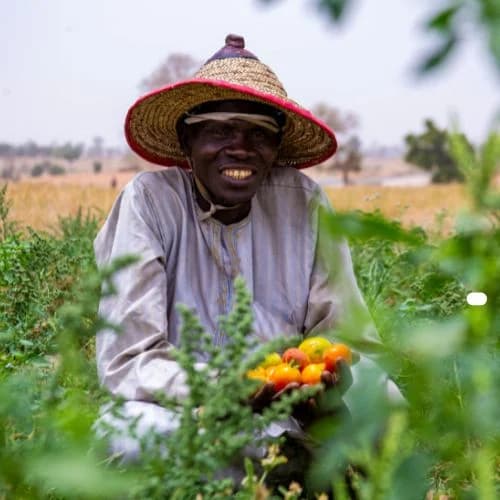
Have you ever gone to the market and found that garri, tomatoes, or eggs cost more than they did last week, even though nothing on the farm has changed? The price hike usually has nothing to do with the food itself.
Think of it as an invisible tax. Every time you buy food, you are not only paying for the food itself.
By the time the basket arrives at the Lagos mar‐ket, the transporter has added all these costs to the original farm price. The wholesaler adds their margin. The retailer adds theirs too.
Practical Steps You Can Take Today
While we wait for government action on infrastructure and fuel prices, there are steps you can take now to mitigate the impact of transport inflation on your household food budget.
Buy Local and Seasonal Foods: Food that is grown near your city travels a shorter distance to reach you, which means less transport cost is built into its price.
Join a Community Buying Group: Some neigh‐bourhoods are already forming food coopera‐tives, where members pool their money together to buy food items in bulk directly from wholesale markets. This eliminates middlemen and reduces individual transportation costs. Ask around in your community or search online to find one near you.
The Bottom Line
Transportation is not just a public service. It is a hidden component of the price of everything you buy. Every loaf of bread, every bag of rice, every bunch of vegetables carries within its price tag the cost of the journey it made to reach you.
Until Nigeria starts investing in rail infrastructure, while stabilising fuel prices, transport inflation will continue to drain the value of household food budgets.
It is caused by something most people rarely think about: the cost of moving that food from where it was grown to where you buy it.
This is transport inflation in all its glory, and it is quietly eating into every Nigerian's food budget.
Think of it as an invisible tax. Every time you buy food, you are not only paying for the food itself.
You are also paying for the fuel, the vehicle main‐tenance, and the unofficial fees that traders and truck drivers have to deal with along the way.
You never see this cost itemised on any receipt, but it is always there.
The Long Journey your Food Takes Before Reaching you
To understand how this works, picture a basket of tomatoes grown on a farm in Jos, Plateau State. It needs to travel over 900 kilometres be‐fore it reaches a market in Lagos.
To understand how this works, picture a basket of tomatoes grown on a farm in Jos, Plateau State. It needs to travel over 900 kilometres be‐fore it reaches a market in Lagos.
Here is what happens along the way:
1. The farmer sells the basket at a fair price at the farm gate.
2. The transporter loads it onto a truck and fills the tank with diesel, which has reached record prices in recent times.
3. The truck battles bad roads that slow the jour‐ney down and cause frequent breakdowns, lead‐ing to expensive vehicle repairs.
4. At various points on the highway, unofficial fees are paid at illegal roadblocks to avoid ha‐rassment or unnecessary delays.
1. The farmer sells the basket at a fair price at the farm gate.
2. The transporter loads it onto a truck and fills the tank with diesel, which has reached record prices in recent times.
3. The truck battles bad roads that slow the jour‐ney down and cause frequent breakdowns, lead‐ing to expensive vehicle repairs.
4. At various points on the highway, unofficial fees are paid at illegal roadblocks to avoid ha‐rassment or unnecessary delays.
By the time the basket arrives at the Lagos mar‐ket, the transporter has added all these costs to the original farm price. The wholesaler adds their margin. The retailer adds theirs too.
So when you finally buy those tomatoes, you are paying for every litre of fuel, every pothole on the road, and every bribe paid between Jos and Lagos.
Practical Steps You Can Take Today
While we wait for government action on infrastructure and fuel prices, there are steps you can take now to mitigate the impact of transport inflation on your household food budget.
Buy Local and Seasonal Foods: Food that is grown near your city travels a shorter distance to reach you, which means less transport cost is built into its price.
Seasonal fruits and vegetables are often cheaper too, because they are abundant and do not need to be transported from far away.
Join a Community Buying Group: Some neigh‐bourhoods are already forming food coopera‐tives, where members pool their money together to buy food items in bulk directly from wholesale markets. This eliminates middlemen and reduces individual transportation costs. Ask around in your community or search online to find one near you.
The Bottom Line
Transportation is not just a public service. It is a hidden component of the price of everything you buy. Every loaf of bread, every bag of rice, every bunch of vegetables carries within its price tag the cost of the journey it made to reach you.
Until Nigeria starts investing in rail infrastructure, while stabilising fuel prices, transport inflation will continue to drain the value of household food budgets.
Understanding this reality is the first step towards patching up your "leaking pockets". Taking action through smarter buying habits and community cooperation, is the next step.