


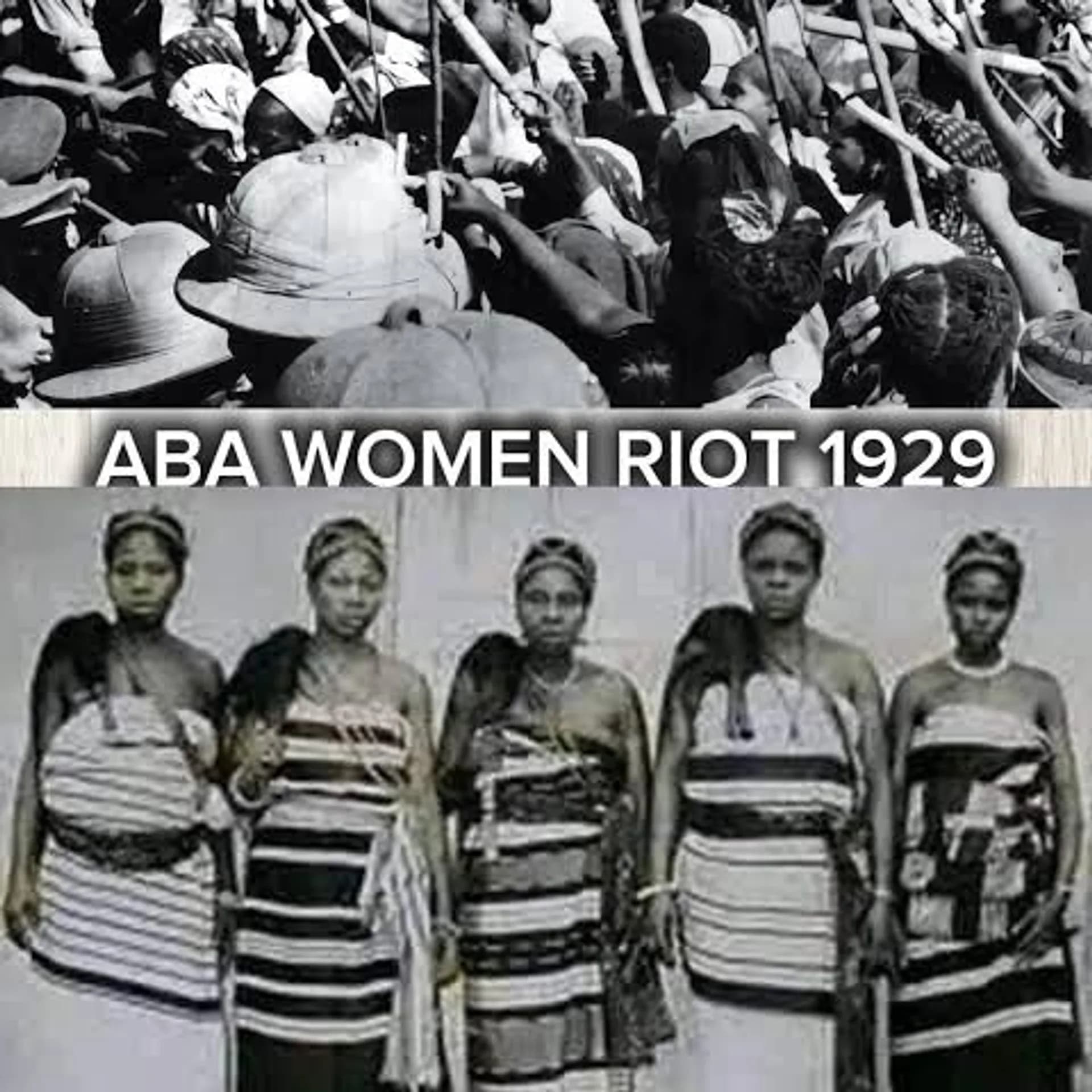
In late 1929, thousands of Nigerian women rose up in what colonial records dismissively called the “Aba Women’s Riot.” In reality, it was a carefully organized protest known locally as Ogu Umunwanyi in Igbo and Ekong Iban in Ibibio. This was not chaos; it was a powerful act of resistance that shook the foundations of British colonial rule in southeastern Nigeria.
The women were protesting the disruption of long-standing systems of governance. Before colonial rule, Igbo communities and others in the region had decentralized political structures in which women had real influence. They participated in councils, resolved conflicts, and managed economic networks. When the British introduced “warrant chiefs” — men chosen by colonial authorities rather than by local communities — it upset this balance. These chiefs were often abusive and unaccountable. The tipping point came with rumors that women would be taxed directly, threatening their economic independence.
Rather than quietly accepting this, the women organized. They marched in towns like Aba, Owerri, and Calabar. They used traditional forms of protest, such as “sitting on a man” — a public shaming that combined song, dance, and direct confrontation. They broke into jails, attacked symbols of colonial authority, and forced warrant chiefs to resign. Their actions were strategic, coordinated, and deeply rooted in local knowledge of power structures.
The colonial response was brutal. Troops opened fire on the crowds, leaving many dead and wounded. Yet, the protests forced the British to make concessions. Plans for direct taxation of women were dropped, reforms were made to the warrant chief system, and women even gained representation in some native courts. Their collective action reshaped colonial governance.
So why does this matter today?
First, the Women’s War challenges the narrative that political resistance in Africa was only led by men. These women acted decades before formal nationalist movements emerged. Their courage and organization paved the way for later struggles for independence.
Second, the uprising highlights how imposing external systems on communities can spark resistance. The colonial disruption of governance and economic life is not just a historical issue. Today, Nigerians still navigate systems where voices are ignored or sidelined. The Women’s War reminds us that ordinary people can demand accountability and change.
Finally, the protests are a powerful example of women refusing to be invisible. They organized, communicated through networks of trade and kinship, and demanded justice. This spirit resonates today in conversations about gender, leadership, and representation in Nigeria and across Africa.
History is more than dates and events; it is the story of people shaping their world. The Women’s War of 1929 shows that women were not just participants in history — they were leaders, organizers, and agents of change. Their actions continue to inspire discussions about power, equity, and civic engagement nearly a century later.