12 Common Causes Every Man Should Know
By Ayo Bashiru Itopa, RD | Clinical Dietitian & Nutritionist
In my previous post about erectile dysfunction (ED), many readers asked a very important question:
"What actually causes erectile dysfunction in men?"
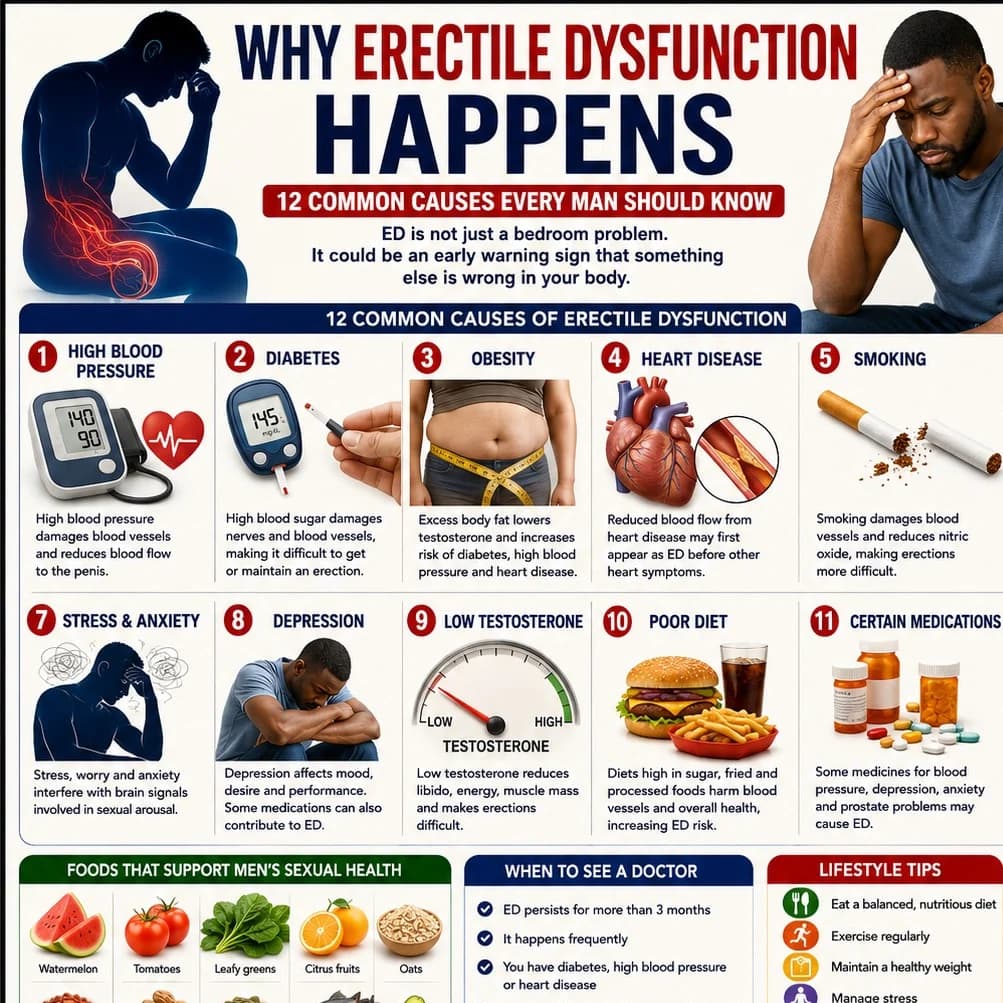
The truth is that ED is not simply a "bedroom problem." In many cases, it is the body's early warning sign that something else is wrong. Understanding the causes can help men seek the right treatment instead of relying on unverified herbal remedies.
What is Erectile Dysfunction?
Erectile dysfunction is the persistent inability to achieve or maintain an erection firm enough for satisfactory sexual activity. While occasional difficulty is normal, frequent or ongoing ED should not be ignored.
1. High Blood Pressure (Hypertension)
High blood pressure damages blood vessels over time, reducing blood flow to the penis. Since an erection depends on good blood circulation, hypertension is one of the leading causes of ED.
What to do:
Reduce salt intake.
Exercise regularly.
Maintain a healthy weight.
Take prescribed medications consistently.
2. Diabetes
Diabetes is one of the most common causes of erectile dysfunction. High blood sugar damages nerves and blood vessels, both of which are essential for normal erections.
Men with poorly controlled diabetes often develop ED earlier than those without diabetes.
3. Obesity
Excess body fat increases inflammation and lowers testosterone levels. Obesity is also linked with diabetes, hypertension, and heart disease—all of which increase ED risk.
Losing even 5–10% of body weight can improve sexual health in many men.
4. Heart Disease
The arteries supplying the penis are smaller than those supplying the heart. Reduced blood flow from heart disease may first appear as erectile dysfunction before other heart symptoms develop.
For some men, ED can be an early warning sign of cardiovascular disease.
5. Smoking
Cigarette smoking damages blood vessels and reduces nitric oxide production, making it more difficult to achieve and maintain an erection.
Quitting smoking can improve blood flow and overall health.
6. Excessive Alcohol Consumption
Heavy alcohol intake can:
Lower testosterone.
Damage nerves.
Reduce sexual performance.
Affect fertility.
Moderation is important.
7. Stress and Anxiety
Financial pressure, work stress, relationship conflicts, and anxiety can interfere with the brain signals involved in sexual arousal.
Managing stress is an important part of treatment.
8. Depression
Depression affects mood, sexual desire, and performance. Some antidepressant medications can also contribute to ED, so men should discuss concerns with their healthcare provider rather than stopping medication on their own.
9. Low Testosterone
Testosterone naturally declines with age, but some men experience abnormally low levels due to medical conditions, obesity, or hormonal disorders.
Symptoms may include:
Low libido.
Fatigue.
Reduced muscle mass.
Erectile difficulties.
A blood test can help confirm the diagnosis.
10. Poor Diet
A diet high in sugary drinks, processed foods, fried foods, and unhealthy fats contributes to obesity, diabetes, high cholesterol, and poor blood vessel health.
Replacing these foods with vegetables, fruits, whole grains, legumes, fish, and healthy fats supports better circulation and overall health.
11. Certain Medications
Some medicines may contribute to ED, including certain medications used for:
High blood pressure.
Depression.
Anxiety.
Prostate conditions.
Never stop a prescribed medication without medical advice. Your doctor may be able to recommend an alternative.
12. Lack of Physical Activity
Regular exercise improves:
Blood circulation.
Heart health.
Testosterone balance.
Weight management.
Mental well-being.
Even brisk walking for 30 minutes on most days can have lasting health benefits.
Foods That Support Men's Sexual Health
A healthy diet supports blood vessel function and hormone balance. Consider including:
Watermelon
Tomatoes
Leafy green vegetables
Citrus fruits
Oats
Beans
Groundnuts
Pumpkin seeds
Fish
Avocados
These foods are not "miracle cures," but they contribute to better cardiovascular and metabolic health, which also benefits sexual function.
When Should You See a Doctor?
Seek medical advice if erectile dysfunction:
Persists for more than three months.
Happens frequently.
Is associated with diabetes, hypertension, or heart disease.
Causes distress or affects your relationship.
Early evaluation can identify treatable underlying conditions.
Final Thoughts
Erectile dysfunction is often a symptom—not the disease itself. Addressing its root causes through healthy eating, regular exercise, weight management, stress reduction, and proper medical care can improve both sexual health and overall well-being.
Don't suffer in silence or depend solely on unverified products. Seeking professional advice is the first step toward effective treatment.
Question for today's discussion:
Which of these causes surprised you the most? Have you ever considered that erectile dysfunction could be an early sign of heart disease or diabetes? Share your thoughts in the comments.