
This is one of those things nobody warns you about when you move to Lagos.
I used to think it was just my area. Then I realised it wasn’t.
Lagos smells because the city is doing too much at once, with very little breathing space.
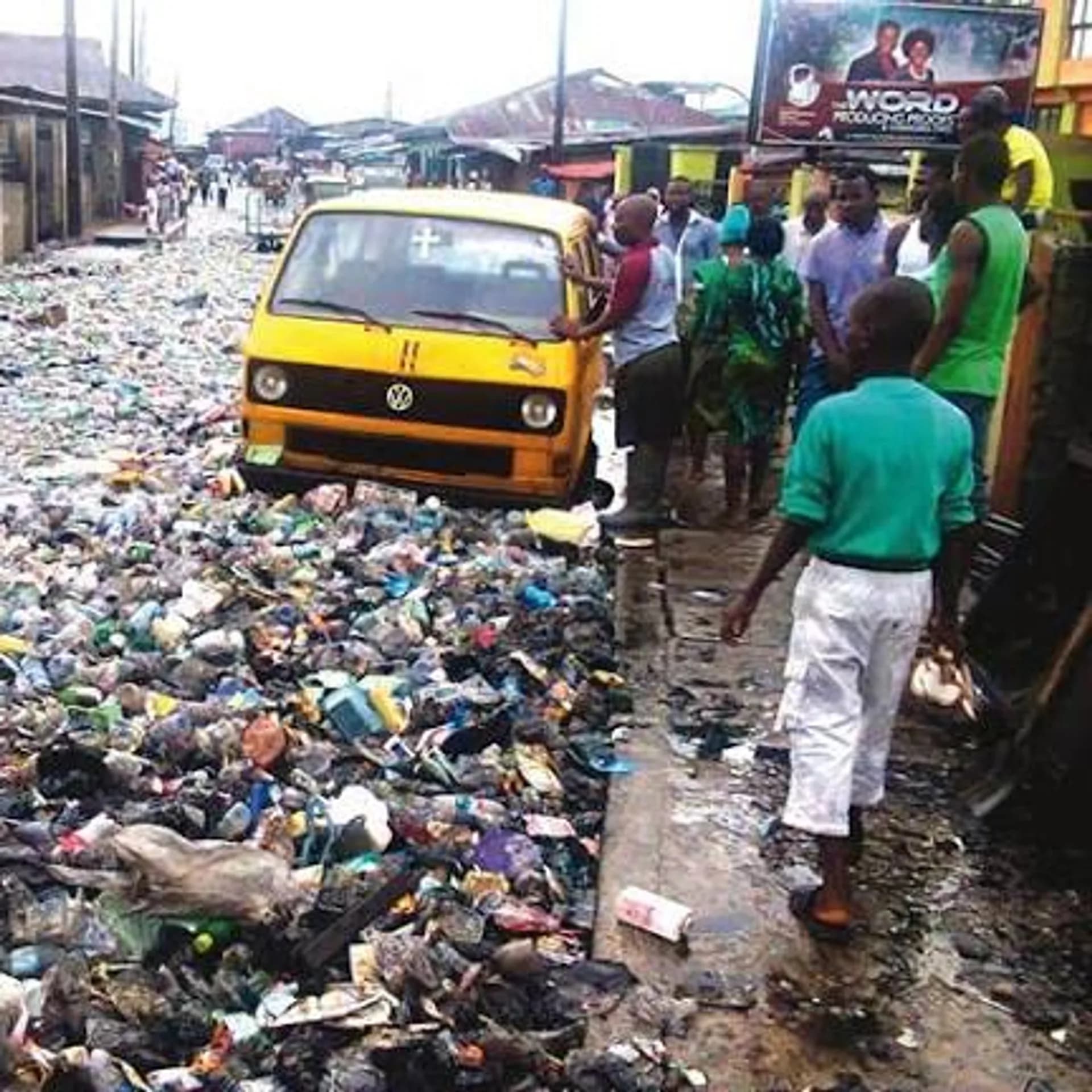
First, drainage. A lot of Lagos drainage systems are either blocked, open, or both. During rainfall, waste has nowhere to go. When the water dries up, whatever was trapped there starts to rot. That smell you perceive as “something dead” is usually a mix of sewage, food waste, and stagnant water baking under heat.
Then there’s waste management. Lagos generates more waste than it can properly handle. Some areas have regular waste pickup, others don’t. When refuse sits out for days under the sun, the smell becomes part of the environment. You stop noticing it until you leave Lagos and come back.
Traffic makes it worse. Long hours of gridlock mean constant exhaust fumes. Buses, trucks, generators, okadas, all releasing smoke into the same air. In some places, that smoky smell mixes with refuse and drainage. That combination is very Lagos.
Open defecation and poor sanitation also play a role, especially in densely populated areas close to water. When sanitation infrastructure doesn’t keep up with population growth, the smell becomes unavoidable.
And let’s talk about heat. Lagos heat intensifies everything. Waste breaks down faster. Stagnant water smells stronger. The sun amplifies what would be manageable in a cooler city.
What makes it more frustrating is that this isn’t about Lagos people being dirty. It’s about a city growing faster than its systems. Too many people. Too much waste. Not enough infrastructure.
Once you understand that, the smell stops being random. It becomes a reminder of how urgently Lagos needs better urban planning, sanitation, and waste management.
If you live here, you already know. Some days, the smell is light. Other days, it announces itself before you even step outside.
That’s Lagos. You smell it before you fully see it.