By Oluwatobiloba Gideon Oludayomi
I have watched good men and good women stay hungry in marriages that look full from outside.
They are not lazy lovers. They cook, they provide, they pray for the home, they show up. Yet their spouse still feels unseen. And if you ask them what happened, they will tell you the truth with confusion in their eyes. I did everything I know to do. I loved the way I know how to love.
That is the whole problem right there. They loved the way they know how to love. Not the way their spouse needed to be loved.
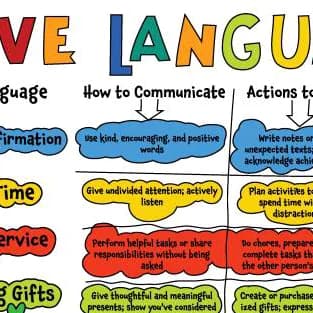
Love languages became a popular idea because it gave people language for something they already felt but could not explain. Words of affirmation. Acts of service. Gifts. Quality time. Physical touch. Good framework. But a framework only works when you apply it correctly, and many people apply it backwards. They speak their own language loudly and wonder why their spouse still looks empty.
Let me put it in terms my business mind understands better. Every person has a currency. Not money. The currency I mean is the thing that makes them feel valued, seen, and secure. You can pour effort into someone all day, but if you are paying them in a currency they do not use, they remain poor in the relationship no matter how much you give.
I have said this before and I will say it again because it bears repeating. Systems do not fail because people do not care. Systems fail because people do not understand what they are working with.
Your spouse is a system. Learn how they process love before you assume you are speaking clearly.
Genesis 2:24 says a man will leave his father and mother and be united to his wife, and they will become one flesh. Oneness is the goal. But oneness is not automatic. Two different people, raised in two different homes, shaped by two different wounds and wins, cannot become one by accident. Oneness is built. And it is built through understanding, not assumption.
I once heard a man say his wife did not appreciate him because he worked so hard to provide for the house. Meanwhile his wife was crying quietly at night because he never sat down to ask her how her day went. He was speaking acts of service. She needed quality time. Both of them were sincere. Both of them were starving.
This is why some of the most hardworking spouses feel like the least appreciated. They keep depositing into an account their spouse does not use.
Proverbs 18:15 says the intelligent heart is always eager and alert for knowledge, listening for it. Notice the word alert. Love that lasts is not sleepy love. It is observant love. It pays attention. It studies the person, not just the relationship.
Here is something I have come to accept with age. Love is not one language repeated loudly. Love is a translation exercise you commit to for life. You will keep learning your spouse the same way you keep learning scripture, layer after layer, season after season, because people are not static and neither is scripture shallow.
A relationship does not collapse because love left. It collapses because understanding stopped growing.
I think many of us confuse intensity with intimacy. We assume that because we feel strongly, we are communicating clearly. But feeling and communicating are two different currencies too. You can feel a lot and still transfer nothing, the same way you can have money in a currency your business partner cannot use in his own country. It looks like wealth on your side and it changes nothing on his side.
So what do you do practically. You ask. You observe. You notice what makes your spouse light up and what makes them go quiet. You notice what they complain about repeatedly, because repeated complaints are usually unmet currency, not nagging. You watch what they do for other people, because people often give what they secretly wish to receive. And you humble yourself enough to admit that your way of loving is not the only way of loving.
1 Corinthians 13:4 to 7, from The Message translation, puts it simply. Love does not want what it does not have. Love does not strut. Love does not have a swelled head. Love does not force itself on others. Love is not always me first.
Read that again slowly. Love is not always me first. That single line exposes why many marriages struggle. We love from our own preference, our own comfort, our own default setting, and we call it sacrifice because it costs us something. But sacrifice that ignores the other person's actual need is still self focused, just quietly.
I always tell couples in my community, that marriage is not about finding someone who thinks like you. It is about building a bridge to someone who thinks differently from you, without resentment. That bridge is built with knowledge. Knowledge of their history, their fears, their currency, and their spoken expectations.
You cannot love a stranger correctly. Study before you serve.
Here is something practical I want you to try this week. Sit with your spouse, not to argue, not to defend yourself, just to ask. Ask them, what makes you feel most loved by me. Then be quiet and actually listen. Do not correct their answer. Do not explain why your own way should be enough. Just receive it as information. Then go and apply it, even if it is not natural to you, because love that only does what is natural is not love yet, it is comfort.
Ecclesiastes 4:9 to 10 reminds us that two are better than one, because if either of them falls, the other can help them up. But help only works when it fits the fall. You cannot lift someone with a method that does not match their need. You will exhaust yourself trying to help in a way that helps no one.
I have learnt in life, in business, and in marriage, that good intentions without correct information create frustrated people on both sides. The giver feels unappreciated. The receiver feels unseen. And nobody is wrong. They are simply misaligned.
Misalignment is not the absence of love. It is the absence of understanding.
So before you conclude that your spouse does not appreciate you, ask yourself honestly if you have taken the time to learn their currency, or if you have simply been repeating the currency that makes sense to you. Before you conclude that love has faded, ask if effort has changed direction or if it has simply gone quiet from exhaustion.
Love languages work. But they only work when you study the person first, and love them second. Study before strategy. Strategy before results. That order does not change, in business or in the home.
I will leave you with this. The strongest marriages I have seen are not the ones with the least conflict. They are the ones where both people committed to keep learning each other, year after year, without giving up on translation just because it got difficult.
Now I want to hear from you. What is your spouse's currency, and when did you discover it. Or if you are not married yet, what do you think your own currency is. Drop your thoughts below. Someone reading this today needs your honesty.
* * *
Oluwatobiloba Gideon Oludayomi is a practical writer, a scripture addict, and a versatile entrepreneur building wealth through agriculture, real estate, and enterprise. He writes on faith, business systems, personal development, mindset re-engineering, and the Nigerian condition. He is the Convener of the Dominion Guild Network, an ecosystem of high value individuals, young and determined to becoming an empowered generation. He is also the author of "Build It to Last", "I Thought I Married a Wife" (a novel), and "Practical Love".