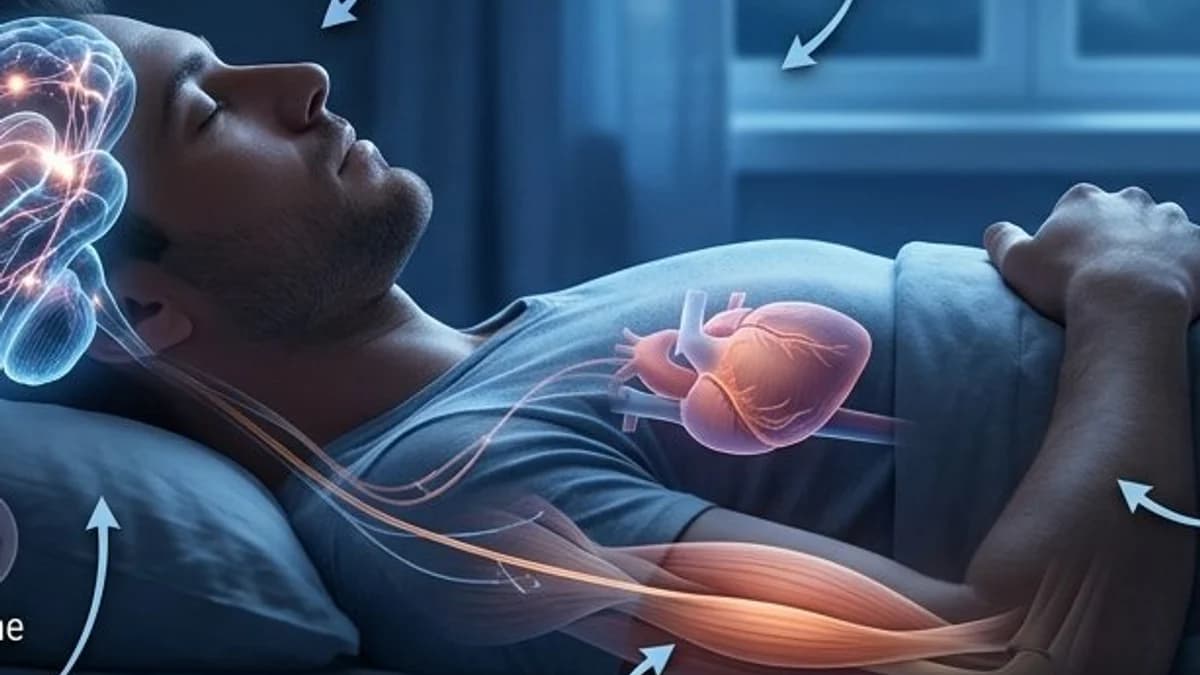
It's easy to think that while sleeping, your body is idle, and your brain "turns off." The reality is, that while you nap, your brain and body are, in fact, quite occupied with the processes happening inside you.
🧠 Your brain is active
while you are asleep, and it goes through several stages throughout the night, including the REM stage (rapid-eye movement).
🔄 In addition, your brain actively processes information
and consolidates memories: which is why a good night's sleep often benefits your cognitive abilities and helps you learn and memorize new information faster.
💪 While your brain works hard to keep you healthy and functional, your body doesn't rest, and your body is doing several important jobs while you're asleep.
❤️ First, your heart begins beating slower and your blood pressure drops, giving your cardiovascular system a much needed, daily rest.
🛡️ Meanwhile, your immune system is also busy fighting off pathogens, which probably explains why when you don't get enough sleep, you tend to get sick easier. Your biological clock also plays an important role in regulating your health and making sure its systems operate correctly, so that your body has an equal chance of fighting off the infection.
⚖️ Not getting enough sleep also throws your hormone levels off balance, which could result in poor appetite control, bad mood, poor concentration, and low energy levels during the day.
💭 And finally, you actually experience two types of dreams while you sleep, although the most interesting ones usually occur during the REM stage.
⏰ Your circadian rhythm, or internal clock, control your natural sleep-wake cycle, and it's easy to disturb it. Common disruptors include lack of light, staying up late for entertainment, work, or studies, stress, caffeine, and an irregular sleeping schedule.
📱 Our modern lives tend to keep us up later than they used to in the past.
While that occasional sleepless night won't hurt you, regularly losing out on sleep deprives your body of valuable hours of regeneration and negatively impacts your memory, emotional stability, performance, and metabolism.
⭐ THE BOTTOM LINE
While you sleep, your body and mind accomplish a variety of important tasks. Your brain processes and consolidates memories, controls your bodily functions, fights off pathogens, and maintains your health. At the same time, your body helps the former by repairing itself and keeping you safe. Your brain and biological clock work together to make sure that everything happens regularly and you're able to get enough rest to keep doing it night after night.
🌙 Sometimes, the most crucial things your body does happen when you're not actively controlling them.
Follow FEEDCOVER for more interesting content about science, technology, society, and humanity's knowledge in general.