
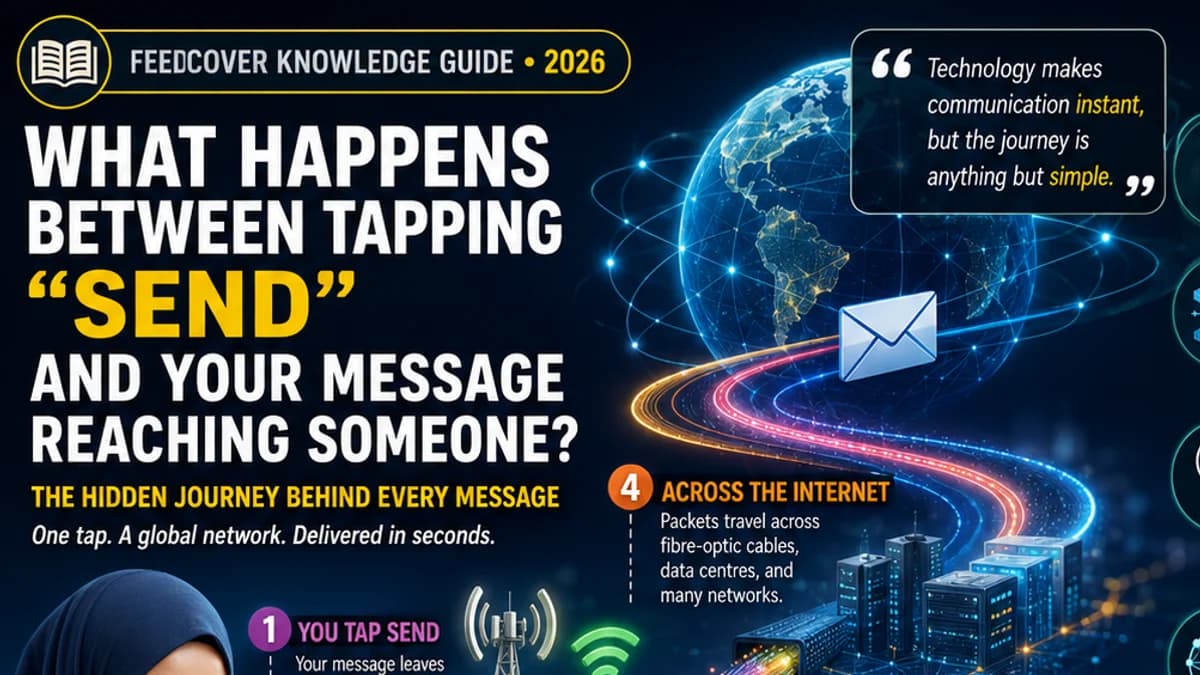
🌟 FEEDCOVER KNOWLEDGE GUIDE · 2026 🌟
You type a message.
You tap SEND.
A moment later, your friend receives it.
It feels almost instant—but your message has actually travelled through a remarkable network of phones, radio signals, cables, computers, routers, and servers before reaching its destination.
So what really happens during those few seconds?
Let’s follow the journey.
━━━━━━━━━━━━━━━━━━━━━━
🚀 THE JOURNEY BEGINS WITH YOUR PHONE
When you press SEND, your phone first prepares the message to leave the device.
If you are using a messaging application, the app communicates with the internet through your phone's connection.
That connection might be:
📶 Mobile data
🏠 Wi-Fi
🌐 Another internet connection
Your phone converts the information into digital data that can travel through a network.
And this is where the journey becomes interesting.
━━━━━━━━━━━━━━━━━━━━━━
📦 YOUR MESSAGE DOESN'T TRAVEL AS ONE BIG OBJECT
Computers are designed to move digital information efficiently.
Large amounts of data can be divided into smaller pieces called packets.
Think of packets like small envelopes carrying parts of the same letter.
Each packet contains information that helps the network understand where it came from and where it needs to go.
The network then moves these packets toward their destination.
Eventually, the receiving system puts the information together again so the message can be displayed correctly.
━━━━━━━━━━━━━━━━━━━━━━
📡 HOW DOES YOUR PHONE CONNECT TO THE INTERNET?
If you are using Mobile data, your phone communicates with a nearby cellular network through radio signals.
Your phone connects to a cell tower.
The tower connects your communication to the wider network operated by your Mobile provider.
From there, your data can travel through many interconnected networks.
If you are using Wi-Fi, your phone normally communicates with a wireless router.
The router then connects your local network to an internet service provider.
Either way, your message is beginning a journey far beyond your phone.
━━━━━━━━━━━━━━━━━━━━━━
🌍 THE INTERNET IS NOT JUST “THE CLOUD”
People often imagine the internet as something floating somewhere in the sky.
In reality, much of the physical infrastructure behind the internet exists on Earth.
It includes:
🔌 Fibre-optic cables
📡 wireless networks
🖥️ Data centres
📶 Routers
🌊 Undersea cables
🏢 Network facilities
Some internet traffic can travel through enormous Fibre-optic cables running across countries and underneath oceans.
So when you send a message to someone in another part of the world, your information may cross a surprisingly large physical distance.
━━━━━━━━━━━━━━━━━━━━━━
🧭 WHO DECIDES WHERE YOUR DATA GOES?
The internet contains countless connected networks.
Routers help direct packets toward their destinations.
They examine information about where data needs to go and determine an appropriate route through the network.
There isn't necessarily one fixed road.
Different packets can sometimes take different paths depending on network conditions.
This is one reason the internet can continue functioning even when particular routes experience problems.
━━━━━━━━━━━━━━━━━━━━━━
🔐 BUT WHAT ABOUT PRIVACY?
This is where things become especially important.
Many modern messaging services use encryption to protect communications.
With end-to-end encryption, the intended communicating devices can be designed so that the message content is protected from being readable by intermediaries.
However, privacy technology differs between services.
Encryption does not mean that every piece of information surrounding a communication is automatically invisible.
Things such as account information, timestamps, device information, or other metadata may be handled differently depending on the service.
So never assume that every online activity is completely private simply because a service uses encryption.
━━━━━━━━━━━━━━━━━━━━━━
📲 THE MESSAGE FINALLY ARRIVES
After travelling through the necessary networks, the message reaches the recipient's device or the system responsible for delivering it.
The receiving application processes the information.
Your friend's phone then displays something that looks incredibly simple:
"Hello!"
But behind those few words may have been a sophisticated chain of digital operations.
And all of this can happen within seconds.
━━━━━━━━━━━━━━━━━━━━━━
🤯 SOMETHING EVEN MORE INTERESTING
Your message does not need to physically travel directly from your phone to your friend's phone.
Depending on the service, it may interact with servers or other network infrastructure along the way.
These systems can help with authentication, delivery, synchronisation, storage, notifications, and many other functions.
This is why modern communication can work even when the sender and receiver are thousands of kilometres apart.
━━━━━━━━━━━━━━━━━━━━━━
⚠️ WHAT CAN GO WRONG?
Sometimes the journey fails.
You might see:
❌ "Message not sent"
❌ "Connecting..."
❌ "Waiting for network"
❌ Delayed delivery
❌ Missing notifications
This can happen because of weak signals, internet congestion, service problems, device issues, routing problems, or other technical failures.
The amazing part is not that the internet occasionally fails.
The amazing part is that such a huge global system works successfully billions of times every day.
━━━━━━━━━━━━━━━━━━━━━━
🌐 THE BIGGER PICTURE
Every time you:
📱 Send a message
🎥 Watch a video
📧 Send an email
💳 Make an online payment
🌍 Visit a website
you are interacting with a massive global communication infrastructure.
What looks like a simple tap on a screen can involve technology operating across multiple networks and physical locations.
━━━━━━━━━━━━━━━━━━━━━━
💡 WHAT THIS TEACHES US
Technology can make complicated processes feel simple.
That simplicity is useful—but understanding what happens behind the screen helps us become more informed digital citizens.
The next time you press SEND, remember:
Your message is not magically appearing on another phone.
It is travelling through a carefully designed digital infrastructure built by millions of people and supported by physical technology around the world.
━━━━━━━━━━━━━━━━━━━━━━
❓ QUESTIONS YOU MAY HAVE
Q: Does every message take the same route?
A: Not necessarily. Internet traffic can travel through different routes depending on the networks and conditions involved.
Q: Does my message always travel through a satellite?
A: No. Much internet traffic travels through Fibre-optic cables and terrestrial networks. Satellites are only one possible communication method.
Q: Why can messages sometimes arrive late?
A: Network problems, weak connections, service interruptions, device issues, or other technical factors can cause delays.
Q: Is the internet completely wireless?
A: No. wireless connections are important, but enormous amounts of internet infrastructure depend on physical cables, including Fibre-optic and undersea cables.
━━━━━━━━━━━━━━━━━━━━━━
⭐ KEY TAKEAWAYS
📱 Your phone converts information into digital data.
📦 Data can be divided into packets.
📶 Networks carry those packets toward their destination.
🧭 Routers help direct traffic between networks.
🌊 Physical cables form a major part of the global internet.
🔐 Encryption can protect communication content depending on the service.
🌍 A simple message can involve infrastructure spanning great distances.
━━━━━━━━━━━━━━━━━━━━━━
🤝 AN ETHICAL PERSPECTIVE
The technology behind modern communication is powerful, but how we use it matters.
We should respect people's privacy, avoid spreading harmful information, protect our accounts, and remember that there are real people behind the screens.
Technology gives us extraordinary power to communicate.
Wisdom determines how responsibly we use that power.
━━━━━━━━━━━━━━━━━━━━━━
🏁 CONCLUSION
The next time you tap SEND, take a moment to appreciate what is happening.
A simple message begins a journey through networks, devices, cables, routers, and digital systems before appearing on another person's screen.
What takes only a few seconds is the result of decades of scientific research, engineering, infrastructure, and global cooperation.
📱 One tap.
🌍 A global network.
⚡ A message delivered in seconds.
That is the hidden journey behind an everyday digital action.
━━━━━━━━━━━━━━━━━━━━━━
📢 CALL TO ACTION
The next time you use your phone, don't just ask:
"How do I use this technology?"
Ask:
🧠 "How does this technology actually work?"
Curiosity is where deeper knowledge begins.
🌟 Follow FEEDCOVER for more fascinating guides that explain the technology, knowledge, and ideas shaping our world.
reach us @