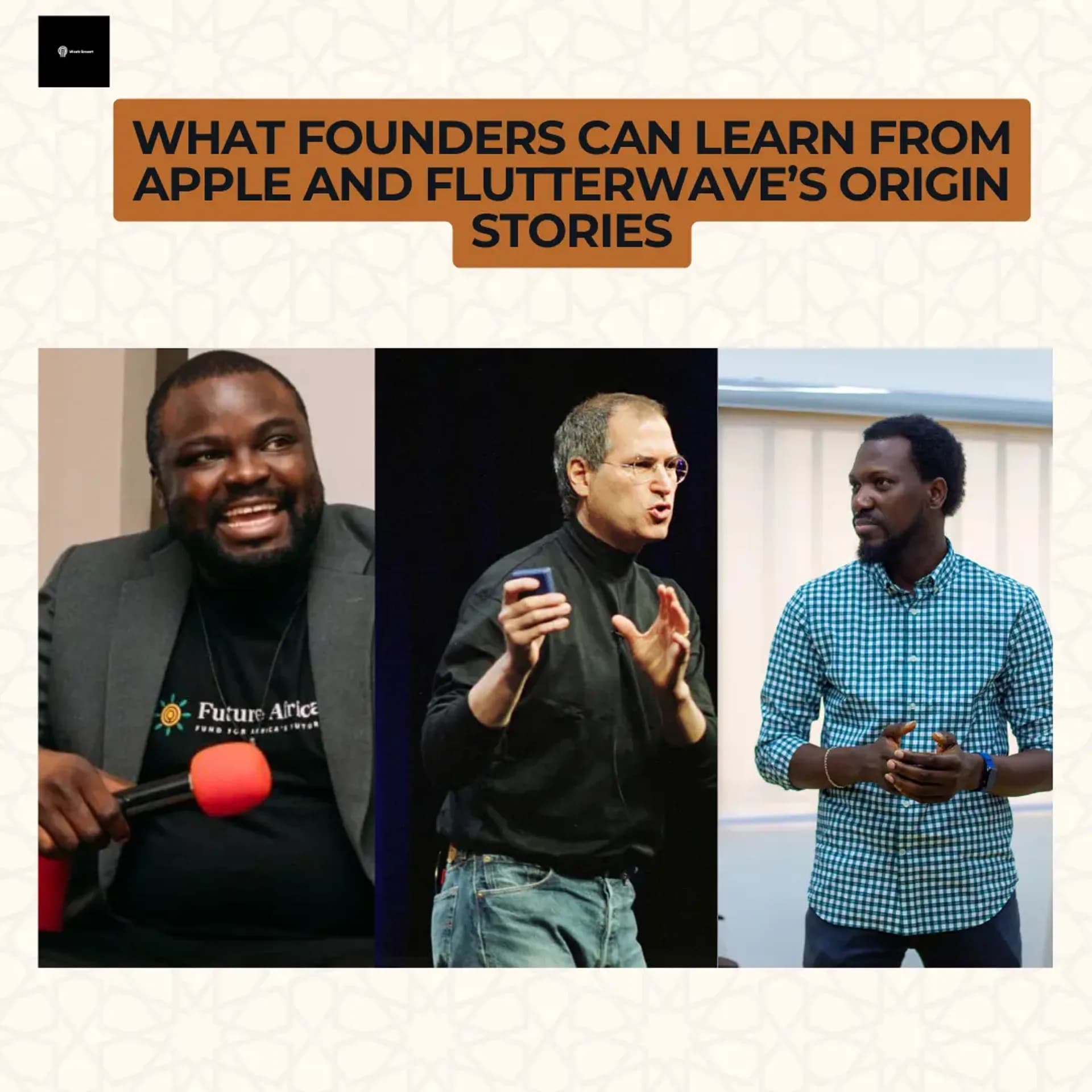
Before Apple set out to democratize the computer industry, computers were large, expensive machines owned primarily by governments, universities, and big corporations—far beyond the reach of ordinary individuals.
Then came Steve Jobs and Steve Wozniak, who began building computers in a garage, driven by a vision to make technology accessible and intuitive for everyone.
Their story of the ‘garage start-up’ did two things. First, it embodies the American dream of innovation and entrepreneurship. It signifies the spirit of America—the land of opportunities where anybody could have an idea, work hard, and see their dreams come to fruition.
But that ‘garage start-up’ narrative, which was told over and over again, especially during the early days of Apple, does something even more grand.
It tells the often emotionally moving underdog story. At the time, IBM controlled 80 percent of the U.S. computer market, and computers were products not found in the homes of ordinary Americans.
Hence, this ‘garage start-up’ story—Apple’s origin story—became a classic tale of two scrappy visionaries, with a revolutionary idea, bent on taking on the giant in the room with a goal of handing down disruptive technology to the hands of ordinary working-class Americans. A technology capable of transforming their lives for good.
In Africa, the story of Flutterwave, one of Nigeria’s unicorns, is equally rooted in the collective narrative of its founders and the frustration they faced with Africa’s payment infrastructure at the time.
Hence, this ‘garage start-up’ story—Apple’s origin story—became a classic tale of two scrappy visionaries, with a revolutionary idea, bent on taking on the giant in the room with a goal of handing down disruptive technology to the hands of ordinary working-class Americans. A technology capable of transforming their lives for good.
In Africa, the story of Flutterwave, one of Nigeria’s unicorns, is equally rooted in the collective narrative of its founders and the frustration they faced with Africa’s payment infrastructure at the time.
Iyinoluwa Aboyeji (former CEO), who had, prior to co-founding Flutterwave, co-founded Andela—a coding jobs and training platform—said he experienced challenges paying developers based in Africa.
“Despite all the entrepreneurial spirit and expertise in Lagos, businesses still have trouble conducting transactions that are an afterthought in most of the world. It’s a problem that is prohibitive to the future growth of the continent, and one that we felt we could no longer ignore. So we decided to do something about it,” Aboyeji said in an interview.
The two other co-founders—Olugbenga Agboola (CEO) and Adeleke Adekoya—had also experienced Africa’s payment issues while working in the fintech space and banking sector before Flutterwave.
Their shared experience became the message—the foundation of selling a vision where Africa’s economic growth is not hindered by broken payment systems. The narrative of "connecting Africa to the world" by streamlining payments became their origin story, one that was reinforced and spread so that any potential investor and client alike understood not just the problem they were solving, but the solution they were offering.
As a founder looking to build authority and become the reckoning voice in your industry, what is your origin story? What made you set out to begin your entrepreneurial journey?
What frustration did you experience that made you say, ‘Ah, this must be solved?’
You might be thinking that your ideas are not grand enough, that you have not spotted anything special worthy of owning a story. But that’s simply not the truth. To help founders discover what their founders story should be, and how to tell it in the most authentic way possible, I've started Founder’s Branding, a weekly newsletter specifically for you.