In part one, I talked about what a toxic workplace looks like, especially for interns and IT students. This part is about protection. Because recognizing toxicity is one thing, surviving it without losing yourself is another.
One hard truth is this.
Not every workplace is invested in your growth, even if they say they are.
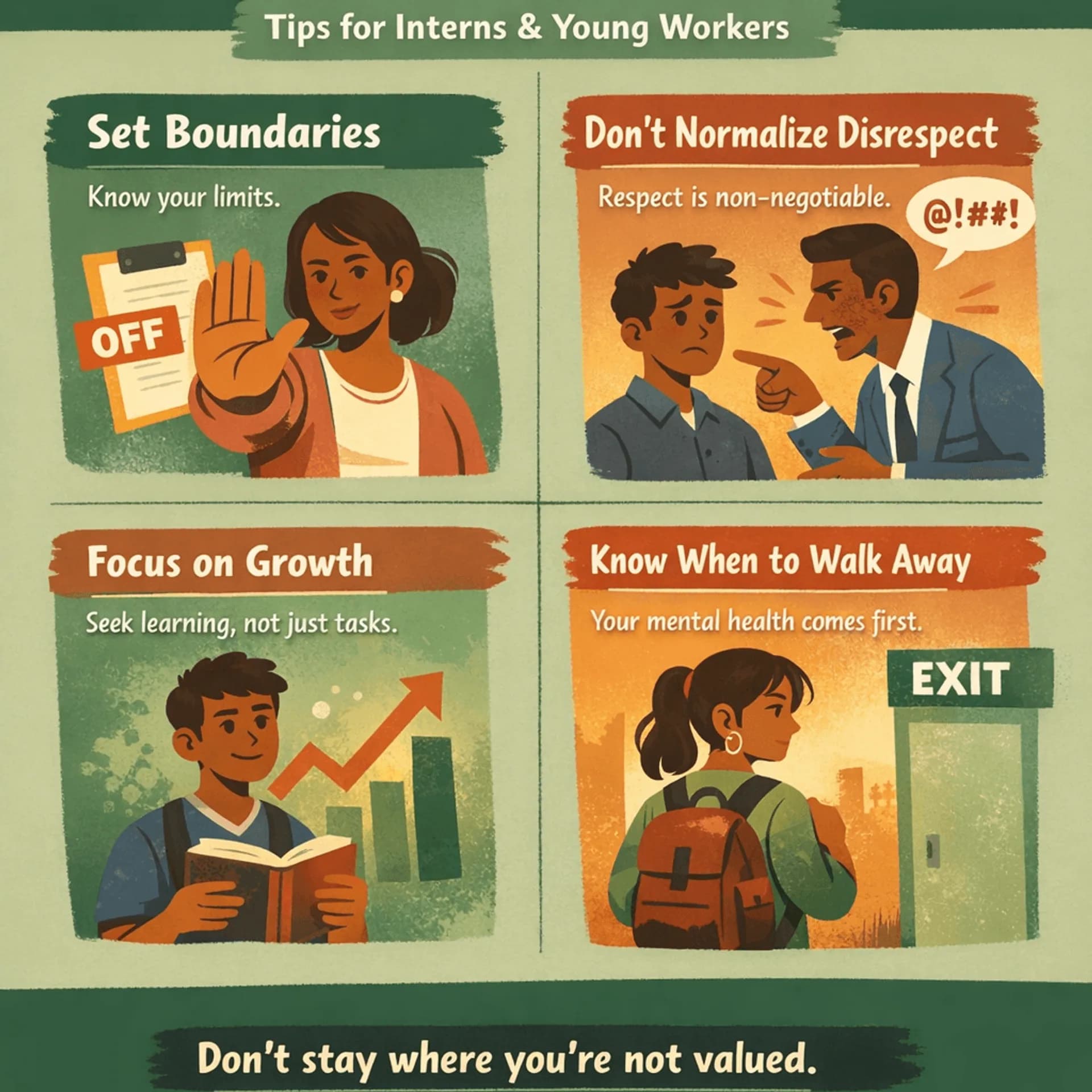
That is why boundaries matter.
3) Lack of clear boundaries
In toxic environments, boundaries are often blurred on purpose.
You are expected to stay late without notice.
Your personal time is treated as optional.
Tasks keep expanding, but expectations are never clearly defined.
As an intern, you must learn to ask questions like:
Is this part of my role?
Is this a learning opportunity?
Is this becoming a pattern?
Boundaries do not make you lazy. They make you intentional.
4) Normalising disrespect because you are an intern
One of the fastest ways toxicity grows is when disrespect is excused.
Being spoken to anyhow.
Being dismissed when you ask questions.
Being told you should be grateful no matter how you are treated.
Internship is not a license for disrespect, and learning does not require humiliation. Once disrespect becomes normal, it rarely stops.
5) When everything feels urgent except your growth
In healthy workplaces, interns are taught. In toxic ones, interns are only used.
If all you do is rush deadlines, run errands, and carry out tasks without explanation, you need to pause and reflect. Ask yourself what you are actually gaining.
Busyness is not the same as development.
Knowing when to walk away
This is the hardest part.
Sometimes, the healthiest decision is to leave. Especially when your mental health is suffering, your confidence is dropping, and nothing improves despite effort and communication.
Walking away is not failure. Staying in an environment that keeps breaking you is.
As interns and young workers, we are often told to endure everything. But endurance without growth is just slow damage.
Pay attention to how you feel.
Pay attention to patterns.
Pay attention to how you are treated when you speak up.
Toxic workplaces rarely change because one person is patient. They only change when people stop accepting less than they deserve.
And if you are currently navigating a difficult work environment, know this. You are not weak for struggling, and you are not wrong for wanting better.