
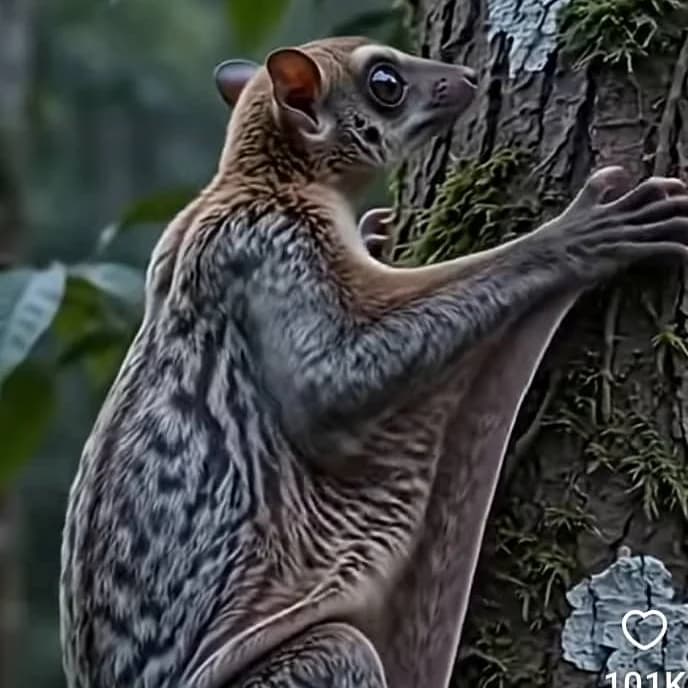
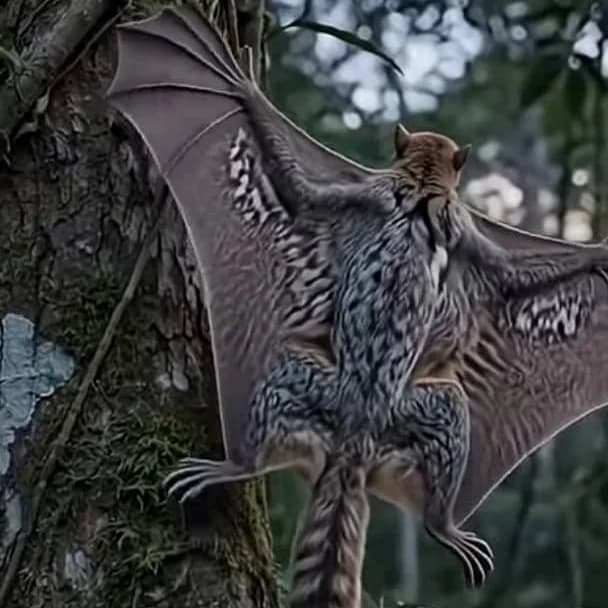
Colugos, also called flying lemurs, are tree-dwelling mammals native to Southeast Asia. Despite their name, they are not lemurs and cannot fly. Instead, they use a large skin membrane to glide up to 200 meters between trees and are closely related to primates.
There are just two living species of colugos: the Sunda flying lemur (Galeopterus variegatus) and the Philippine flying lemur (Cynocephalus volans). These two species make up the entire family Cynocephalidae and order Dermoptera, from Ancient Greek (dérma), meaning "skin", and (pterón), meaning "wing".
Physical Traits and Gliding
Patagium: A massive web of skin stretches from the neck, across the fingers, toes, and all the way to the tail tip, forming a kite-like shape.
Comb teeth: Their front lower teeth are shaped like little combs, used for grooming and scraping food.Camouflage: Their mottled fur blends smoothly into tree bark and moss.
Behavior and Diet
Nocturnal: They wake up at night to look for food and navigate using large, sharp-vision eyes.
Herbivores: They eat young leaves, shoots, flowers, and soft fruits.
Tree life: They spend almost all their time high up in the forest canopy and are clumsy when forced to move on the ground.