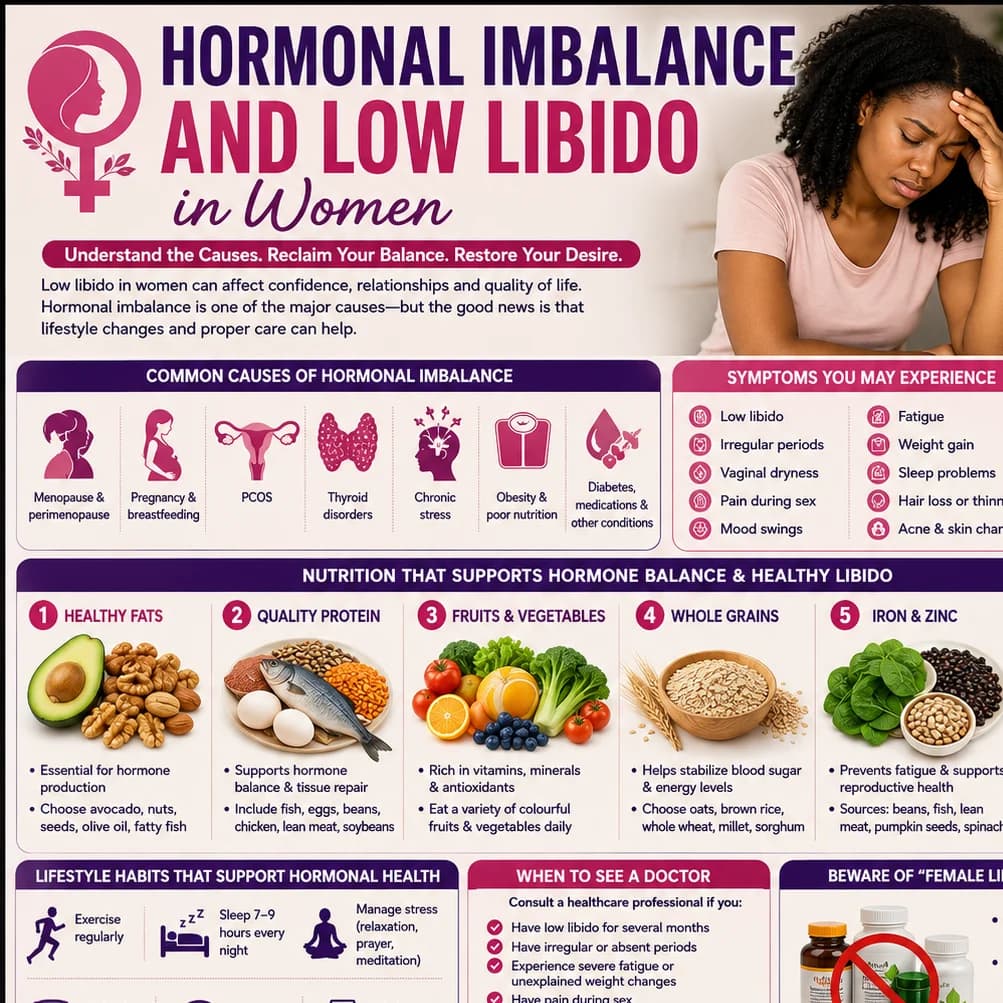
Hormonal Imbalance and Low Libido in Women
Understanding the Causes, Symptoms, and the Role of Nutrition
By Ayo Bashiru Itopa, RD | Clinical Dietitian & Nutritionist
Many women experience a reduced interest in sex (low libido) at some point in their lives. While occasional changes in sexual desire are normal, persistent low libido may be linked to hormonal imbalance, stress, poor nutrition, medical conditions, or certain medications.
Hormonal imbalance is not something to ignore. It can affect a woman's physical health, emotional well-being, fertility, and quality of life.
What Is Low Libido?
Low libido refers to a persistent decrease in sexual desire that causes concern or affects personal relationships. It can occur at any age but becomes more common during pregnancy, after childbirth, during breastfeeding, around menopause, or in women with certain medical conditions.
What Is Hormonal Imbalance?
Hormones are chemical messengers that regulate many body functions, including sexual desire, mood, sleep, metabolism, and reproduction. When hormone levels become too high or too low, a woman may develop various symptoms, including reduced sexual desire.
The main hormones involved include:
Estrogen
Progesterone
Testosterone
Thyroid hormones
Prolactin
Cortisol (stress hormone)
Common Causes of Hormonal Imbalance
Hormonal imbalance may result from:
Menopause or perimenopause
Pregnancy and breastfeeding
Polycystic Ovary Syndrome (PCOS)
Thyroid disorders
Chronic stress
Diabetes
Obesity
Poor nutrition
Lack of sleep
Certain medications (including some antidepressants and hormonal contraceptives)
Excessive alcohol intake
Smoking
Symptoms of Hormonal Imbalance
Women may experience:
Low libido
Irregular menstrual cycles
Vaginal dryness
Pain during sexual intercourse
Mood swings
Fatigue
Weight gain
Difficulty sleeping
Hair loss or thinning
Acne
Hot flashes (especially around menopause)
How Nutrition Can Help
A healthy diet supports hormone production, reduces inflammation, and improves energy levels.
1. Eat Healthy Fats
Healthy fats are needed for hormone production.
Choose:
Avocado
Groundnuts
Almonds
Walnuts
Olive oil
Fatty fish
2. Include Quality Protein
Protein supports muscle health and hormone balance.
Good sources include:
Fish
Eggs
Beans
Soybeans
Chicken
Lean meat
3. Eat Plenty of Fruits and Vegetables
Colourful fruits and vegetables provide antioxidants, vitamins, and minerals that support reproductive health.
Choose:
Oranges
Watermelon
Pawpaw
Berries (when available)
Spinach
Ugu
Okra
Tomatoes
4. Choose Whole Grains
Whole grains help maintain stable blood sugar levels.
Examples include:
Oats
Brown rice
Whole wheat bread
Millet
Sorghum
5. Get Enough Iron and Zinc
Deficiencies in iron and zinc can contribute to fatigue and reduced sexual desire.
Good sources include:
Beans
Fish
Lean meat
Pumpkin seeds
Spinach
6. Ensure Adequate Vitamin D
Low vitamin D levels have been associated with poor mood, fatigue, and reduced quality of life.
Sources include:
Safe sunlight exposure
Eggs
Fortified dairy products
Fatty fish
Lifestyle Habits That Support Hormonal Health
In addition to healthy eating:
Exercise regularly.
Sleep 7–9 hours every night.
Maintain a healthy weight.
Manage stress through relaxation, prayer, meditation, or counselling.
Avoid smoking.
Limit alcohol consumption.
When Should You See a Doctor?
Consult a healthcare professional if:
Low libido persists for several months.
You have irregular or absent menstrual periods.
You experience severe fatigue or unexplained weight changes.
Sexual intercourse becomes painful.
Symptoms interfere with your daily life or relationships.
Your healthcare provider may recommend hormone testing, thyroid function tests, or other investigations to identify the underlying cause.
Beware of "Female Libido Boosters"
Many herbal products marketed as "female sex enhancers" have little or no scientific evidence to support their claims. Some may contain hidden ingredients or interact with medications.
Always seek advice from a qualified healthcare professional before using supplements or herbal remedies.
Final Thoughts
Low libido is not simply "part of being a woman" or something to be ashamed of. Hormonal imbalance, medical conditions, stress, poor nutrition, and lifestyle factors can all contribute. Addressing these underlying causes through a balanced diet, regular physical activity, stress management, adequate sleep, and appropriate medical care can help improve hormonal health and overall well-being.
Remember, sexual health is an important part of women's health, and seeking help early can lead to better outcomes.
About the Author
Ayo Bashiru Itopa, RD is a Registered Dietitian, Clinical Nutritionist, and Research Consultant committed to helping Nigerians improve their health through practical, evidence-based nutrition. He specializes in lifestyle disease prevention, women's nutrition, and personalized dietary counselling.