By Oluwatobiloba Gideon Oludayomi
We grow up believing that God's blessing shows up as size. A bigger account. A bigger house. A bigger harvest. So we chase size and call it favour. But I have come to see something quieter and more serious sitting underneath every story of increase in scripture. God is less interested in what He gives you. God is watching what you do with it. How you manage what He gives to you is what determines how much he gives you next.
Look at the parable of the talents in Matthew 25. Three servants received different amounts, five talents, two talents, one talent. Notice that the master did not return asking who had the most money. He asked what each of them did with what they were given. The servant who buried his one talent was not punished for having little. He was punished for doing nothing wise with it. The master called him wicked and lazy, not poor. That word choice should stop us in our tracks.
This tells me something I wish someone had told me earlier in my own business journey. God is not an accountant counting your size. He is an investor evaluating your judgment.
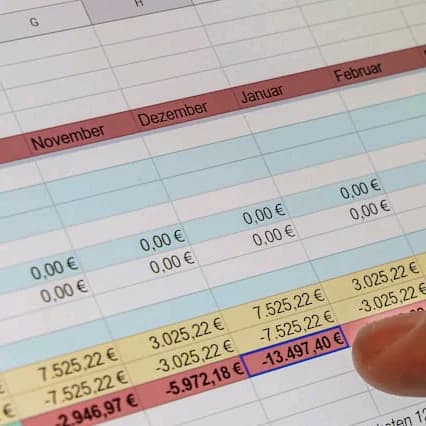
I remember one of my early ventures years back. I had capital, I had energy, I had connections. What I did not have was structure. Money came in and money left without a clear system tracking where it went. I called it growth. It was actually leakage. I did not lack provision. I lacked stewardship. And provision without stewardship is just a slower way of losing everything.
Proverbs 27 verse 23 gives simple instruction that many skip past. Know well the condition of your flocks, and pay attention to your herds. This was written to shepherds, but it speaks directly to anyone managing money, a business, a marriage, a calling, even your own time. Knowing what you have and paying attention to it is not optional. It is the discipline scripture keeps returning to.
Here is the deeper truth I want us to sit with. What looks like a financial problem is often a management problem wearing a financial disguise. A man says he needs more income. But look closer, he actually needs a budget. A business owner says sales are low. But look closer, the real issue is that money is disappearing through carelessness before sales even matter. We keep praying for more supply when the real gap is in our handling of supply.
Luke 16 verse 10 says it plainly. Whoever can be trusted with very little can also be trusted with much, and whoever is dishonest with very little will also be dishonest with much. This is not really about money size. It is about character revealed through handling. Small amounts expose our habits before large amounts ever get the chance to.
I have watched this play out in agriculture too, an industry I know intimately from years of farming and managing land. Two farmers can receive the same rainfall, the same soil quality, the same season. One ends up with abundance. The other ends up with waste. The difference was never the weather. It was attentiveness. It was record keeping. It was discipline in the small daily decisions nobody claps for.
This is why I always tell people in the Dominion Guild Network that wealth is not the goal. Wealth handling is the goal. Because wealth without handling ability simply becomes a louder version of the same chaos you had with less.
There is a quiet dignity in management that our culture rarely celebrates. We celebrate the harvest, not the farmer who wakes early to check the soil. We celebrate the profit, not the discipline of writing down every expense. But God seems to celebrate the opposite. He watches the early mornings. He watches the small decisions. He watches whether you respected the little before you asked for the much.
Let me put it simply. Increase is a test, not a reward. If your handling does not improve with your income, your income will eventually shrink to match your handling. This is not punishment. It is simply how stewardship works. God is not stingy. God is strategic. He releases capacity to those who have proven they will not waste it.
So here is a question worth sitting with today. Is your current struggle really about lack, or is it about mismanagement of what you already carry. Be honest. Sometimes the answer stings a little, but it also sets you free, because a mismanagement problem can be solved this week, while a lack problem can feel impossible to escape.
Here are three questions to ask regularly. Do I know exactly what I have? Do I know where it is going? Do I have a system, or am I depending on memory and good intentions? If your honest answer troubles you, that is not shame, that is information. Use it.
Here is a line I often return to when I am tempted to measure myself by size instead of stewardship.
God is not impressed by how much passes through your hands. He is impressed by how wisely you hold what stays.
I want to leave you with something practical, because I do not believe in inspiration without application. This week, take one hour and simply track everything, income, expense, time, energy. Do not judge it yet, just observe it. Awareness always comes before improvement. You cannot manage what you refuse to look at clearly.
The wealthy man who could not sleep had money. He did not have management. The woman with almost nothing had peace, because she had mastered the discipline of handling little with excellence, and that mastery eventually attracted more.
So I ask you plainly, and I genuinely want your answer in the comments. If God gave you double what you currently manage today, would your life get better, or would it simply get more complicated. Tell me honestly. Let us reason together.
* * *
Oluwatobiloba Gideon Oludayomi is a practical writer, a scripture addict, and a versatile entrepreneur building wealth through agriculture, real estate, and enterprise. He writes on faith, business systems, personal development, mindset re-engineering, and the Nigerian condition. He is the Convener of the Dominion Guild Network, an ecosystem of high value individuals, young and determined to becoming an empowered generation. He is also the author of "Build It to Last", "I Thought I Married a Wife" (a novel), and "Practical Love".