Nourish Your Brain, Sharpen Your Mind
By Ayo Bashiru Itopa, RD | Clinical Dietitian & Nutritionist
Your brain controls everything you do—from thinking, learning, and memory to movement and emotions. Just like your heart and muscles, your brain needs the right nutrients to function at its best. A healthy diet can help improve concentration, memory, mood, and may reduce the risk of age-related cognitive decline.
While no single food can make you smarter overnight, eating a balanced diet rich in brain-supporting nutrients can have long-term benefits.
Why Brain Health Matters
Poor nutrition can affect:
Memory
Concentration
Learning ability
Mood
Mental performance
Risk of stroke and dementia
A healthy lifestyle that includes proper nutrition, regular exercise, quality sleep, and stress management supports optimal brain function.
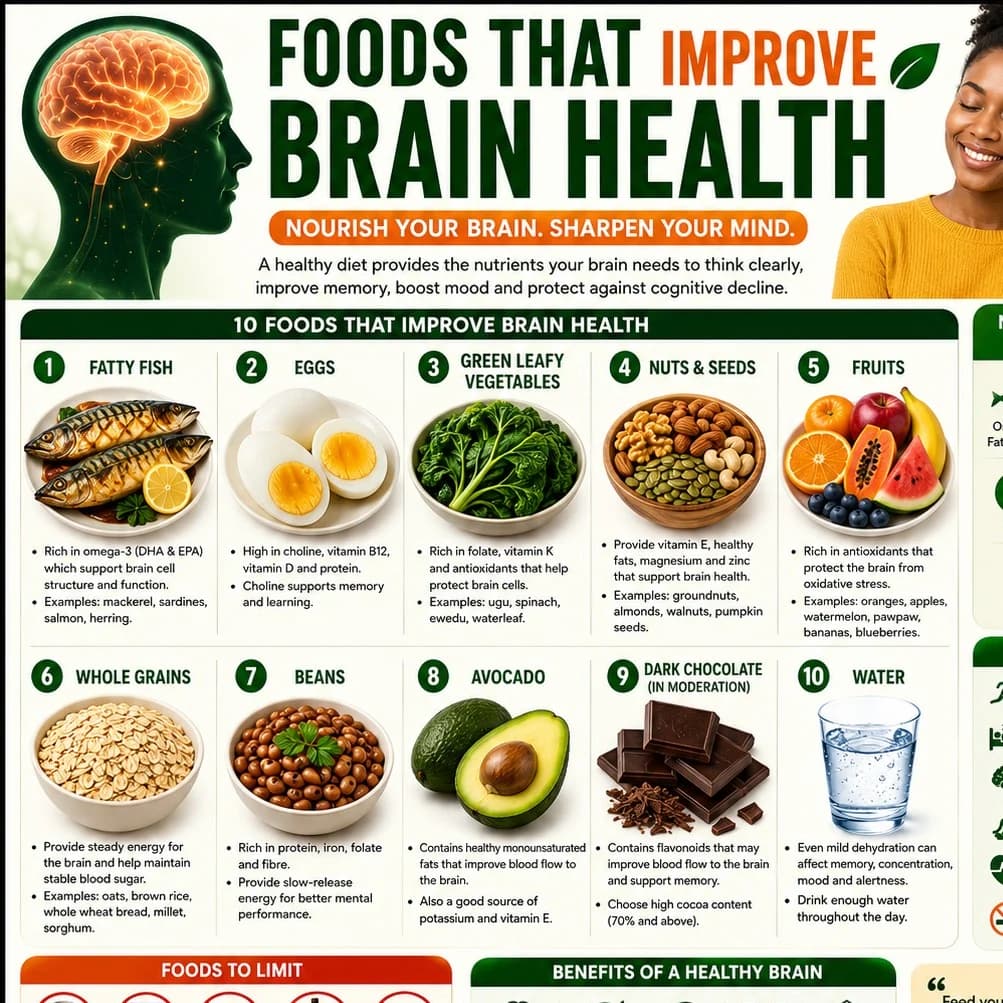
1. Fatty Fish
Fatty fish are rich in omega-3 fatty acids (DHA and EPA), which are essential for brain cell structure and communication.
Good choices include:
Mackerel (Titus)
Sardines
Salmon
Herring
Aim to eat fish at least twice a week.
2. Eggs
Eggs provide important nutrients such as:
Choline (supports memory)
Vitamin B12
Vitamin D
Protein
A boiled egg makes an excellent breakfast or snack.
3. Green Leafy Vegetables
Vegetables such as:
Ugu
Spinach
Ewedu
Waterleaf
These are rich in folate, vitamin K, and antioxidants that help protect brain cells.
4. Nuts and Seeds
Examples include:
Groundnuts
Almonds
Walnuts
Pumpkin seeds
They contain vitamin E, healthy fats, magnesium, and zinc that support brain health.
Enjoy a small handful daily.
5. Fruits
Fruits provide antioxidants that protect the brain from oxidative stress.
Excellent choices include:
Oranges
Apples
Watermelon
Pawpaw
Bananas
Blueberries (when available)
Eat at least two servings of fruit daily.
6. Whole Grains
Whole grains provide steady energy for the brain.
Choose:
Oats
Brown rice
Whole wheat bread
Millet
Sorghum
These foods help maintain stable blood sugar levels, improving concentration and energy.
7. Beans
Beans are rich in:
Protein
Iron
Folate
Fibre
They provide slow-release energy that supports mental performance throughout the day.
8. Avocado
Avocados contain healthy monounsaturated fats that support healthy blood circulation to the brain.
They also provide potassium and vitamin E.
9. Dark Chocolate (In Moderation)
Dark chocolate contains flavonoids that may improve blood flow to the brain and support memory and learning.
Choose dark chocolate with a high cocoa content and enjoy in moderation.
10. Water
Even mild dehydration can affect:
Memory
Concentration
Mood
Mental alertness
Aim to drink enough water throughout the day, especially in hot weather.
Nutrients That Support Brain Health
Your brain particularly needs:
Omega-3 fatty acids
Vitamin B12
Folate
Iron
Zinc
Magnesium
Vitamin D
Antioxidants
Eating a varied diet usually provides these nutrients.
Lifestyle Tips for a Healthy Brain
Alongside good nutrition:
Exercise regularly.
Sleep 7–9 hours each night.
Keep your blood pressure, blood sugar, and cholesterol under control.
Stay mentally active by reading, learning new skills, or solving puzzles.
Avoid smoking.
Limit alcohol intake.
Manage stress effectively.
Foods to Limit
Too much of the following may negatively affect brain health:
Sugary drinks
Highly processed foods
Deep-fried foods
Excess alcohol
Foods high in trans fats
Final Thoughts
A healthy brain begins with healthy daily habits. Eating nutrient-rich foods such as fish, eggs, leafy vegetables, beans, fruits, nuts, whole grains, and staying well hydrated can support memory, concentration, and long-term cognitive health. Combined with regular exercise, quality sleep, and stress management, these habits can help keep your brain functioning at its best throughout life.
Feed your brain today—your future self will thank you.
About the Author
Ayo Bashiru Itopa, RD is a Registered Dietitian and Clinical Nutritionist dedicated to promoting healthier lives through evidence-based nutrition education. He provides practical dietary guidance to help individuals prevent disease, improve well-being, and achieve optimal health.