Here's What You Should Know
Intermittent fasting has become one of the most popular approaches to weight loss. Many people claim it helps them lose weight quickly, improve blood sugar, and boost overall health.
But the question remains:
Is intermittent fasting safe?
The answer is yes—for many healthy adults, it can be safe and effective when done correctly. However, it is not suitable for everyone.
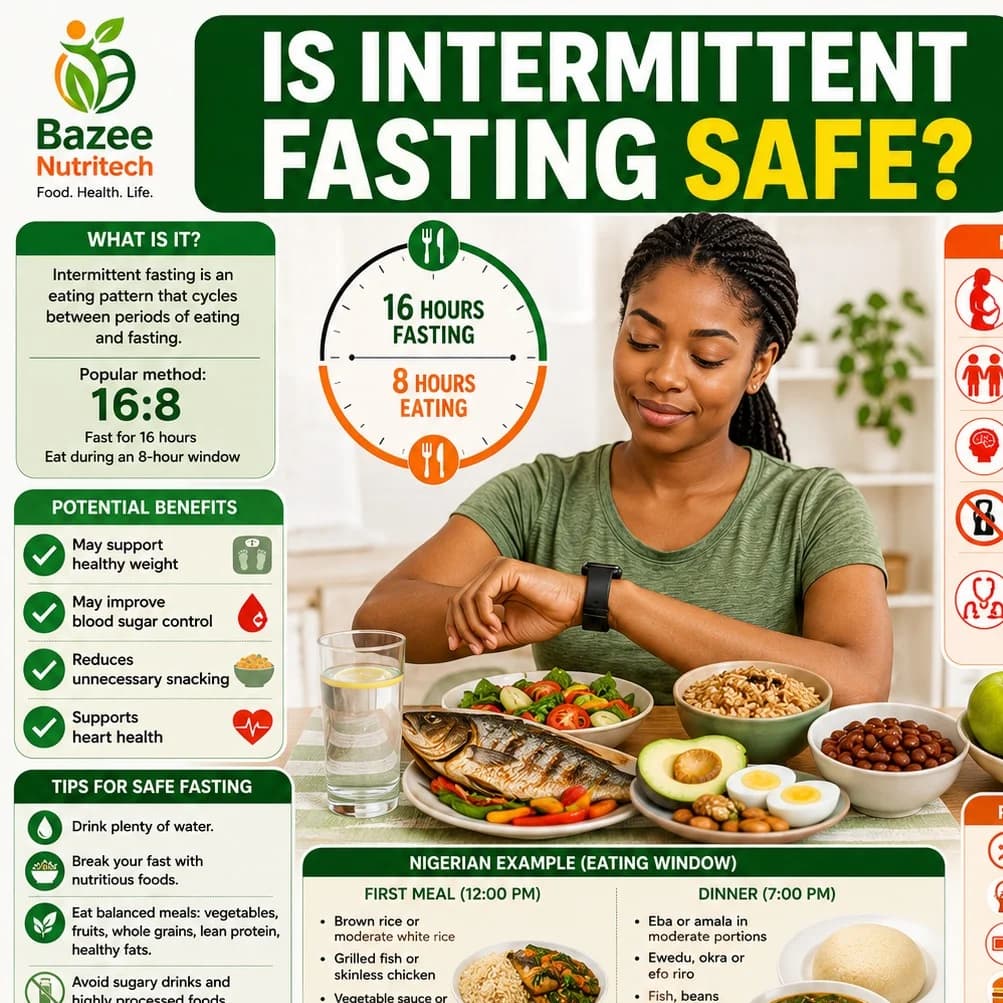
Intermittent fasting focuses on when you eat, not just what you eat. One common method is the 16:8 pattern, where you fast for 16 hours and eat during an 8-hour window.
✅ Potential Benefits of Intermittent Fasting
• May support healthy weight loss by reducing overall calorie intake.
• May improve insulin sensitivity in some people.
• Can help reduce unnecessary snacking.
• May improve blood sugar control in some individuals.
• May support heart health when combined with a balanced diet.
Remember, these benefits depend on what you eat during your eating window. Fasting is not a license to overeat unhealthy foods.
⚠️ Possible Risks
Intermittent fasting may cause:
• Hunger, especially during the first few days.
• Headaches or dizziness.
• Fatigue and difficulty concentrating.
• Overeating during eating periods.
• Low blood sugar in susceptible individuals.
If you have diabetes or take medications that lower blood sugar, fasting should only be done under medical supervision.
🚫 Who Should Avoid Intermittent Fasting?
It may not be appropriate for:
• Pregnant or breastfeeding women.
• Children and teenagers who are still growing.
• People with a history of eating disorders.
• Individuals who are underweight or malnourished.
• People with certain chronic illnesses unless advised by a healthcare professional.
🥗 Tips for Healthy Intermittent Fasting
✔️ Drink plenty of water.
✔️ Break your fast with nutritious foods—not junk food.
✔️ Include vegetables, fruits, whole grains, lean protein, and healthy fats.
✔️ Avoid sugary drinks and excessive processed foods.
✔️ Get enough sleep and stay physically active.
🍛 A Nigerian Example
If your eating window starts at 12 noon, a balanced first meal could include:
• Brown rice or moderate white rice.
• Grilled fish or skinless chicken.
• Vegetable sauce or steamed vegetables.
• Fresh fruit for dessert.
For dinner, choose a balanced meal such as:
• Eba or amala in moderate portions.
• Ewedu, okra, or efo riro.
• Fish, beans, or lean meat.
💡The Bottom Line
Intermittent fasting is not a miracle diet, but it can be a useful tool for some people when combined with healthy eating and an active lifestyle.
The best eating pattern is one that is safe, balanced, and sustainable for your individual health needs.
💬 Let's discuss!
Have you ever tried intermittent fasting?
Did it work for you, or did you find it difficult? Share your experience in the comments.
#IntermittentFasting #WeightLoss #HealthyEating #Nutrition #Dietitian #Nigeria #Wellness #Diabetes #PublicHealth #FoodAsMedicine #Feedcover #BazeeNutritech