Have you ever heard someone say:
"I hardly eat anything, but I keep gaining weight!"
Meanwhile, another person seems to eat large portions and never gains weight.
Is it true?
The answer is yes—but there is usually more to the story.
Let's explore the science behind it.
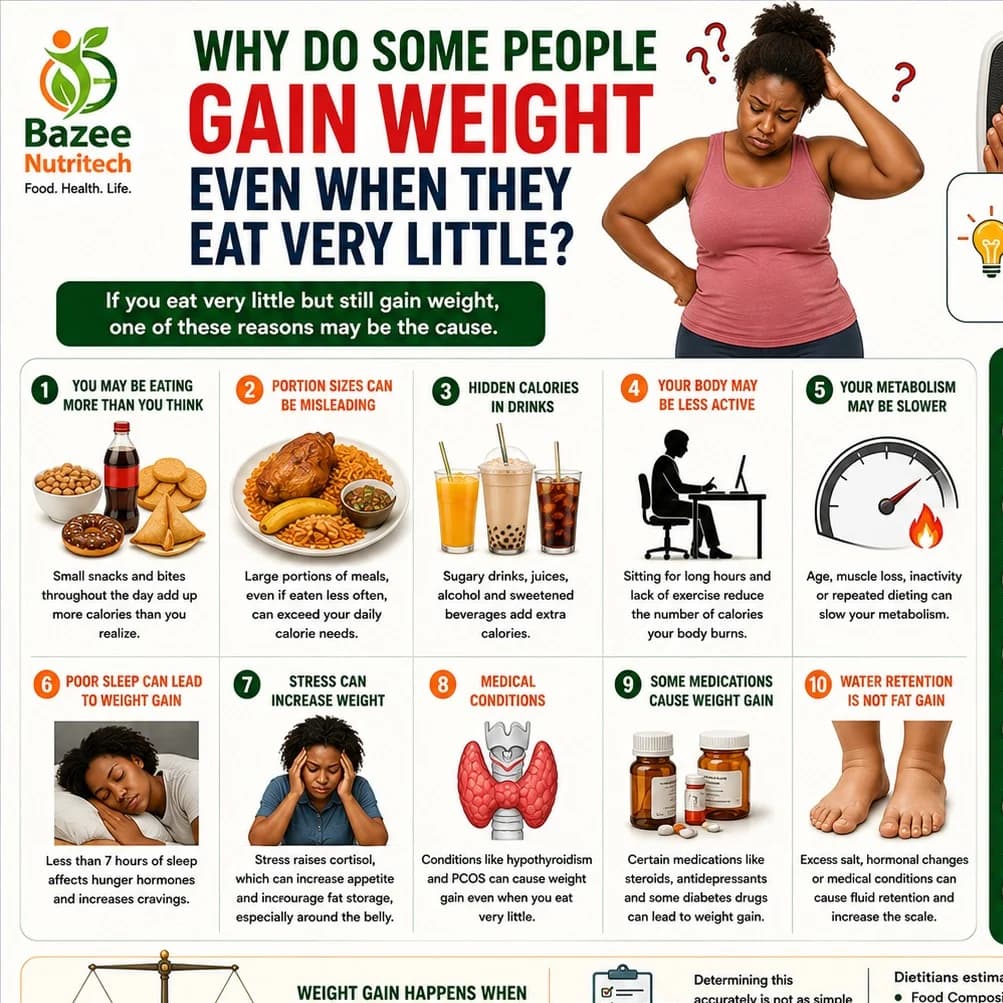
1️⃣ You May Be Eating More Than You Think
Many people underestimate how much they eat.
Small snacks throughout the day can quickly add up, such as:
A handful of groundnuts
A bottle of soft drink
Biscuits with tea
Meat pie
Suya
Chin chin
Sweetened yoghurt
These "small" foods can contribute hundreds of extra calories without you realizing it.
2️⃣ Portion Sizes Can Be Misleading
You may eat only two meals a day, but if the portions are very large, your calorie intake can still exceed your body's needs.
For example:
4 wraps of eba with egusi soup
A large bowl of jollof rice with fried chicken
A large plate of yam porridge with palm oil
Eating less often does not always mean eating fewer calories.
3️⃣ Hidden Calories in Drinks
Many people forget to count what they drink.
Common examples include:
Soft drinks
Malt drinks
Sweetened fruit juices
Bubble tea
Sugary coffee
Energy drinks
Alcohol
Liquid calories can significantly increase your daily energy intake.
4️⃣ Your Body May Be Less Active
Weight gain is not only about food.
If you:
Sit at a desk all day
Drive everywhere
Rarely exercise
Spend most evenings watching television
...your body burns fewer calories.
Even a moderate food intake may exceed your daily energy needs.
5️⃣ Your Metabolism May Be Slower
Everyone burns calories at a different rate.
Your metabolism can slow down because of:
Increasing age
Loss of muscle mass
Long periods of inactivity
Repeated crash dieting
A slower metabolism means your body requires fewer calories than before.
6️⃣ Poor Sleep Can Lead to Weight Gain
Sleeping less than 7 hours regularly can affect hormones that control hunger.
You may:
Feel hungrier
Crave sugary foods
Snack more often
Eat larger portions
Quality sleep is an important part of weight management.
7️⃣ Stress Can Increase Weight
Stress raises cortisol, a hormone that can:
Increase appetite
Trigger emotional eating
Encourage fat storage, especially around the abdomen
Many people eat not because they are hungry, but because they are stressed.
8️⃣ Medical Conditions
Certain health conditions can contribute to weight gain, including:
Hypothyroidism (underactive thyroid)
Polycystic Ovary Syndrome (PCOS)
Cushing's syndrome
If weight gain is sudden, unexplained, or associated with other symptoms, seek medical advice.
9️⃣ Some Medications Cause Weight Gain
Certain medications may increase appetite or promote weight gain, such as:
Some antidepressants
Steroids
Some diabetes medications
Some antipsychotic medications
Never stop taking prescribed medication without consulting your healthcare provider.
🔟 Water Retention Is Not Fat Gain
Sometimes the number on the scale increases because of fluid retention rather than body fat.
This may occur due to:
Eating too much salt
Hormonal changes
Pregnancy
Kidney disease
Heart disease
Not every increase in weight is due to excess body fat.
🧮 The Most Important Truth
Weight gain happens when you consistently consume more energy (calories) than your body uses over time.
However, determining this accurately is not as simple as guessing how much you eat.
Dietitians estimate energy intake using professional tools such as:
Food Composition Tables
Food Exchange Lists
Standard household measures
Portion size estimation
Individual calorie requirements based on age, sex, weight, height, activity level, and health status
This is why two people eating what appears to be the "same amount" can have very different results.
✅ What Can You Do?
✔ Pay attention to portion sizes.
✔ Limit sugary drinks and frequent snacking.
✔ Stay physically active.
✔ Sleep 7–9 hours each night.
✔ Manage stress.
✔ Eat more vegetables, fruits, legumes, and whole grains.
✔ If you're gaining weight despite healthy habits, consult a healthcare professional to rule out an underlying medical condition.
📝 Final Takeaway
If you feel you eat very little but keep gaining weight, don't blame yourself immediately. The reason may be hidden calories, portion sizes, low physical activity, poor sleep, stress, medication, or an underlying medical condition.
Rather than following internet advice, seek guidance from a qualified dietitian who can assess your eating pattern and energy needs accurately.
💬 Let's discuss!
Have you ever felt like you were eating very little but still gaining weight? What do you think was the reason?
#WeightGain #HealthyWeight #NutritionEducation #Dietitian #Nigeria #HealthyLiving #FoodAsMedicine #Feedcover #BazeeNutritech