
Why You Should Register Your Business with CAC in Nigeria: Advantages and Disadvantages of Not Doing It [2026 Guide]
Intro
If you’re selling anything in Nigeria — cupcakes, clothes, hair, graphics, or food — you have a business.
But is it a _real_ business?
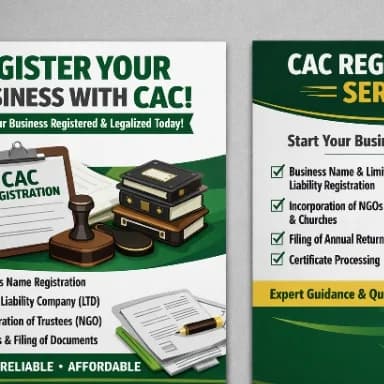
Registering with the Corporate Affairs Commission `CAC` is what turns your hustle into a legal business. Many people in Lagos, Port Harcourt and across Nigeria delay this step. But it can cost you money, customers, and opportunities.
Here’s the truth about registering your business name with CAC in 2026.
Advantages of Registering Your Business with CAC
1. Legitimacy and Trust
Customers, banks, and big companies take you more seriously. "Official Gm Ventures" sounds better than just "Gm cakes" on WhatsApp. People are more willing to pay you.
2. Access to Bank Loans and Grants
No CAC certificate = No business account = No loan. Government grants, BOI, SMEDAN, and NGO funding all require your CAC number.
3. Open a Business Bank Account
Banks won’t open a corporate account with just your personal details. With CAC, you can separate personal money from business money.
4. Protect Your Business Name
Once registered, no one else in Nigeria can use that name. This protects your brand as you grow on Instagram, TikTok, and Feedcover.
5. Qualify for Government Contracts
Schools, companies, and government agencies will not give you contracts if you’re not registered. This is where real money is.
6. Easy to Grow and Sell Later
A registered business can be transferred, partnered, or sold. An unregistered one dies with you.
Disadvantages of NOT Registering Your Business with CAC
1. You Can’t Scale
Big clients will ask for CAC. If you don’t have it, they’ll give the job to someone who does.
2. No Access to Funding
Banks and investors will not fund an "invisible" business. You’ll be stuck using personal savings forever.
3. Risk of Losing Your Name
Anyone can start using your business name tomorrow and register it before you. You’ll lose your brand.
4. Legal Problems
If there’s a dispute with a customer or supplier, you have no legal standing. The law doesn’t recognize unregistered businesses.
5. Limited Growth
You can’t bid for tenders, partner with companies, or expand to other states easily without CAC.
Conclusion: Should You Register?
If you’re serious about making money long-term, register.
You don’t need to wait until you’re "big". Start small, but start legal.
The disadvantage of _not_ registering is bigger than the money you’ll spend today. You’re basically telling the government and big customers: "I’m not serious yet."
Start your business the right way. Your future self will thank you.
Have you registered your business yet? What’s stopping you? Let’s discuss in the comments.