Nourish Yourself, Nourish Your Baby 🤰🥗
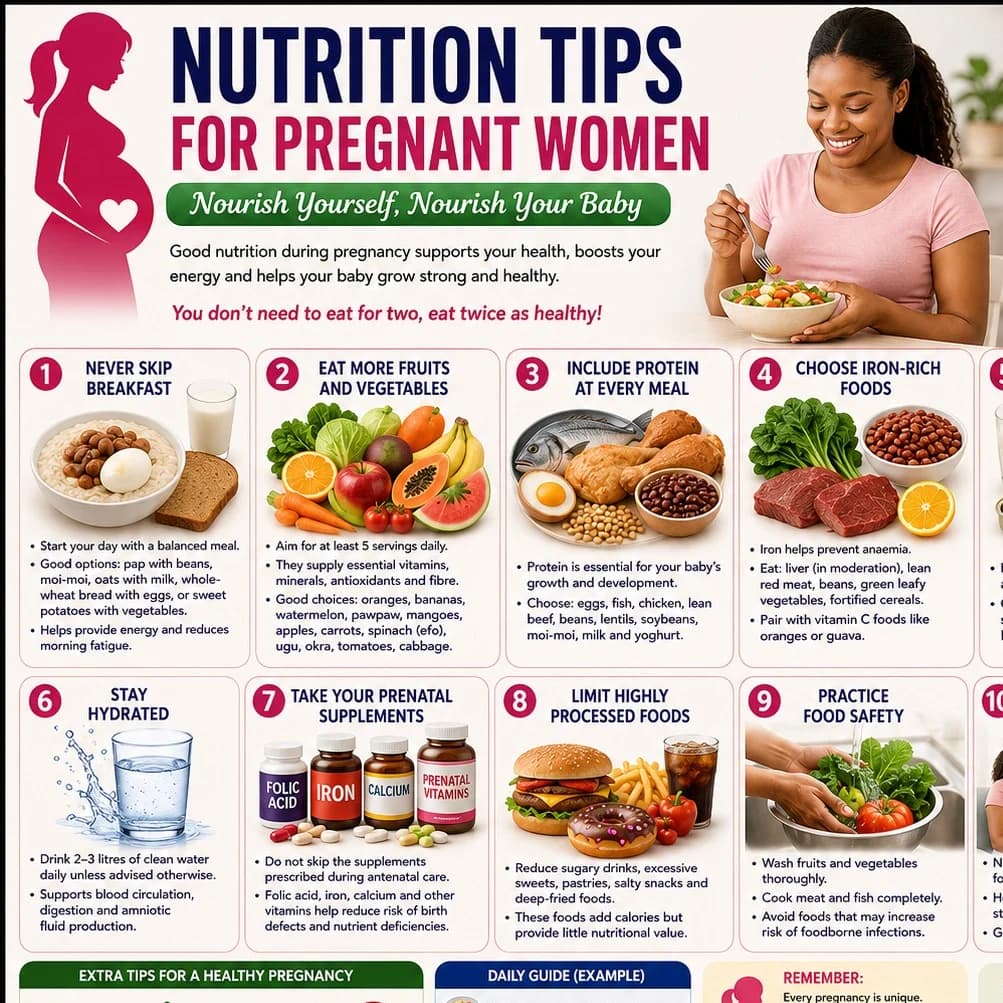
Pregnancy is one of the most important periods in a woman's life. What you eat doesn't just affect your health—it also plays a vital role in your baby's growth, brain development, immune system, and birth outcomes.
You don't need to "eat for two." Instead, focus on eating twice as healthy.
Here are practical nutrition tips every pregnant woman should follow:
1. Never Skip Breakfast
Start your day with a balanced meal such as pap (ogi) with beans or moi-moi, oats with milk, whole-wheat bread with eggs, or sweet potatoes with vegetables. A healthy breakfast provides energy and helps reduce morning fatigue.
2. Eat More Fruits and Vegetables
Aim for at least five servings daily. They supply essential vitamins, minerals, antioxidants, and fibre that support your baby's development and help prevent constipation.
Good choices include oranges, bananas, watermelon, pawpaw, mangoes, apples, carrots, spinach (efo), ugu, okra, tomatoes, and cabbage.
3. Include Protein at Every Meal
Protein is essential for your baby's growth and the development of muscles and organs.
Healthy protein sources include:
• Eggs
• Fish
• Chicken
• Lean beef
• Beans
• Lentils
• Soybeans
• Moi-moi
• Milk and yoghurt
4. Choose Iron-Rich Foods
Pregnancy increases your need for iron to prevent anaemia.
Eat foods such as:
• Liver (only in moderation and according to your healthcare provider's advice)
• Lean red meat
• Beans
• Green leafy vegetables
• Fortified cereals
Pair iron-rich foods with vitamin C sources like oranges or guava to improve iron absorption.
5. Get Enough Calcium
Calcium helps build your baby's bones and teeth while protecting your own bone health.
Choose:
• Milk
• Yoghurt
• Cheese
• Sardines
• Soy milk (fortified)
• Green leafy vegetables
6. Stay Hydrated
Drink 2–3 litres of clean water daily unless your healthcare provider advises otherwise. Proper hydration supports blood circulation, digestion, and amniotic fluid production.
7. Take Your Prenatal Supplements
Eat healthy foods, but don't skip the supplements prescribed during antenatal care. Folic acid, iron, calcium, and other prenatal vitamins help reduce the risk of birth defects and nutrient deficiencies.
8. Limit Highly Processed Foods
Reduce your intake of sugary drinks, excessive sweets, pastries, salty snacks, and deep-fried foods. These foods add calories but provide little nutritional value.
9. Practice Food Safety
Wash fruits and vegetables thoroughly, cook meat and fish completely, and avoid foods that may increase the risk of foodborne infections.
10. Attend Regular Antenatal Clinics
Nutrition counselling is an important part of antenatal care. Your healthcare team can monitor your weight, nutritional status, and your baby's growth while providing personalized dietary advice.
Remember: Every pregnancy is unique. If you have diabetes, hypertension, severe morning sickness, multiple pregnancy, or any medical condition, consult a Registered Dietitian or your healthcare provider for individualized nutrition guidance.
A healthy pregnancy starts with healthy nutrition. Every balanced meal is an investment in both the mother's health and the baby's future.
💬 Are you pregnant, planning a pregnancy, or supporting someone who is? Which nutrition tip do you think is most important? Share your thoughts below!
#Pregnancy #MaternalHealth #PregnancyNutrition #HealthyPregnancy #Dietitian #Nutrition #Women'sHealth #BabyHealth #AntenatalCare #HealthyEating #Nigeria #PublicHealth #Feedcover