
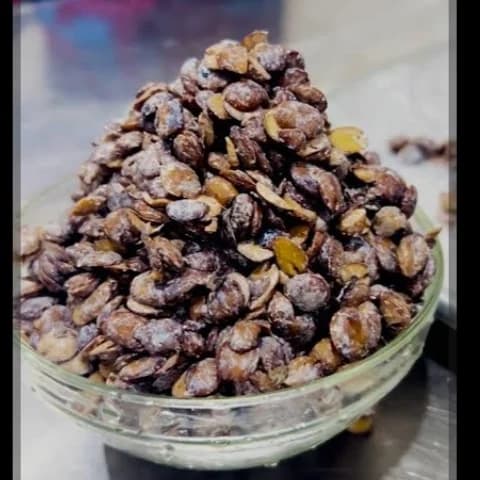
Ever wondered why the very ingredient that makes your kitchen smell "pungent" is the same one responsible for that addictive, deep, savory soul in your favorite Nigerian soups?
Welcome to the science of Locust Beans (Parkia biglobosa), or as we know it, Iru/Dawadawa.
The Science Behind the Aroma:
Iru is a product of controlled microbial fermentation. During this process, specific bacteria (primarily Bacillus species) break down the complex proteins in the locust bean seeds into simpler amino acids, specifically glutamate.
That "polarizing" aroma you notice? That’s the result of volatile organic compounds, including ammonia and various sulfur-containing compounds, produced as these proteins break down. While they may smell intense at first, they are the chemical foundation of Umami—the "fifth taste" that provides that rich, mouth-filling, savory depth.
The Transformation:
When you add Iru to hot oil or boiling broth, the heat helps dissipate the harsh, volatile ammonia compounds while the glutamates and other flavor-active compounds bond with your ingredients. The result is a transformative flavor profile that synthetic seasonings struggle to replicate.
As a Food Technologist at Mariacathie Root Lab, I don’t just see Iru as a seasoning—I see it as a masterpiece of traditional food science that we are currently studying to optimize for our clean-label functional food projects.
Tip:
If the aroma is too strong for your preference but you still want that Umami hit, try lightly sautéing your Iru in oil before adding your base liquids. This helps "mellow" the volatile compounds while locking in the savory depth.
Let’s talk:
Are you Team "I can’t cook soup without a mountain of Iru," or are you on the fence because of the aroma?
Drop your thoughts below—I’m curious to know how you use it in your own kitchen! 👇
#FoodScience #MariacathieRootLab #LocustBeans #Iru #NigerianCuisine #CleanLabel #FoodTechnology #Umami #CulinaryHeritage #ScienceOfFlavor