Overview:
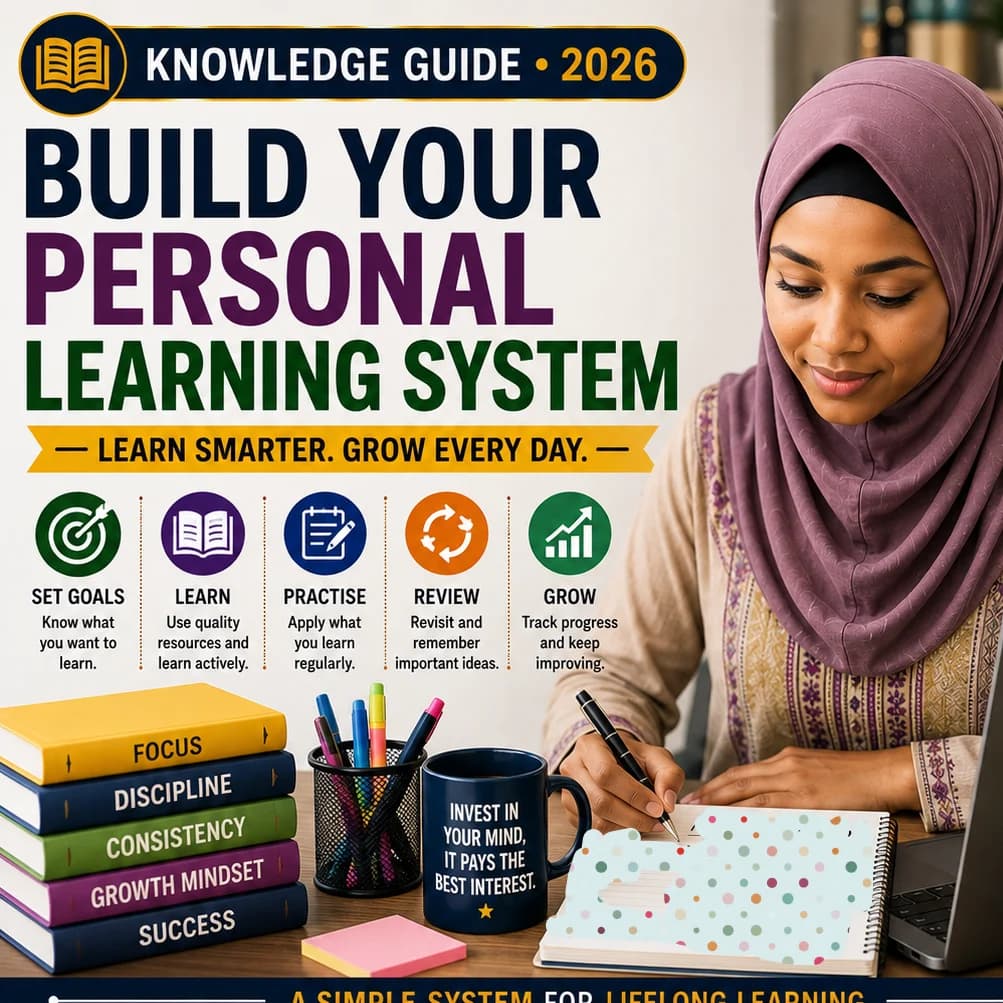
This guide outlines a structured methodology for developing an individualized learning system designed to enhance cognitive efficiency, knowledge retention, and skill acquisition. It addresses the selection of relevant subjects, systematic organization of information, effective recall mechanisms, judicious integration of artificial intelligence, and the sustained development of high-value competencies.
Core Themes:
- Designing a personalized learning architecture
- Optimizing learning efficacy in 2026
- Best practices for structuring educational efforts
- Techniques for long-term knowledge retention
- Evidence-based strategies for lifelong learning
- Establishing a sustainable learning routine
- Integrating AI as a cognitive support tool
- Advancing personal development and metacognitive skills
- Cultivating expert-level learning proficiency
Introduction
The contemporary landscape is characterized by rapid technological evolution, shifting professional demands, and the continuous emergence of novel concepts and tools. In this context, the capacity for sustained, purposeful learning has become a critical competency. However, increased consumption of educational content does not necessarily correlate with improved understanding or application. Many individuals accumulate resources—books, videos, articles, digital courses—without implementing a coherent framework to transform input into actionable knowledge.
A personal learning system offers a solution to this challenge. It constitutes a deliberate, goal-oriented process for identifying learning priorities, curating credible materials, engaging in active practice, reinforcing memory, and applying insights in practical contexts.
Defining a Personal Learning System
A personal learning system is a structured, adaptive mechanism for continuous intellectual development, aligned with an individual’s objectives, interests, obligations, and temporal constraints. It need not be complex; foundational components may include a journal, scheduling tool, digital note repository, vetted sources, and a consistent weekly schedule. The primary objective is to replace haphazard learning with intentional, strategic engagement.
Rationale for a Structured Learning Approach
In the absence of a systematic approach, learners often exhibit fragmented attention, shifting between domains—business, artificial intelligence, technical skills—without achieving depth in any. A formalized system enables:
- Sustained focus on priority areas
- Efficient categorization and retrieval of information
- Incremental mastery of applicable skills
- Reinforcement of core concepts through spaced repetition
- Objective assessment of advancement
- Translation of theoretical knowledge into real-world solutions
Seven-Step Framework for System Development
1. Define Specific Learning Objectives
Begin with precise, measurable aims. Replace vague intentions such as “learning technology” with targeted domains like data analysis, digital marketing, coding, or technical writing. Specificity facilitates resource allocation and progress tracking.
2. Curate High-Quality Learning Resources
Prioritize quality over quantity. Select a limited set of authoritative texts, courses, instructors, or platforms. Excessive sourcing contributes to cognitive overload and diminishes learning efficacy.
3. Engage in Active Learning
Passive consumption yields minimal retention. Employ strategies such as paraphrasing in personal notes, formulating inquiries, self-explanation, and immediate practice. Cognitive engagement directly enhances comprehension and utility.
4. Implement Regular Review Cycles
Without periodic reinforcement, learned material rapidly decays. Schedule weekly intervals to revisit key concepts using summaries, flashcards, self-generated questions, or reflective annotations to strengthen memory consolidation.
5. Apply Knowledge Practically
Utility emerges through implementation. Writers should produce texts, designers develop projects, and business learners analyze actual organizational challenges. Application exposes gaps in understanding and reinforces mastery.
6. Integrate Artificial Intelligence Strategically
AI tools can augment learning by clarifying complex topics, generating practice exercises, organizing conceptual frameworks, and offering alternative explanations. However, reliance must be tempered: users should attempt independent problem-solving before consulting AI, verify outputs, and ensure conceptual grasp. The aim is cognitive augmentation, not substitution.
7. Establish a Sustainable Weekly Routine
Extended daily sessions are unnecessary. Allocate focused intervals—30 to 60 minutes multiple times per week—structured around:
- Acquisition: Engaging new material
- Practice: Applying concepts
- Review: Revisiting prior content
- Application: Executing real tasks
- Reflection: Assessing progress and planning next steps
Consistency outweighs intensity in long-term knowledge accumulation.
Common Learning Pitfalls
Recurrent errors undermine progress:
- Concurrent pursuit of multiple disciplines
- Accumulation of unengaged resources
- Passive viewing without hands-on practice
- Neglect of periodic revision
- Overreliance on AI-generated responses
- Unfavorable comparisons with advanced practitioners
- Premature abandonment due to perceived slow progress
Realistic expectations and process-oriented focus mitigate these issues.
Practical Recommendations
- Maintain organized repositories of learning materials
- Document emerging questions during study
- Archive completed projects as evidence of growth
- Teach concepts to others to reinforce understanding
- Conduct monthly evaluations of progress
- Align learning goals with personal values and life objectives
Frequently Asked Questions
- Are expensive courses necessary?
No. Value derives from content quality, not cost. Numerous reputable resources exist in public libraries, open-access platforms, and established educational websites.
- How much time is required?
There is no fixed requirement. Even 30 minutes of focused, consistent effort can yield significant results.
- Can multiple skills be pursued simultaneously?
While feasible, concentrating on one primary domain typically accelerates measurable progress.
- How can retention be improved?
Utilize active recall, spaced repetition, applied practice, and teaching to consolidate knowledge.
Key Conclusions
- Set well-defined learning goals
- Rely on credible, vetted sources
- Prioritize active engagement over passive consumption
- Schedule regular review sessions
- Apply knowledge in authentic contexts
- Use AI as a supplementary tool, not a cognitive crutch
- Develop a realistic, repeatable weekly structure
- Emphasize consistency rather than flawless execution
Ethical Considerations in Learning
Knowledge entails responsibility. Learning should extend beyond self-interest to include problem-solving, community contribution, and ethical innovation. Responsible scholarship involves respecting intellectual property, rejecting academic dishonesty, critically evaluating sources, and maintaining intellectual humility—acknowledging both mastery and ongoing gaps in understanding.
Conclusion
A personal learning system requires neither complexity nor excessive resources. Its function is to impose structure, direction, and accountability on the learning process. By selecting meaningful topics, engaging reliable information, practicing deliberately, reviewing systematically, and applying insights, individuals can navigate an era of information flux effectively. In a world where knowledge rapidly evolves, the ability to learn continuously surpasses the value of static memorization.
Begin incrementally: select one relevant skill, establish a minimal viable routine, and initiate purposeful study. Over time, disciplined micro-habits compound into substantial intellectual capital, enabling personal advancement, expanded opportunities, and enduring developmental momentum.
Call to Action
Identify one skill or subject you intend to master by the end of 2026. Document this objective, select a single authoritative resource, and undertake your first learning session today.
For further guidance on digital literacy, critical thinking, productivity, and ethical technology use, follow the Knowledge Guide Series.
More@