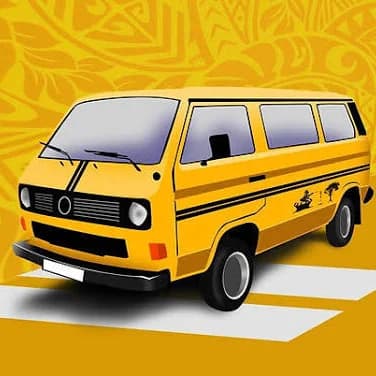


Ask anyone to picture Lagos, and chances are they’ll mention the yellow Danfo.
It’s as much a symbol of the city as yellow taxis are to New York or red double-decker buses are to London.
But the thing that surprised me is that Danfo didn’t originate in Nigeria.
Its story actually begins in Germany.
Back in the 1950s, Volkswagen introduced a small van called the Volkswagen Transporter, also known in many countries as the Kombi. It was built to transport both people and goods efficiently.
Years later, these vans found their way to Lagos.
As the city’s population increased, transport operators realized they were perfect for navigating busy roads. They were relatively affordable, easy to maintain, and could carry a good number of passengers without taking up too much space.
Over time, the Volkswagen Transporter became one of the most common commercial vehicles in Lagos. Other minibuses like the Toyota HiAce and Nissan Urvan eventually joined the roads, but by then, the name Danfo had already become part of the city’s identity.
Then came the yellow paint.
Lagos required commercial buses to be painted yellow with black stripes, making them easy to identify from a distance. That distinctive look became inseparable from the city itself.
Today, the Danfo is more than public transport.
You’ll see it in Nigerian movies, Afrobeats music videos, paintings, fashion collections, souvenirs, and even international exhibitions celebrating Lagos culture.
It’s noisy, unpredictable and sometimes frustrating, but it’s also one of the strongest symbols of Lagos.
It’s fascinating to think that a vehicle designed in Germany ended up becoming something so deeply Nigerian.
If the Danfo disappeared tomorrow, do you think Lagos would still feel like Lagos?