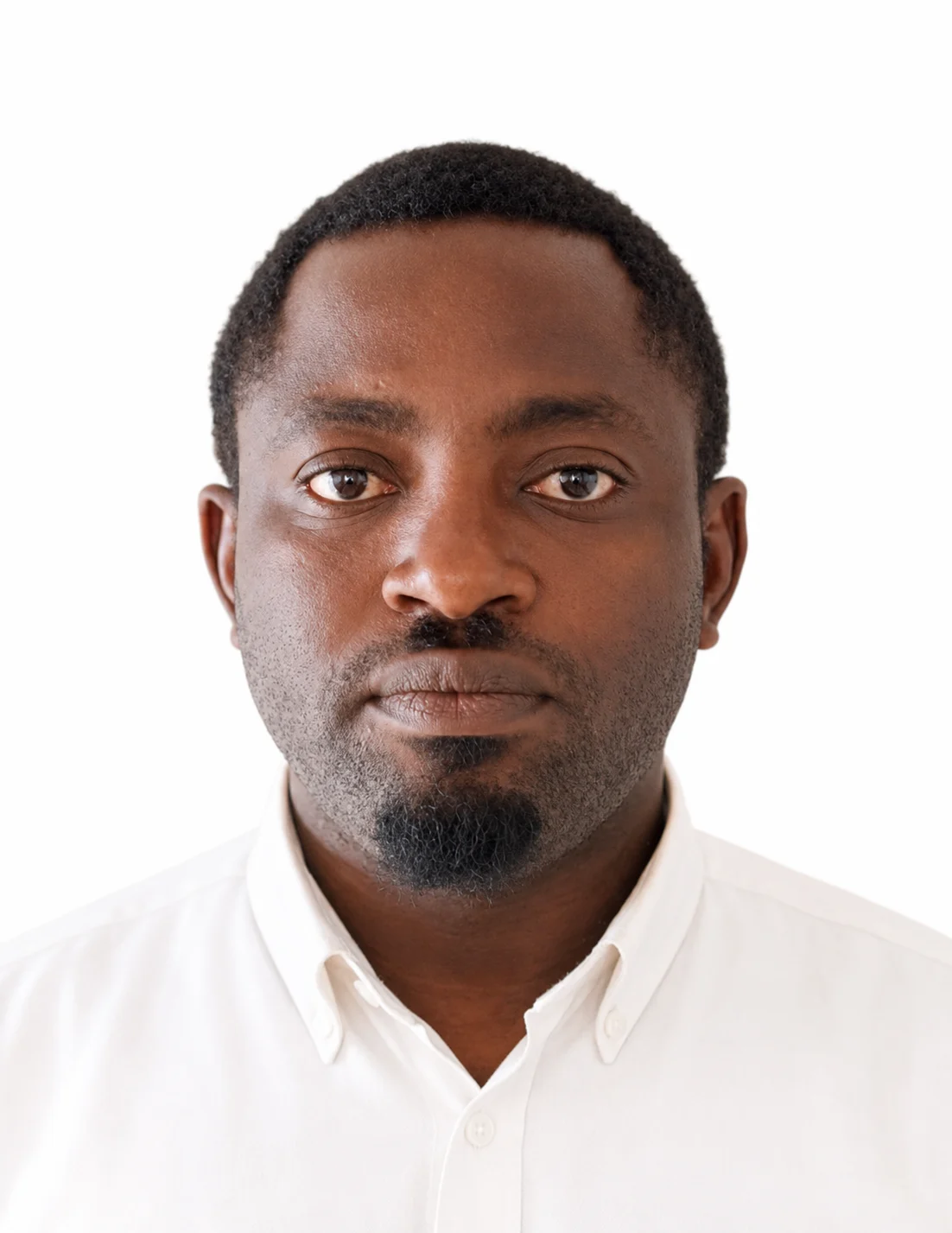

By Oluwatobiloba Gideon Oludayomi
I remember where I was when EndSARS happened. I remember the songs, the flags, the fists in the air, the strangers who suddenly felt like family because we all wanted the same thing. For a few weeks, Nigeria felt like it was holding its breath, waiting to exhale into something new.
Then it ended. And if I am honest with you, the way it ended still disappoints me till today.
Not because the anger was wrong. The anger was earned. Not because the courage was fake. That courage was real, and many paid a heavy price for it. My disappointment is simpler than that. We had a movement with global attention, with international sympathy, with a generation united by pain and purpose, and we let it dissolve into hashtags and anniversary posts. We had the ingredients for a structure. We ended up with a memory.
Let me say this plainly. Emotion without structure is a fire without a fireplace. It burns bright, it burns hot, it burns everything close to it, and then it burns out, leaving ash where a home could have been built.
EndSARS was never just about police brutality. Every serious observer knew that. It was youths saying, in one loud national voice, that they were tired of being ruled by a system that saw them as a threat instead of a resource. Data from the National Bureau of Statistics has consistently shown that Nigerians under thirty five make up well over half of the population. We are not a minority shouting from the margins. We are the demographic majority of this country, and yet our political weight rarely matches our number.
That imbalance did not happen by accident. It happened because energy without organization always gets absorbed by whatever structure already exists. When you refuse to build your own house, you end up living as a tenant in someone else's. That is exactly what happened after EndSARS. The state waited us out. The emotion cooled, as emotion always does, and no political structure was left standing to hold the ground we had gained.
I am not writing this to reopen wounds. I am writing this because a wound that is not studied cannot become wisdom. If we do not name what went wrong, we will keep repeating it under new hashtags with new names.
Protest is emotional. It asks for your presence and your voice. Politics is structural. It asks for your time, your strategy, your patience, and sometimes your money. Many of us were ready to give the first. Very few of us were ready to give the second.
Here is a truth I have learned in over a decade of building businesses, leading teams, and watching movements rise and fall in this country. Passion gets you noticed. Structure gets you power. And power, whether we like the word or not, is what changes policy, budgets, and the direction of a nation.
The ballot box does not reward the loudest voice on the day of the protest. It rewards the most organized voice on the day of the election, and every day leading up to it. It rewards voter registration drives that started a year before, not a week before. It rewards candidates who were vetted, mentored, and financed quietly by people who understood that politics is a marathon dressed in the clothes of a hundred metre dash.
Ecclesiastes 9 verse 11 puts it with a wisdom that still humbles me. It says the race is not to the swift, nor the battle to the strong, but time and chance happen to them all. Speed is not the same as strategy. Strength of feeling is not the same as strength of plan. If we do not understand this, we will keep mistaking the noise of a moment for the substance of a movement.
I understand why many young Nigerians feel unmotivated now. You poured yourself into a cause, you watched government respond with panels that produced reports nobody implemented, you watched some of your own leaders get compromised, and you watched the system return to business as usual with alarming ease. That kind of disappointment settles into the bones. It makes you want to withdraw and simply survive, rather than engage and try to fix a system that seems designed to outlast your patience.
I will not insult that pain by pretending it is simple to overcome. But I will remind you of something scripture has taught me repeatedly in seasons of personal failure and business collapse. Galatians 6 verse 9 says let us not grow weary while doing good, for in due season we shall reap if we do not lose heart. Notice it does not say the harvest is immediate. It says the harvest comes in due season, to those who do not quit in the meantime.
Discouragement is not evidence that the cause was wrong. Discouragement is often just evidence that the timeline did not match your expectation. Nations do not turn on emotion. Nations turn on organized, sustained, generational effort. If we understand that from the start, we stop measuring our impact by how fast the transformation appears and start measuring it by how consistent our presence remains.
So what do we do now. How do we take the fire that EndSARS lit and finally build the fireplace it deserved.
First, we localize our politics. Most young Nigerians can name the president faster than they can name their local government chairman. That is backwards. Local government and state assembly are where budgets are decided close to your daily life, where a young person with the right structure can actually win a seat without needing billions of naira. Build influence where influence is buildable, then grow upward.
Second, we professionalize our participation. Establish our own political parties or adopt one and attend party congresses. Understand how delegates are selected. Learn how a ward functions. This is unglamorous work. Nobody makes a viral video registering as a delegate. But this unglamorous work is exactly what our elders who currently run this country did decades ago, while we were busy assuming politics would simply hand itself over to good intentions.
Third, we fund our own. One of the quiet truths of Nigerian politics is that many capable young people lose elections not because voters rejected them, but because they could not sustain a campaign financially against better funded opponents. If The Dominion Guild Network and communities like it can begin pooling resources toward vetted young candidates, the way cooperative societies pool resources for farmland and business, we begin to shift the financial gatekeeping that has kept sincere youths out of real power.
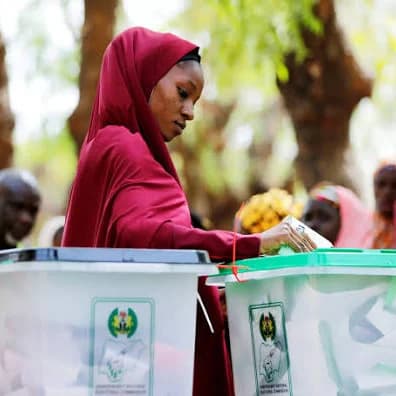
Fourth, we vote like our lives depend on it, because they genuinely do. Data from Nigeria's electoral body has shown repeatedly that youth voter turnout remains disproportionately low compared to our population share. A generation that dominates the census but abandons the ballot box has no moral ground to complain about the government it did not seriously try to shape.
I have built businesses that failed. I have watched structures I was proud of collapse because I trusted energy more than systems. That failure taught me something I now teach others constantly. Passion is fuel, not foundation. You still need to lay blocks, count costs, and plan for the long journey, or the passion simply burns through the resources meant to sustain the vision.
Our nation is no different from a business or a marriage or a farm. It does not run on how deeply we feel about it. It runs on how deliberately we build it, sustain it, and defend it, season after season, election after election, disappointment after disappointment.
There is a quiet kind of courage that the world does not applaud the way it applauds street protest. It is the courage to keep showing up to unglamorous meetings, to keep registering to vote even when the last election disappointed you, to keep mentoring one younger sibling or neighbour into political consciousness even when nobody is filming it. That courage builds nations. Loud courage starts revolutions. Quiet courage finishes them.
You did not waste your voice during EndSARS. You revealed something about this generation that can never be denied again, that we can organize, that we can unite across tribe and religion for a shared cause, that we are watching and we are willing to act. That revelation is not lost. It is simply waiting for its next assignment, and that assignment is the ballot box.
Nehemiah did not rebuild the wall of Jerusalem through one dramatic uprising. He rebuilt it brick by brick, family by family, section by section, while enduring mockery and threats the entire time. Nehemiah chapter 4 shows him arming the builders even as they built, because he understood that vision under construction will always attract opposition. Our own wall, the Nigeria we dream of, will be rebuilt the same way. Not by one more viral moment, but by a thousand unseen decisions to stay engaged.
Here is a line I want you to carry with you. A generation that only knows how to protest will always be powerful for a season. A generation that learns how to govern will be powerful for a lifetime.
We did not fail EndSARS. We simply have not finished the assignment it started. The street gave us the spark. The ballot box is asking us for the structure. Let us not disappoint ourselves twice.
What do you think? Did EndSARS truly fail, or did it simply hand us an unfinished assignment? I would love to read your honest thoughts in the comments, agree with me, challenge me, or share what you believe genuine youth political structure should look like in Nigeria today.
* * *
Oluwatobiloba Gideon Oludayomi is a practical writer, a scripture addict, and a versatile entrepreneur building wealth through agriculture, real estate, and enterprise. He writes on faith, personal development, business systems, mindset re-engineering and the Nigerian condition. He is the Convener of the Dominion Guild Network — an ecosystem of high-value individuals, young and determined to becoming an empowered generation. He is also the author of "Build It to Last", "I Thought I Married a Wife" (a novel), and "Practical Love".