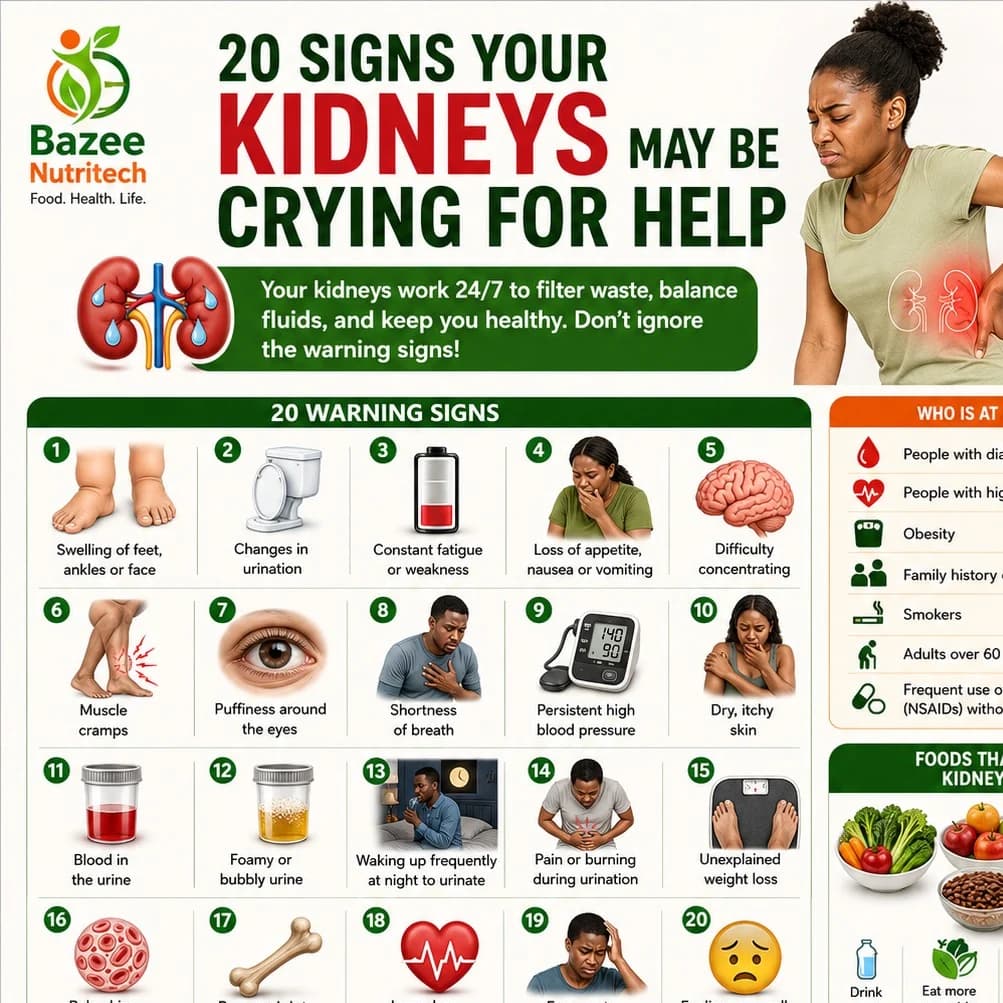
Your kidneys work 24/7 to filter waste, balance fluids, regulate blood pressure, and keep your body healthy. Unfortunately, kidney disease often develops silently, with symptoms appearing only after significant damage has occurred.
Recognizing the warning signs early can help protect your kidneys and prevent serious complications.
Here are some signs to watch for:
🩸 1. Swelling of the Feet, Ankles, or Face
When the kidneys cannot remove excess fluid effectively, it builds up in the body, causing swelling (edema).
🚽 2. Changes in Urination
Pay attention if you notice:
Urinating more or less than usual
Waking up frequently at night to urinate
Foamy or bubbly urine (may indicate protein loss)
Blood in the urine
Pain or burning during urination
😴 3. Constant Fatigue or Weakness
Damaged kidneys produce less erythropoietin, a hormone that helps make red blood cells. This can lead to anemia, causing tiredness and weakness.
🤢 4. Loss of Appetite, Nausea, or Vomiting
Waste products can accumulate in the blood when the kidneys are not functioning properly, reducing appetite and causing nausea.
🧠 5. Difficulty Concentrating
A buildup of toxins and anemia can reduce oxygen delivery to the brain, making it harder to focus.
🌙 6. Muscle Cramps
Electrolyte imbalances, especially low calcium or abnormal potassium levels, may cause frequent muscle cramps.
💨 7. Persistent Puffiness Around the Eyes
Protein leaking into the urine may cause swelling around the eyes, especially in the morning.
😮💨 8. Shortness of Breath
Excess fluid can accumulate in the lungs, or anemia may reduce oxygen delivery, making breathing difficult.
🌡️ 9. Persistent High Blood Pressure
High blood pressure can both damage the kidneys and result from kidney disease. Poorly controlled hypertension is a major risk factor.
🧴 10. Dry, Itchy Skin
Healthy kidneys maintain mineral balance. Kidney disease can cause dry, itchy skin due to disturbances in these minerals.
Who Is at Higher Risk?
People with diabetes
People with high blood pressure
Individuals with obesity
Those with a family history of kidney disease
Smokers
Adults over 60 years
People who frequently misuse painkillers (NSAIDs) without medical advice
Foods That Support Kidney Health
🥬 Vegetables
🍎 Fruits
🐟 Fish
🫘 Beans (in appropriate amounts depending on kidney function)
🌾 Whole grains
💧 Adequate water intake (unless a healthcare provider advises fluid restriction)
Reduce:
Excess salt
Sugary drinks
Excess alcohol
Highly processed foods
Frequent consumption of very salty snacks and instant noodles
Don't Ignore the Signs
Kidney disease can often be managed effectively when detected early. If you notice any of these symptoms, especially if you have diabetes or high blood pressure, speak with a healthcare professional. Simple tests such as a urine test, blood creatinine, estimated glomerular filtration rate (eGFR), and blood pressure check can provide valuable information about your kidney health.
💬 Let's discuss!
Have you ever had a kidney function test or urine test? What healthy habits do you practice to protect your kidneys?
#KidneyHealth #Nutrition #HealthyLiving #Dietitian #Nigeria #PublicHealth #PreventiveHealth #Wellness #Feedcover #BazeeNutritech