Have you ever noticed that your shoes feel tighter in the evening than they did in the morning?
Or perhaps you've looked down after work and found that your feet or ankles are swollen.
This is a common problem, but it shouldn't always be ignored.
Let's look at why it happens.
💧 What Causes Swollen Feet?
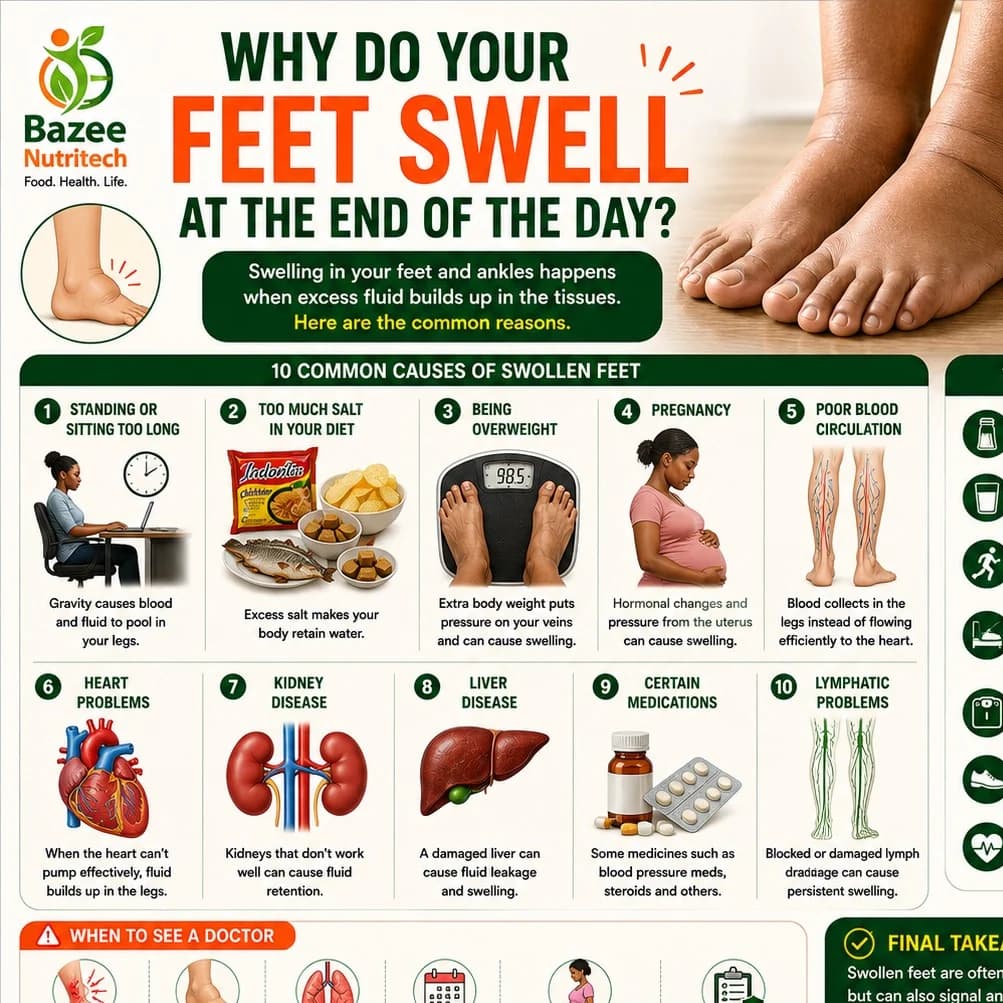
Swelling occurs when excess fluid collects in the tissues of your feet and ankles. This is called peripheral edema.
There are many possible causes—some are harmless, while others may need medical attention.
1️⃣ Standing or Sitting for Too Long
If your job involves standing all day (teachers, nurses, security personnel, traders, hairdressers) or sitting for long hours (office workers, drivers), gravity causes blood and fluid to pool in your legs.
This is one of the most common reasons for evening foot swelling.
What can help?
Walk around every hour if you sit for long periods.
Avoid standing in one position for too long.
Elevate your legs when you get home.
Wear comfortable footwear.
2️⃣ Eating Too Much Salt
Excess salt causes your body to retain water, which can lead to swelling.
Common Nigerian foods that may contain high amounts of salt include:
Instant noodles
Excess stock cubes
Salted fish
Processed meats
Fast foods
Potato chips and other salty snacks
Reducing salt intake can make a noticeable difference.
3️⃣ Being Overweight
Extra body weight places additional pressure on your veins, making it harder for blood to return to the heart.
This can lead to fluid buildup in the legs and feet.
4️⃣ Pregnancy
Many pregnant women experience swollen feet, especially during the second and third trimesters.
This is often due to hormonal changes and the growing uterus putting pressure on blood vessels.
However, sudden or severe swelling, especially if accompanied by headache, blurred vision, or high blood pressure, needs urgent medical evaluation because it could indicate pre-eclampsia.
5️⃣ Poor Blood Circulation
As we age, or in people with weakened leg veins (chronic venous insufficiency), blood can collect in the lower legs instead of flowing efficiently back to the heart.
This often causes swelling that becomes worse later in the day.
6️⃣ Heart Problems
When the heart cannot pump blood effectively, fluid may accumulate in the legs, ankles, and feet.
Warning signs include:
Shortness of breath
Easy fatigue
Swelling in both legs
Difficulty lying flat because of breathlessness
This requires prompt medical assessment.
7️⃣ Kidney Disease
Healthy kidneys remove excess fluid and waste from the body.
If they are not working properly, fluid can build up and cause swelling.
Other signs may include:
Puffy eyes, especially in the morning
Reduced urine output
Persistent tiredness
High blood pressure
8️⃣ Liver Disease
The liver produces proteins that help keep fluid inside blood vessels.
When the liver is damaged, fluid can leak into surrounding tissues, causing swelling in the legs and sometimes the abdomen.
9️⃣ Certain Medications
Some medicines can cause swelling as a side effect, including:
Some blood pressure medications
Steroids
Certain diabetes medications
Hormonal medications
Never stop a prescribed medication without speaking to your healthcare provider.
🔟 Problems with the Lymphatic System
The lymphatic system helps remove excess fluid from body tissues.
If lymph drainage is blocked or damaged, persistent swelling can occur. This is called lymphedema.
🚨 When Should You See a Doctor?
Seek medical attention if:
Swelling affects only one leg and is painful or red.
Swelling appears suddenly.
You have chest pain or difficulty breathing.
The swelling persists for several days despite rest.
You are pregnant and develop sudden swelling with headache or blurred vision.
You have diabetes, kidney disease, heart disease, or liver disease.
✅ What Can You Do at Home?
✔ Reduce salt intake.
✔ Drink enough water.
✔ Walk regularly during the day.
✔ Avoid sitting or standing in one position for long periods.
✔ Elevate your feet above heart level for 20–30 minutes after work.
✔ Maintain a healthy body weight.
✔ Wear properly fitting shoes.
✔ Follow your healthcare provider's advice if you have an underlying medical condition.
📝 Final Takeaway
Swollen feet at the end of the day are often related to prolonged standing, sitting, excess salt intake, or pregnancy. However, persistent or severe swelling may be an early sign of heart, kidney, liver, or circulation problems.
Don't ignore swelling that keeps coming back—your body may be telling you that something needs attention.
💬 Let's discuss!
Have you ever experienced swollen feet after a long day? What do you think was the cause, and what helped relieve it?
#SwollenFeet #Edema #HealthEducation #HeartHealth #KidneyHealth #Dietitian #Nutrition #HealthyLiving #Nigeria #FoodAsMedicine #Feedcover #BazeeNutritech