
When I first heard the term “API,” I’ll admit I had no idea what it meant. People kept talking about REST APIs, endpoints, JSON, and I just nodded along, pretending I understood. But in reality, it felt complicated and distant, like some advanced concept I wasn’t ready for. Looking back, I realize that the reason I struggled at first was that I was trying to understand all the technical jargon instead of just grasping the simple idea behind it.
For me, the simplest way to understand an API is to think of it like a waiter at a restaurant. At first, this sounds strange, but it clicked when I visualized it. Imagine you’re at a table, and you want food from the kitchen. You don’t go into the kitchen yourself. Instead, you tell the waiter what you want. The waiter takes your request, communicates with the kitchen, and brings back your food. That’s exactly what an API does it’s the messenger between your application and another system.
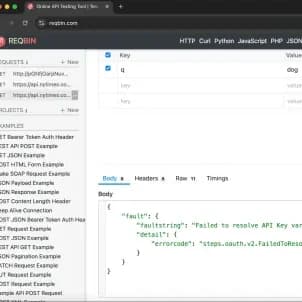
I remember the first time I actually used an API in a project. I was building a small weather app. Instead of manually entering weather data, I used a weather API to get the current temperature and conditions for any city. At first, I was intimidated by the URL, parameters, and the JSON response. But when I thought of it like sending a request to a waiter and receiving back exactly what I asked for, it made sense. I sent a request (asking for the weather in Lagos), the API processed it, and sent back a response with the data I needed.
Understanding APIs also changed the way I approach projects. I realized I didn’t need to reinvent the wheel. If there’s a system or service that already exists like payment gateways, maps, or social media I can communicate with it via an API and integrate it into my app. It saves time and allows me to build more powerful applications.