
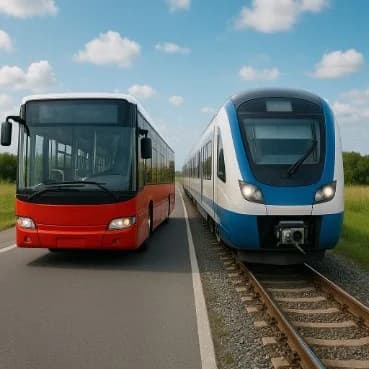
There has been an ongoing discussion regarding transportation options. When it comes to traveling by train, there is a distinct structure to the experience. Everything feels well-planned: you arrive, board the train, and once it starts moving, the journey feels controlled.
Traveling by train allows you to truly relax without the stress of traffic. You can open your laptop and work without constant shaking or interruptions. You can walk around inside the coaches if you grow tired of sitting. You can use the restroom without having to wait for the next scheduled stop. Additionally, you can predict your arrival time with greater accuracy, which helps in planning your day. The overall experience feels mentally lighter due to the absence of constant horn sounds, road congestion stress, and sudden stops for police checks every few minutes.
However, the limitations of train travel are clear. You are bound to fixed routes and set departure times. If you miss your train, it can leave you stranded, and once you arrive at your destination, you still need another mode of transportation to complete your journey.
In contrast, bus travel offers flexibility and access to a wider range of locations. With a bus, you can depart almost any time without waiting for a schedule. Buses can take you to places that trains do not reach, and you may be dropped closer to your exact destination in many cases. The journey allows for more real-time interactions within the local context, including conversations, roadside stops, and market activity along the way.
However, the drawbacks of using a bus are well-known. Travel time is unpredictable; traffic, road conditions, accidents, and stops can significantly alter your arrival time. Comfort is also limited, as you remain seated for the duration of the trip with little room to move.
Ultimately, the choice between bus and train travel boils down to control versus access. Trains provide control over your time and comfort but come with limited routes. Buses offer access to numerous locations but sacrifice punctuality.
If I am planning an important trip where timing is crucial, I tend to choose the train when it is available. However, if I need flexibility or am traveling to a location not accessible by rail, the bus is often the only practical option.
If both train and bus services cost the same and covered your route, which one would you personally choose for interstate travel? What is the main reason for your choice?