
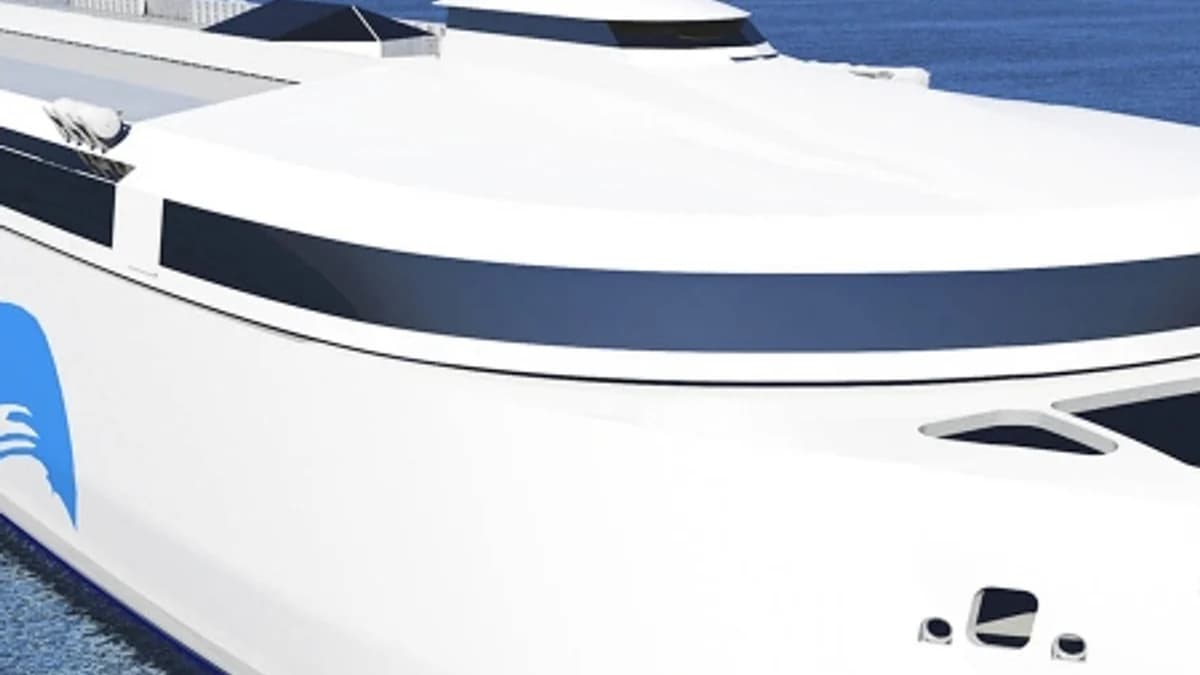
The electric boat segment will grow and become more important. The first signs of this trend are already here, and the latest example is the hull 096, a massive battery-electric ferry built in Australia and now arriving in South America.
With a length of 130 meters, the ferry can accommodate 2,100 passengers and 225 vehicles on its deck. It has been constructed by Incat Tasmania, a local shipyard, for Buquebus, one of the largest ferry companies in South America. This particular craft is expected to transit between Argentina and Uruguay for short trips at a time, but the range is enough to make it the largest battery electric ferry in the world.
The traditional diesel engines have been replaced with a battery pack that spans 40 MWh. This is achieved with 5,016 lithium battery cells that are spread across four battery rooms in the ship’s body. These provide enough power for eight Wärtsilä water jet propulsion units, giving the ferry a speed of about 25 knots or 46 km/h per hour.
The way this ferry operates is equally fascinating. At either end of the journey, there are fast-charging jacks to charge the battery pack, which takes about 40 minutes.
The technology aboard Hull 096 is the perfect example of where battery electric technology can be applied. It works for fairly predictable, short voyages where vehicles can dock and charge frequently. In addition, emissions and noise from battery electric ferry are significantly reduced.
However, Hull 096 also demonstrates the primary technical barrier to the widespread adoption of battery electric boats and ships. Due to the low energy density of lithium batteries, long voyages with such vessels are challenging to achieve. Moreover, the issue of recharging, infrastructure, and battery disposal remains relevant.
Thus, in the nearest future, the appearance of fully electric vessels on long-haul routes is unlikely. However, Hull 096 and similar projects are the right step towards sustainable shipping. The long-term viability of battery electric shipping will be determined by how well these early vessels perform and what improvements can be made in terms of energy storage and onboard systems.
More information: