
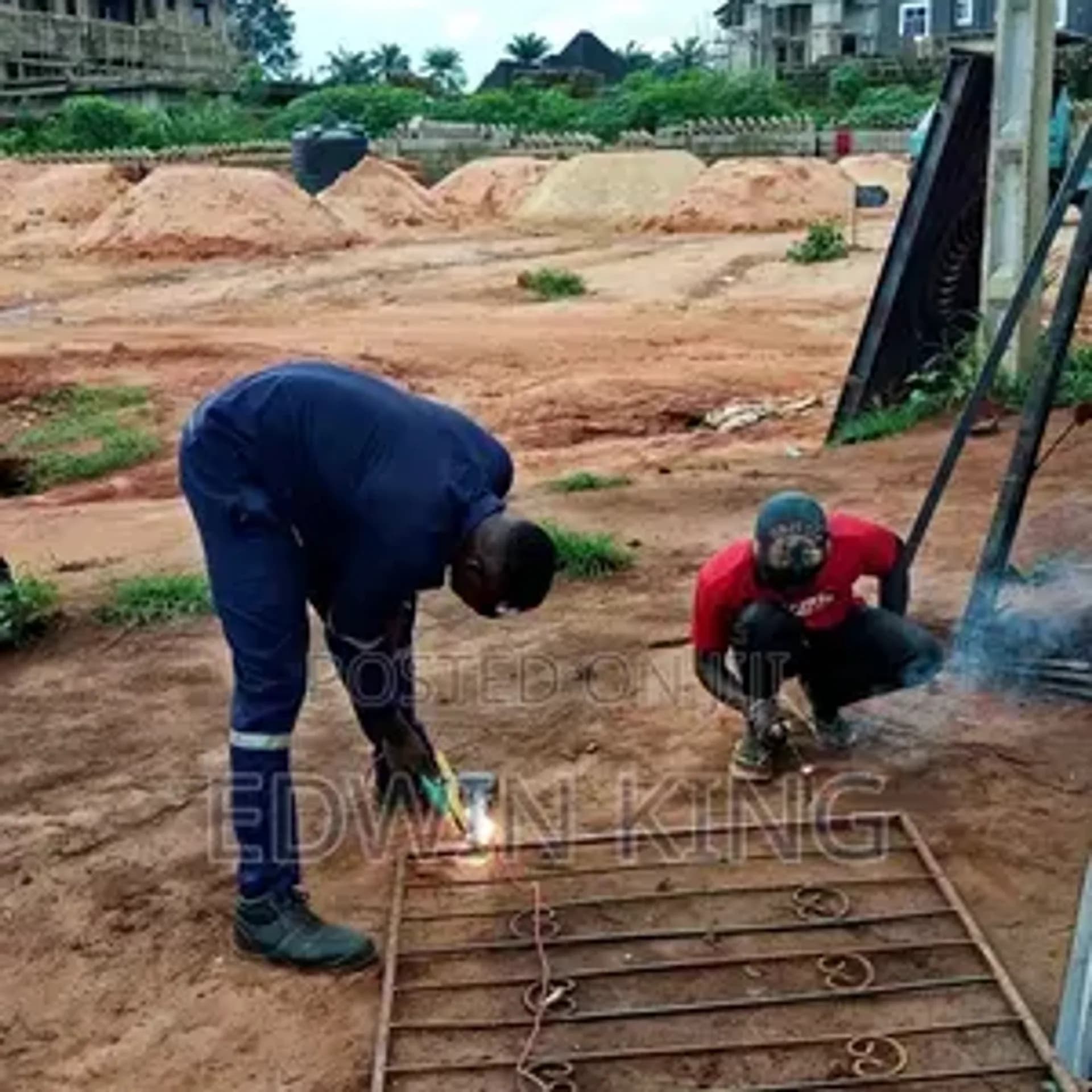
Location: Kitengela, Kajiado County (Kenya)
Builder: Joseph “Mzee Chuma” Ole Saitoti, informal metal fabricator
Joseph Ole Saitoti has no signboard.
If you walk past his workshop, you might think it’s abandoned: a half-roofed shed, scrap metal stacked against the wall, a welding machine humming softly when power is available.
Yet if you stand at the junction nearby and look around carefully, you’ll notice something strange.
Most of the gates, grills, and metal doors look… related.
That’s Joseph’s work.
⸻
The business (metal, patience, reputation)
Joseph is a metal fabricator and welder. He builds:
• residential gates
• window grills
• shop doors
• small steel frames
He doesn’t do flashy designs. His work is thick steel, simple geometry, no shortcuts.
People don’t come to him because he’s cheap.
They come because his work doesn’t sag.
⸻
Year 1–3: learning the cost of undercutting
When Joseph started, he priced work like everyone else—low.
He wanted jobs. Any jobs.
But welding taught him something fast:
cheap metal bends, thin frames fail, rushed joints crack.
After replacing one gate for free (it twisted after three months), he made a quiet decision:
“I will lose jobs before I lose my name.”
He began charging slightly more than the roadside welders. No explanation. No negotiation games.
Some customers walked away.
The ones who stayed came back with neighbors.
⸻
How customers actually find him
Joseph doesn’t market. He installs.
Every gate he puts up becomes a silent billboard:
• neighbors ask who built it
• landlords ask how long it took
• security guards give directions
His phone contacts are saved like this:
• “Blue Gate House”
• “Shop Near Butchery”
• “Mama Akinyi Grill”
No CRM. Just memory and landmarks.
⸻
The operating reality nobody sees
His real constraints aren’t demand.
They are:
• electricity outages (forcing generator use)
• rising steel prices
• customers delaying payments after installation
To survive, he introduced three rules:
1. Materials money first — no exceptions
2. Installation before painting (so unpaid work stays visible)
3. One job at a time — no overbooking
These rules slowed growth.
They also stopped debt.
⸻
The silent scaling move
Joseph didn’t hire workers.
Instead, he trained one nephew.
Not to rush.
Not to multitask.
But to measure properly and weld clean joints.
This doubled output without doubling mistakes.
Today, Joseph handles the structure while his nephew assists with cutting, grinding, and finishing.
Still small. Still controlled.
⸻
Numbers that don’t impress outsiders — but work
• 2–4 major jobs per month (gates, doors)
• smaller grill jobs in between
• income fluctuates, but rarely hits zero
During slow months, repairs keep him afloat. During good months, he buys extra steel stock.
He doesn’t talk about “expansion.”
He talks about stability.