
Boosting SME Sales. Integrating Embedded Finance and BNPL into Your Nigerian Digital Shop:
Have you noticed your favorite delivery app or electricity payment portal recently nudging you with a "Buy Now, Pay Later" (BNPL) option? This isn't a coincidence or a minor UI update; it is the face of Embedded Finance. As of 2026, this sector in Nigeria has moved beyond a buzzword into a massive growth trajectory, fundamentally altering how capital flows through the digital economy.
The "Invisible" Bank: Banking as a Feature, Not a Place
For decades, banking was a destination a physical building you visited to prove your worthiness for a loan. Today, the infrastructure of finance is being "embedded" directly into the software we use daily. In this new ecosystem, banking is becoming a feature rather than a standalone service.
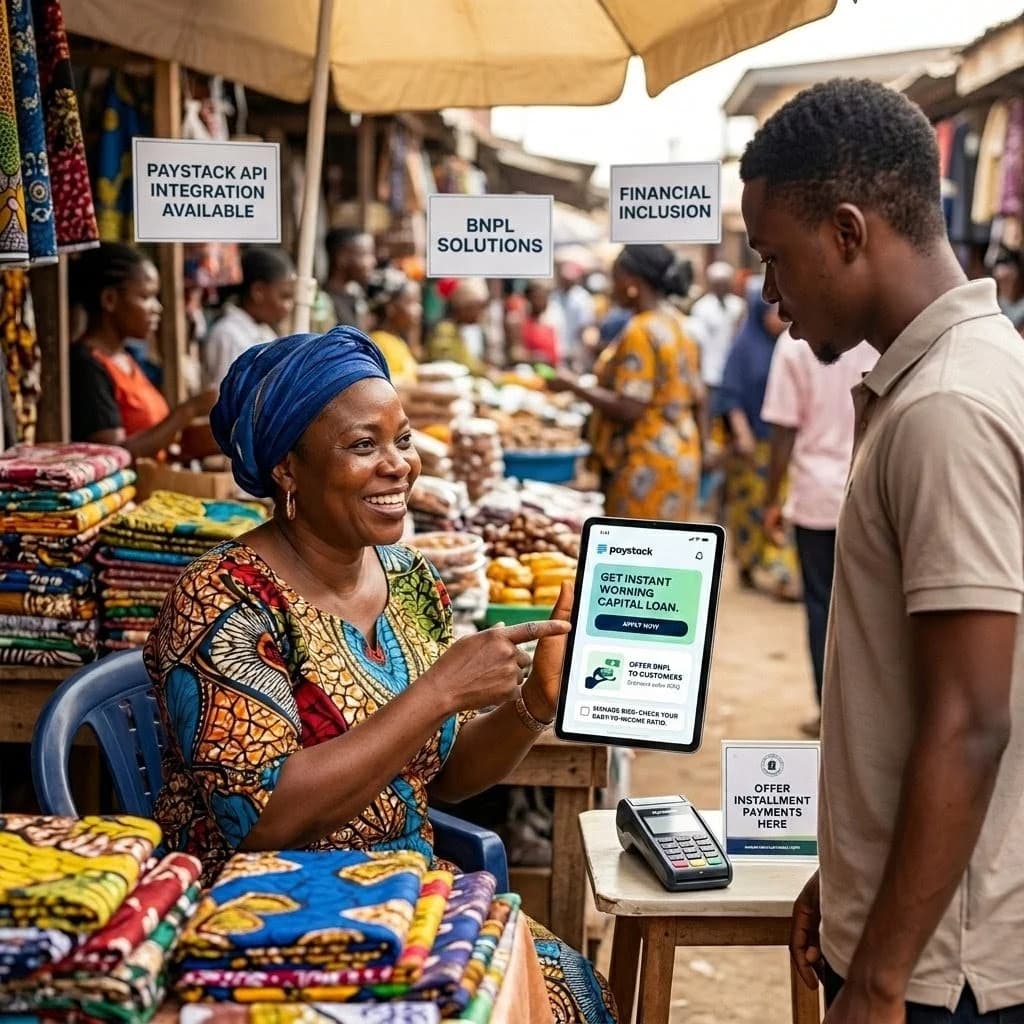
Consider a local trader on a digital marketplace. Previously, securing a working capital loan would require months of bank statements and physical collateral. Now, using real-time data, the marketplace app can offer an instant loan based on the trader's transparent sales history and customer ratings.
The transaction happens entirely within the app's interface, allowing the merchant to restock inventory in seconds without ever stepping foot inside a traditional financial institution.
Empowering Small Vendors: The 30% Growth Lever
For digital shop owners and SMEs, the integration of finance tools is no longer a luxury it is a competitive necessity.
Modern infrastructure, such as Paystack’s updated 2026 Payment APIs, allows even the smallest vendors to offer sophisticated financial products at checkout.
Installment Payments: By offering customers the ability to split payments, vendors are seeing average sales increases of up to 30%.
Reduced Friction: By keeping the payment and credit process within the store environment, "cart abandonment" rates drop significantly.
Data-Driven Insights: These modules provide vendors with deeper analytics on customer purchasing power, allowing for more targeted inventory management.
Integration is no longer a complex coding feat; it is a "plug-and-play" reality that levels the playing field for micro-entrepreneurs against retail giants.
The Double-Edged Sword: Navigating "Over-Indebtedness"
While the democratization of credit fuels economic activity, it brings a significant shadow: the risk of the "Easy Credit" trap. When a loan is only two clicks away on every app from food delivery to ride-hailing consumers face the unprecedented challenge of credit fragmentation.
The ease of access can lead to Over-Indebtedness, where a user’s total monthly repayments across multiple platforms exceed their actual liquidity. In this 2026 landscape, financial literacy is as important as financial access.
Pro-Tip for Consumers: To maintain financial health, it is vital to track your Debt-to-Income (DTI) ratio. Financial experts suggest that your total monthly debt repayments should never exceed 35-40% of your gross monthly income.
Looking Ahead
As Nigerian retail apps continue to evolve into "Super Apps," the line between commerce and finance will continue to blur.
For the Nigerian consumer and entrepreneur, the benefit is clear: faster, more contextual, and more inclusive financial services. However, the responsibility to manage this newfound "invisible" credit remains firmly in the hands of the user.