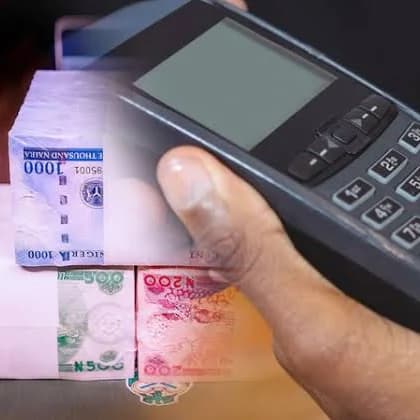

The Point-of-Sale (POS) agent business has become one of the most visible small business opportunities in Nigeria. Long queues at bank branches, limited ATM availability, and the growing adoption of agency banking have created steady demand for cash withdrawals, transfers, deposits, airtime purchases, and bill payments. For many entrepreneurs, the business appears attractive because it requires far less capital than opening a conventional retail store.
However, one misconception continues to discourage new entrants and disappoint existing operators. Many people focus only on buying a POS terminal. In reality, the terminal is often the smallest part of the investment. The largest financial commitment is the working cash, commonly called the float, that keeps daily transactions running.
Before investing, prospective operators should understand every major expense, the realistic capital required, and the profit expectations that come with different transaction volumes.
The POS Terminal Is Only the Beginning
A POS terminal is the device customers see, but it does not represent the true startup cost.
Several fintech companies and banks provide terminals under different arrangements. Some require an outright purchase, while others ask for a refundable caution fee or lease payment. Depending on the provider and device type, a terminal may cost anywhere from about ₦20,000 to ₦80,000. Some providers also offer installment plans or refundable security deposits instead of full ownership.
Choosing the cheapest terminal is not always the smartest decision. Business owners should compare:
- Settlement speed
- Network reliability
- Customer support
- Transaction charges
- Maintenance policies
- Device replacement procedures
Frequent network failures can easily erase whatever savings were made by purchasing a cheaper machine.
Your Largest Investment Is Float Capital
The biggest expense is not equipment. It is liquidity.
Every withdrawal requires immediate cash. Every cash deposit requires sufficient electronic balance inside the agent wallet. Without enough float, customers will simply move to another agent.
Many beginners underestimate this requirement.
Someone opening in a residential neighborhood may operate comfortably with around ₦100,000 to ₦200,000 in combined cash and electronic float. Busy commercial locations often require several hundred thousand naira or substantially more to avoid running out of cash during peak periods.
This working capital never disappears. It continually moves between physical cash and digital balances throughout the day.
The higher the transaction volume, the larger the float required.
Shop or Street Setup?
Location influences both startup cost and future earnings.
Some agents operate from existing grocery stores, pharmacies, or mobile phone shops, avoiding additional rent altogether.
Others rent kiosks or roadside spaces specifically for POS services.
Typical setup expenses include:
- Expense Estimated Cost
- Kiosk or small shop ₦15,000 to ₦50,000 or more depending on location
- Table and chair ₦10,000 to ₦25,000
- Umbrella or shelter ₦8,000 to ₦20,000
- Business signage ₦5,000 to ₦15,000
Costs vary significantly between cities and neighborhoods, but location quality usually has a greater effect on income than decorative improvements.
Busy markets, transport terminals, campuses, hospitals, and densely populated residential areas generally generate higher transaction volumes than isolated streets.
Power and Internet Cannot Be Ignored
A POS business depends entirely on connectivity.
Even the best terminal becomes useless without electricity and mobile data.
Common operating expenses include:
- Mobile data subscription
- Power bank or inverter
- Generator fuel where necessary
- Phone charging
- Occasional maintenance
These recurring costs may appear small individually, but together they reduce monthly profit if they are not factored into pricing.
Reliable backup power is especially important because customers rarely wait while an operator searches for electricity.
Registration and Compliance Costs
Although many operators begin informally, registering a business can improve credibility and simplify relationships with financial institutions.
Depending on the provider, agents may need:
- Valid identification
- Bank Verification Number (BVN)
- National Identification Number (NIN)
- Bank account
- Passport photographs
- Proof of address
Some operators also register a business name through the Corporate Affairs Commission (CAC), although provider requirements differ.
Understanding the compliance requirements of the chosen provider before investing can prevent unnecessary delays.
How POS Agents Actually Make Money
Many first-time investors assume profits come from transaction percentages alone.
In reality, earnings come from several small revenue streams.
These commonly include:
- Cash withdrawals
- Cash deposits
- Bank transfers
- Airtime purchases
- Data sales
- Utility bill payments
- Cable television subscriptions
Withdrawal transactions usually generate the highest volume, while digital services provide additional commissions throughout the day. Commission structures vary by provider and transaction type.
Success therefore depends less on charging high fees and more on processing many transactions consistently.
What Daily Profit Looks Like
There is no universal daily income.
Profit depends almost entirely on customer traffic.
A low-volume location processing only a few dozen transactions may generate only a few thousand naira in daily profit after expenses.
High-traffic locations serving hundreds of customers each day can earn significantly more, but they also require larger float balances, longer operating hours, stronger security, and better cash management.
Anyone promising fixed daily earnings is oversimplifying the business.
Customer volume determines everything.
Hidden Costs That Surprise New Operators
Many startup guides focus only on purchasing equipment.
Experienced operators know several additional expenses eventually appear.
These include:
- Cash transportation
- Security concerns
- Damaged receipt paper
- Terminal repairs
- Lost business during network outages
- Cash shortages
- Fraud attempts
- Emergency borrowing when float becomes insufficient
Unexpected downtime can be particularly expensive because customers often switch permanently to competing agents after repeated failed transactions.
Planning for these costs before opening improves long-term sustainability.
Security Is a Business Expense
Cash businesses naturally attract risk.
Operators handling large amounts of money should consider security from the beginning.
Simple precautions include:
- Operating in busy commercial areas
- Avoiding unnecessary cash exposure
- Maintaining accurate transaction records
- Closing with minimal excess cash
- Using secure storage during business hours
Fraud awareness is equally important. Customers should never lose sight of their cards during transactions, and agents should verify transaction confirmations before releasing cash. Cybersecurity researchers have also highlighted risks associated with poor handling of payment cards and insider fraud in POS environments.
Security is not optional. It protects both revenue and reputation.
A Sample Startup Budget
While actual costs differ by location, a practical budget for many first-time operators could resemble the following:
- Item Estimated Cost
- POS terminal ₦20,000 to ₦80,000
- Shop setup and signage ₦30,000 to ₦80,000
- Working float ₦100,000 to ₦500,000 or more
- Power backup and accessories ₦15,000 to ₦50,000
- Miscellaneous expenses ₦10,000 to ₦30,000
This means a realistic startup budget often falls between roughly ₦200,000 and ₦700,000, although operators using an existing shop or lower float can begin with less, while high-volume locations may require substantially more working capital.
Is the Business Still Worth Starting?
Despite growing competition, agency banking continues to serve millions of Nigerians who need convenient access to financial services.
The business remains viable for entrepreneurs who understand two realities.
First, the terminal itself is only a small fraction of the required investment.
Second, success depends far more on location, liquidity, customer volume, and operational discipline than on purchasing the newest machine.
Prospective operators who budget realistically, maintain sufficient float, select reliable service providers, and control operating costs are far better positioned than those attracted only by social media claims of quick daily profits.
A POS business is not a guaranteed path to instant wealth. It is a transaction-driven service business where preparation, cash management, and consistent customer demand determine whether the investment produces steady returns or constant financial pressure.