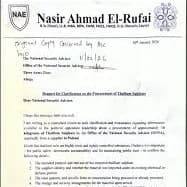
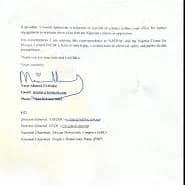
A single letter has ignited one of the most intense political conversations in Nigeria this year, placing former Kaduna State governor Nasir El-Rufai at the center of a growing national controversy involving the country’s top security leadership.
The letter, addressed to National Security Adviser Nuhu Ribadu, has triggered widespread debate across political circles, media platforms, and social networks, with many questioning its implications for national security and the future of Nigeria’s political landscape.
Inside the controversial letter
In the widely circulated communication, El-Rufai requested clarification from the Office of the National Security Adviser regarding reports about the alleged importation of thallium sulphate into Nigeria. Thallium sulphate is known internationally as a highly toxic substance historically associated with pest control and, in extreme cases, poisoning.
El-Rufai asked whether any agency under the NSA’s supervision had approved or facilitated the importation of the chemical and what purpose it was intended to serve. He framed the inquiry as a matter of national interest and public safety, calling for transparency on the issue and urging authorities to provide clear answers.
The letter quickly gained traction online after excerpts surfaced on social media, transforming what might have been a private communication into a full scale public controversy.
Government response and denial
The Presidency and the Office of the National Security Adviser responded swiftly, dismissing the allegations and urging El-Rufai to provide evidence to security agencies if he possessed any credible information.
Officials described the claims as unfounded and potentially capable of creating unnecessary public anxiety. They maintained that no unlawful or dangerous importation of toxic substances had been authorized and suggested that the letter was an attempt to distract from ongoing investigations involving the former governor.
The strong rebuttal signaled that the matter had moved beyond routine political disagreement into a sensitive national security conversation.
Political undertones and rising tension
The timing of the letter has intensified speculation about its political significance. It emerged amid ongoing legal and corruption related investigations involving El-Rufai and shortly after his recent political realignment.
Supporters of the former governor argue that his request for clarification reflects legitimate concern about public safety and government accountability. Critics, however, view the letter as an attempt to generate controversy and shift public attention away from investigations into his tenure as governor.
The situation has deepened divisions across Nigeria’s political landscape, with commentators interpreting the exchange as part of a broader power struggle ahead of the 2027 election cycle.
Public reaction and media spotlight
The letter has dominated headlines and online discussions, with analysts dissecting its language, intent, and possible implications. Political observers note that rarely has a single written communication generated such rapid national attention.
Television networks, including Arise TV, and major digital platforms have hosted extensive debates on the issue, while social media continues to amplify competing narratives surrounding the controversy.
A developing political drama
What began as a formal request for clarification has evolved into a defining moment in Nigeria’s current political climate. The exchange between El-Rufai and the Office of the National Security Adviser has raised questions about transparency, national security, and the increasingly tense relationship between key political figures.
As public scrutiny intensifies and further responses are expected, the letter remains a central document in a rapidly unfolding political drama whose full implications are yet to be seen.