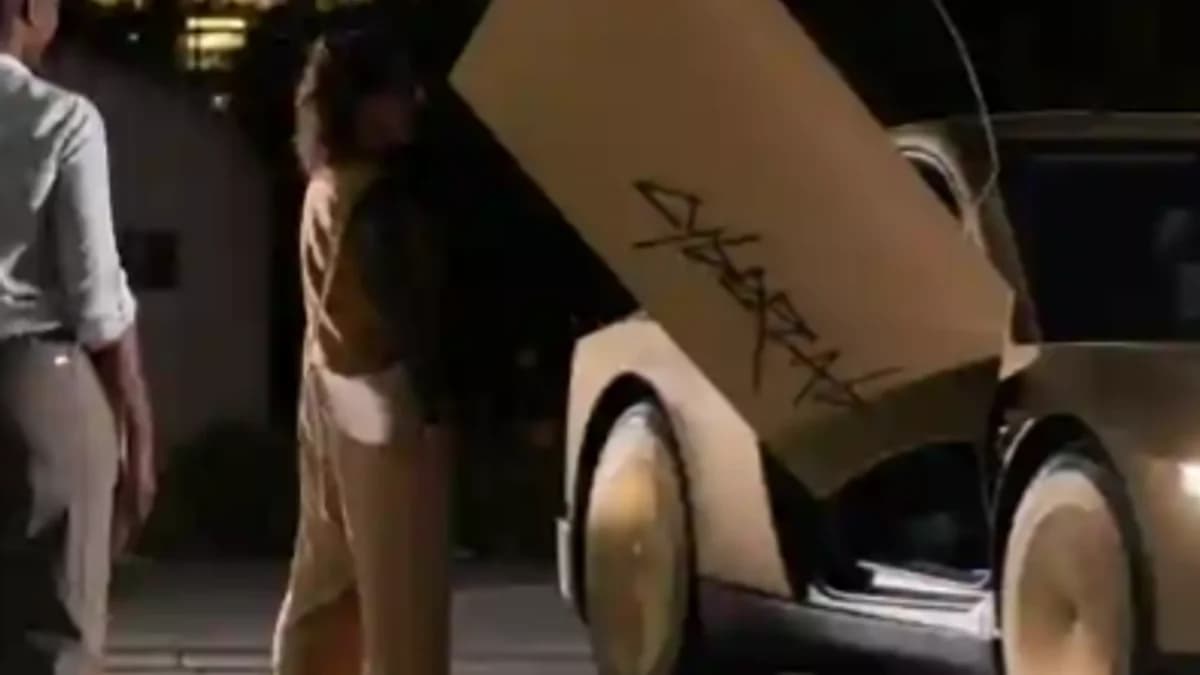
Last Thursday, Tesla unveiled the Cybercab, a new vehicle that it intends to position as a driverless robotaxi. The vehicles are already being tested in the state of Texas, since Tesla has registered 45 Cybercabs with the Texas Department of Motor Vehicles.
The Cybercab is the biggest step yet towards fully driverless cars. They are designed not to have a steering wheel or pedals, only the Full Self Driving system from Tesla.
The two-seat car has gull-wing doors and weighs about 1,412 kg. It has a lithium battery and a 219 horsepower motor at the front wheels, and it can go up to 673 kilometers in laboratory tests. Tesla announced that it intends to sell the Cybercab for around thirty thousand dollars, and offer its use for a much lower price per mile than conventional cars.
Elon Musk views the Cybercab as essential to shift Tesla from a car manufacturer to a mobility and AI company.
They are not the only ones in the race for the robotaxis, since companies like Waymo or Baidu’s Apollo Go are already established competitors. However, Tesla has one significant advantage: its potential to manufacture vehicles at a much lower price than modifying those already in use. The main challenge for Tesla in this race is for Waymo to have far more experience on the road, since they have driven millions of miles in autonomous mode.
If Tesla can meet the targets it has set for itself, it should be able to reduce significantly the cost of a robotaxi, which in turn would make its use accessible to many more people than currently possible. The Cybercab could also contribute to changing the paradigm in transportation, changing from ownership to mobility, to use rather than possession.
However, technology and production costs will not be the only determining factors for the future of the Cybercab, or even its future. Regulation, autonomy, technology, and consumer perception will all be major factors in the success or failure of this new project from Tesla.
For the time being, many people need to get used to the idea of getting into a vehicle without a steering wheel and without a driver. For Tesla, its biggest challenge is to convince people to get into one of its cars without a driver, without feeling threatened.
The Cybercab is not just a concept car, but also an experiment in creating a different mobility paradigm. The car is essential to change the way people think about mobility as a service and about autonomous vehicles in general. If Tesla succeeds, the impact on the automotive industry will be enormous.
References
Reuters:
Clarín: