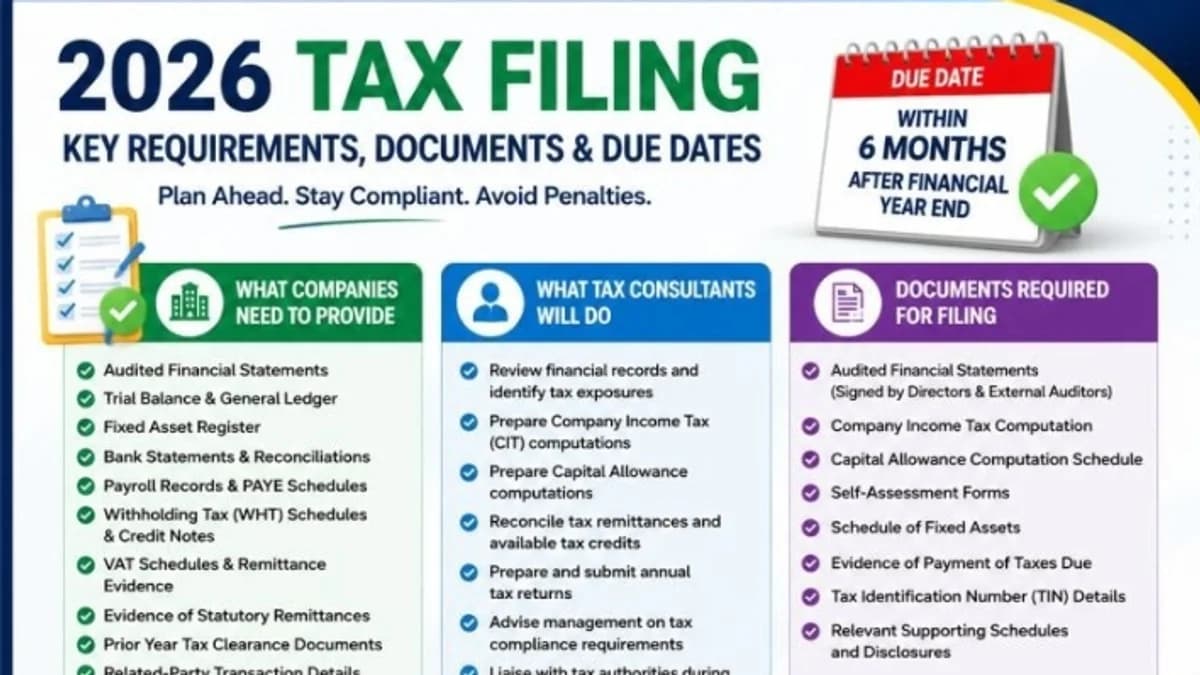
The 2026 Nigerian tax landscape is governed by the Tax Acts 2025 (including the Nigeria Revenue Service Establishment Act and the Nigeria Tax Act), which officially came into effect on January 1, 2026. In June 2026, the Federal Ministry of Finance issued official Transition Guidelines to clarify how accounting periods and prior liabilities are handled.
Key Operational & Regulatory Updates
1. Institutional & Transition Rules
Nigeria Revenue Service (NRS): The Federal Inland Revenue Service (FIRS) has officially transitioned to the NRS under unified administration.
Accounting Cut-off: Tax returns for financial accounting periods that ended before January 1, 2026, are filed under the old laws (CITA, PITA, etc.). Returns for accounting periods ending on or after January 1, 2026, are fully governed by the new Tax Acts.
2. Personal Income Tax (PIT) Structure
Tax Bands:
0%: First ₦800,000 of annual income (exempts low-income earners and minimum wage).
15%: ₦800,001 – ₦3,000,000
18%: ₦3,000,001 – ₦12,000,000
21%: ₦12,000,001 – ₦25,000,000
23%: ₦25,000,001 – ₦50,000,000
25%: Above ₦50,000,000
Relief Changes: The Consolidated Relief Allowance (CRA) was replaced. Standard deductions now prioritize verifiable expenses such as pension, NHF, life insurance, and capped rent relief (20% of annual rent paid, up to a maximum of ₦500,000).
3. Corporate Income Tax & MSME Provisions
Monthly Tax Installments: Companies now pay estimated income tax in monthly installments throughout their accounting year rather than paying all at once at annual filing.
MSME Relief: Small businesses with turnover below ₦100 million qualify for graduated corporate tax relief, with 0% corporate tax for eligible micro-businesses.
Development Levy: Large corporate taxpayers now compute and declare a unified 4% Development Levy on assessable profits.
4. VAT & E-Invoicing Compliance
Threshold Exemption: Small enterprises under the statutory threshold are exempt from filing VAT returns unless they voluntarily opt in.
State Breakdown & E-Invoicing: VAT-registered businesses must submit e-invoices auto-reported to the NRS and provide state-by-state sales breakdowns.
The image attached shows the necessary requirements for tax filling.