Technology has made it possible to access banking services, social media accounts, work platforms, online stores, and personal files from almost anywhere. While this convenience saves time, it also means that a single weak password can expose a large part of a person's digital life. Many people continue to use easy-to-guess passwords because they are simple to remember. Common choices such as birthdays, names, phone numbers, or simple number combinations remain popular despite repeated warnings from security experts.
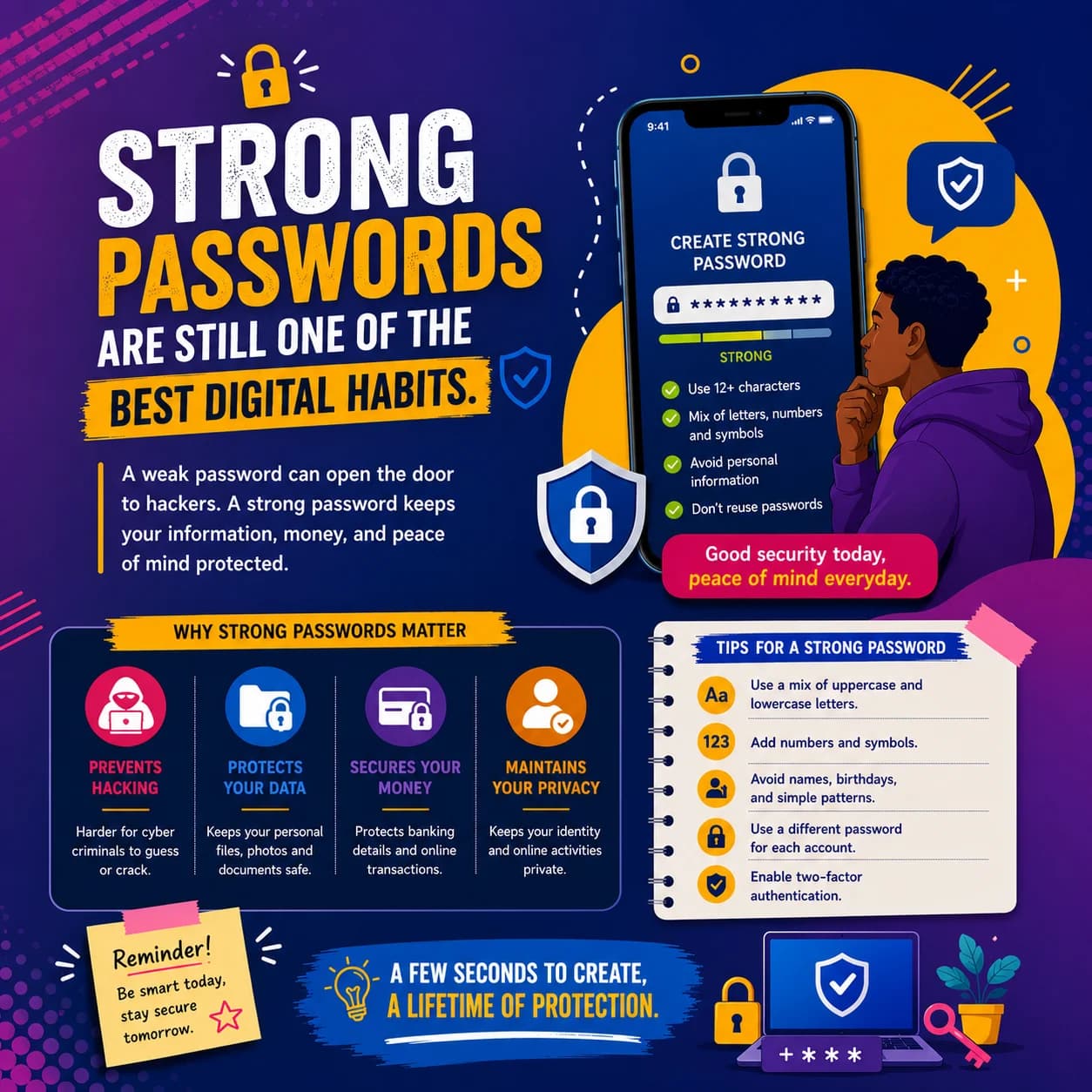
The problem is that cybercriminals often rely on these predictable habits. Automated tools can test thousands of password combinations within seconds. Once one account is compromised, criminals may try the same password on other accounts, especially if the user has reused it across multiple platforms. This can lead to unauthorized access to emails, social media accounts, financial services, and even cloud storage.
A stronger approach involves creating unique passwords for different accounts and using a combination of letters, numbers, and symbols. Password managers can help store these securely without requiring users to memorize every password. Two-factor authentication adds another layer of protection by requiring a second verification step before access is granted.
Strong passwords may seem like a small detail, but they remain one of the most effective ways to reduce digital risks. The few minutes spent improving account security today can prevent significant stress, financial loss, and privacy concerns in the future.
Lesson: Good security often starts with simple habits that are easy to maintain.