


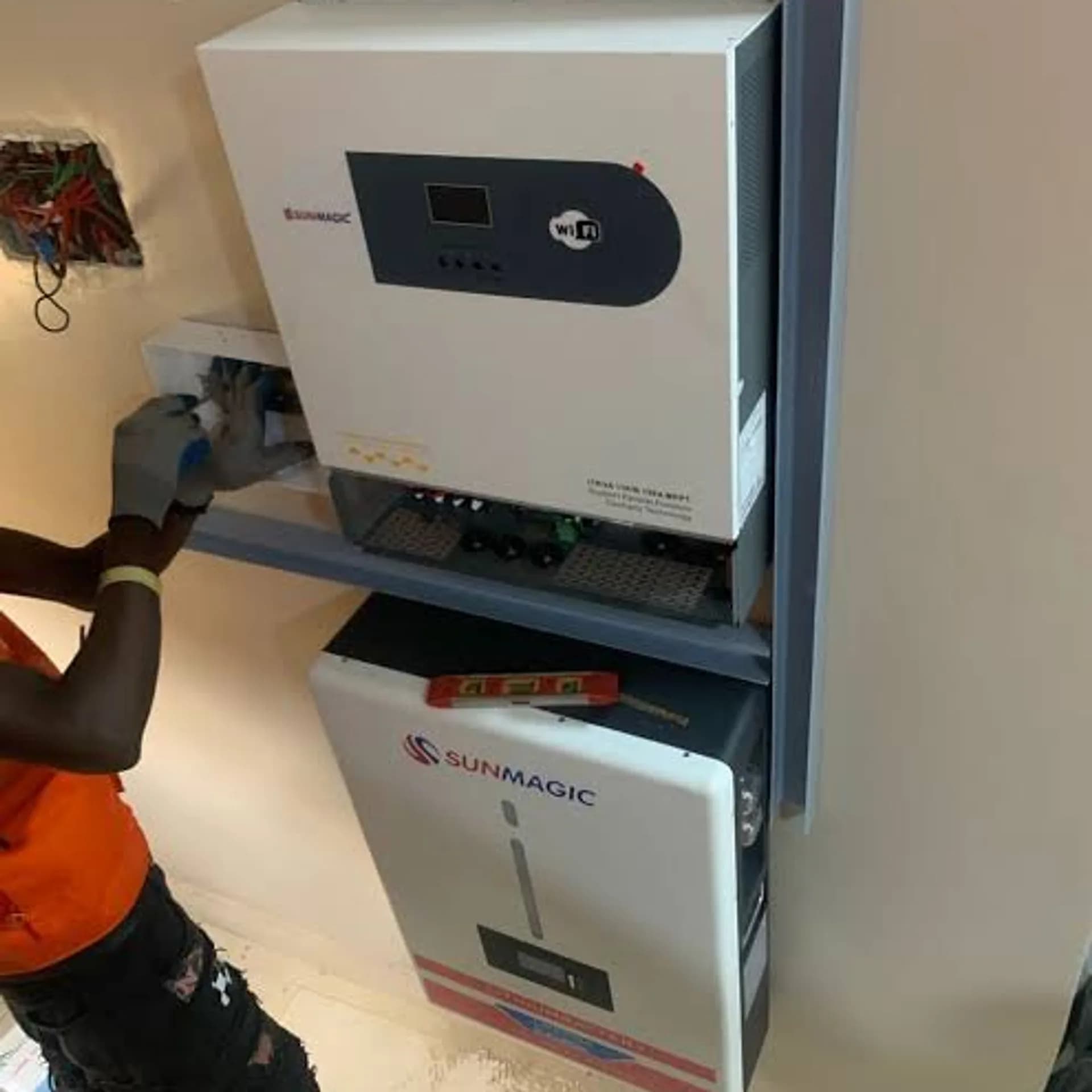
He bought the inverter with confidence.
Box fresh. Installer smiling. Lights steady on day one.
Month one felt perfect. Phones charged. TV ran all night. Neighbours asked questions.
By month three, something felt off. Battery did not last till morning. Fan slowed before dawn. He blamed NEPA.
Month five brought heat. The inverter sat in a small store. No window. No airflow. The room stayed hot all day. The inverter hummed louder. Batteries felt warm to touch.
Month seven, power dropped fast. One fridge start caused a shutdown. Installer said nothing was wrong. He added another cheap battery to help.
That was the mistake.
Old battery dragged the new one down. Charging became uneven. One boiled. One stayed weak. Both aged fast.
By month nine, cables turned brown at the ends. Thin wires carried heavy load daily. Resistance rose. Heat followed. Terminals loosened. Sparks appeared once.
Month eleven, the inverter died quietly. No bang. No smoke. Just silence.
The problem was never the inverter brand.
The system failed from day one.
Wrong batteries. Automotive type, built for cars, not deep discharge.
Battery size too small for daily load.
Charger voltage never matched battery chemistry.
Heat trapped in a closed room.
Undersized cables choking current flow.
No allowance for fridge and pump startup surge.
No maintenance. No water checks. No cleaning.
Each issue alone survived. Together, they killed the system.
A good inverter setup behaves like a boring machine. Cool. Quiet. Predictable.
When a setup fails within a year, the cause lives in design, not luck.
If you want, share your inverter size, battery type, and daily load. The failure point shows up fast.