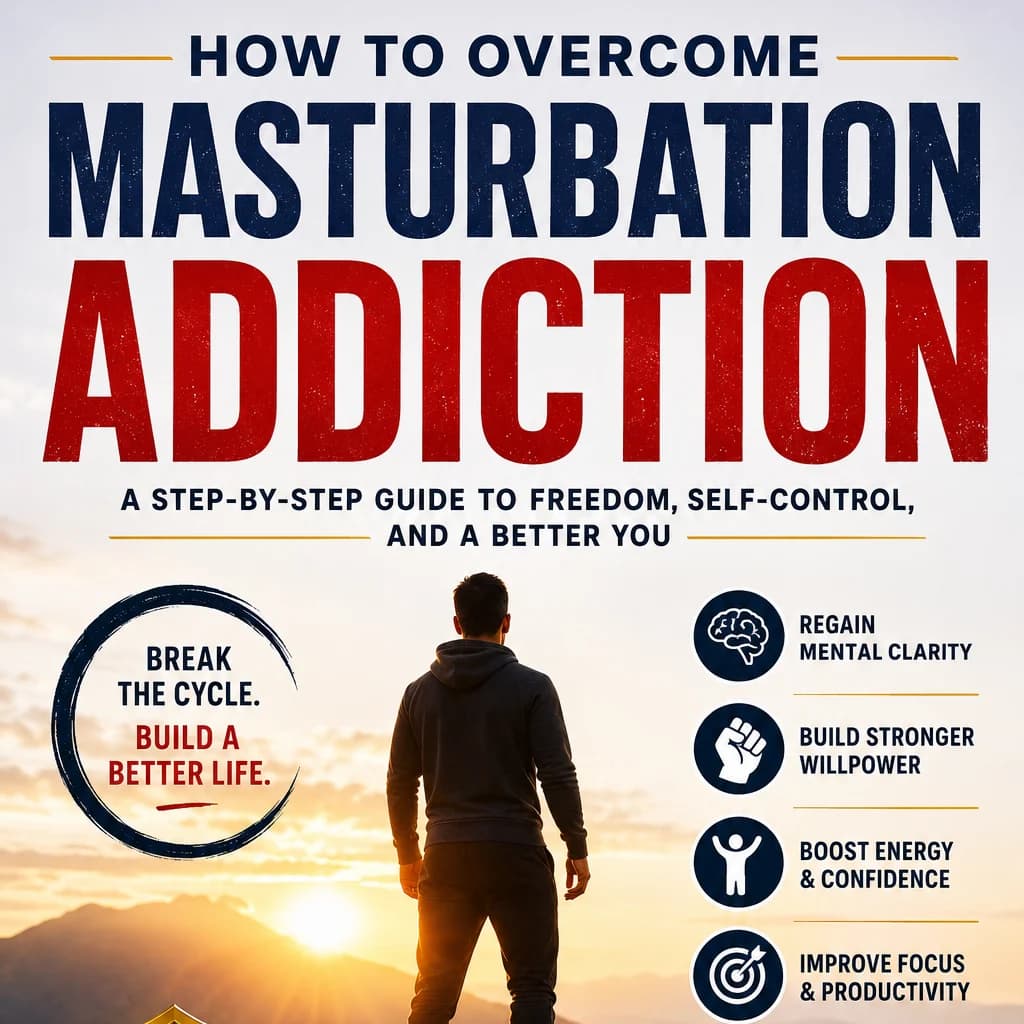
A Practical Wellness Guide for Long-Term Self-Control and Mental Strength
Important: Masturbation is a common sexual behavior and is not automatically harmful. It becomes a problem when it feels compulsive, causes distress, interferes with work, relationships, sleep, faith, or daily responsibilities, or is difficult to control despite repeated attempts.
Understanding the Habit
TRIGGER
↓
URGE
↓
MASTURBATION
↓
SHORT-TERM RELIEF
↓
GUILT / SHAME
↓
STRESS
↓
BACK TO TRIGGER
Breaking this cycle is the goal.
STEP 1: Identify Your Triggers
Write down when the urge usually happens.
Common triggers include:
Being alone
Watching pornography
Stress or anxiety
Loneliness
Boredom
Late-night phone use
Social media with sexual content
Action:
Keep a daily journal for one week.
Example:
Time Trigger Emotion Response
10 PM Alone in room Bored Watched YouTube instead
STEP 2: Remove Pornography
Pornography strengthens compulsive habits.
Practical steps:
Delete saved videos.
Unfollow explicit social media pages.
Install website blockers.
Avoid browsing when alone late at night.
STEP 3: Control the First Five Minutes
Urges usually peak for a short period before fading.
When an urge appears:
Stand up immediately.
Leave the room.
Drink water.
Walk for 10 minutes.
Do 20 push-ups or squats.
Call or message a friend if needed.
STEP 4: Stay Busy
An idle mind often increases temptation.
Fill your day with:
Exercise
Reading
Learning new skills
Volunteering
Business or career projects
Family time
STEP 5: Exercise Daily
Exercise helps reduce stress and improve mood naturally.
Recommended:
30–45 minutes daily
Running
Brisk walking
Gym workouts
Cycling
Swimming
Benefits:
Better self-control
Reduced stress
Improved sleep
Increased confidence
STEP 6: Improve Your Sleep
Poor sleep can increase impulsive behavior.
Aim for:
7–9 hours each night
Avoid screens for one hour before bed
Keep your bedroom cool and dark
STEP 7: Practice the "Delay Technique"
Instead of giving in immediately, tell yourself:
"I'll wait just 15 minutes."
Repeat if needed. Many urges weaken with time.
STEP 8: Replace the Habit
Don't just stop—replace.
Instead of masturbation:
Read a book
Pray or meditate
Exercise
Learn a language
Listen to music or a podcast
Work on a hobby
STEP 9: Eat a Healthy Diet
A balanced diet supports overall well-being.
Choose:
Fruits
Vegetables
Whole grains
Lean protein
Plenty of water
Limit:
Excess alcohol
Excess caffeine (if it worsens anxiety)
Ultra-processed foods
STEP 10: Build Accountability
Recovery is often easier with support.
Consider:
A trusted friend
A mentor
A counselor or therapist
A support group
Be honest about your progress.
STEP 11: Practice Stress Management
Stress is a common trigger.
Healthy coping strategies:
Deep breathing
Meditation
Journaling
Prayer (if it aligns with your beliefs)
Walking outdoors
STEP 12: Track Your Progress
Celebrate consistency rather than perfection.
Day Goal Achieved
1 ✅
2 ✅
3 ✅
4 ❌
5 ✅
If you have a setback, don't give up. Learn from what triggered it and continue.
Recovery Cycle
Trigger
↓
Notice the urge
↓
Pause for 15 minutes
↓
Choose a healthy alternative
↓
Urge decreases
↓
Confidence grows
When to Seek Professional Help
Consider speaking with a healthcare professional or mental health provider if:
You feel unable to control the behavior despite repeated efforts.
It interferes with work, school, or relationships.
It causes significant distress, anxiety, or depression.
It is closely tied to compulsive pornography use.
Evidence-based treatments, including forms of psychotherapy such as cognitive behavioral therapy (CBT), can be very effective.
Final Encouragement
Recovery is a gradual process. Most people improve by understanding their triggers, changing routines, and practicing healthier coping strategies. A lapse does not erase your progress—it is an opportunity to learn and strengthen your plan for next time. Consistent effort, patience, and self-compassion are key to lasting