
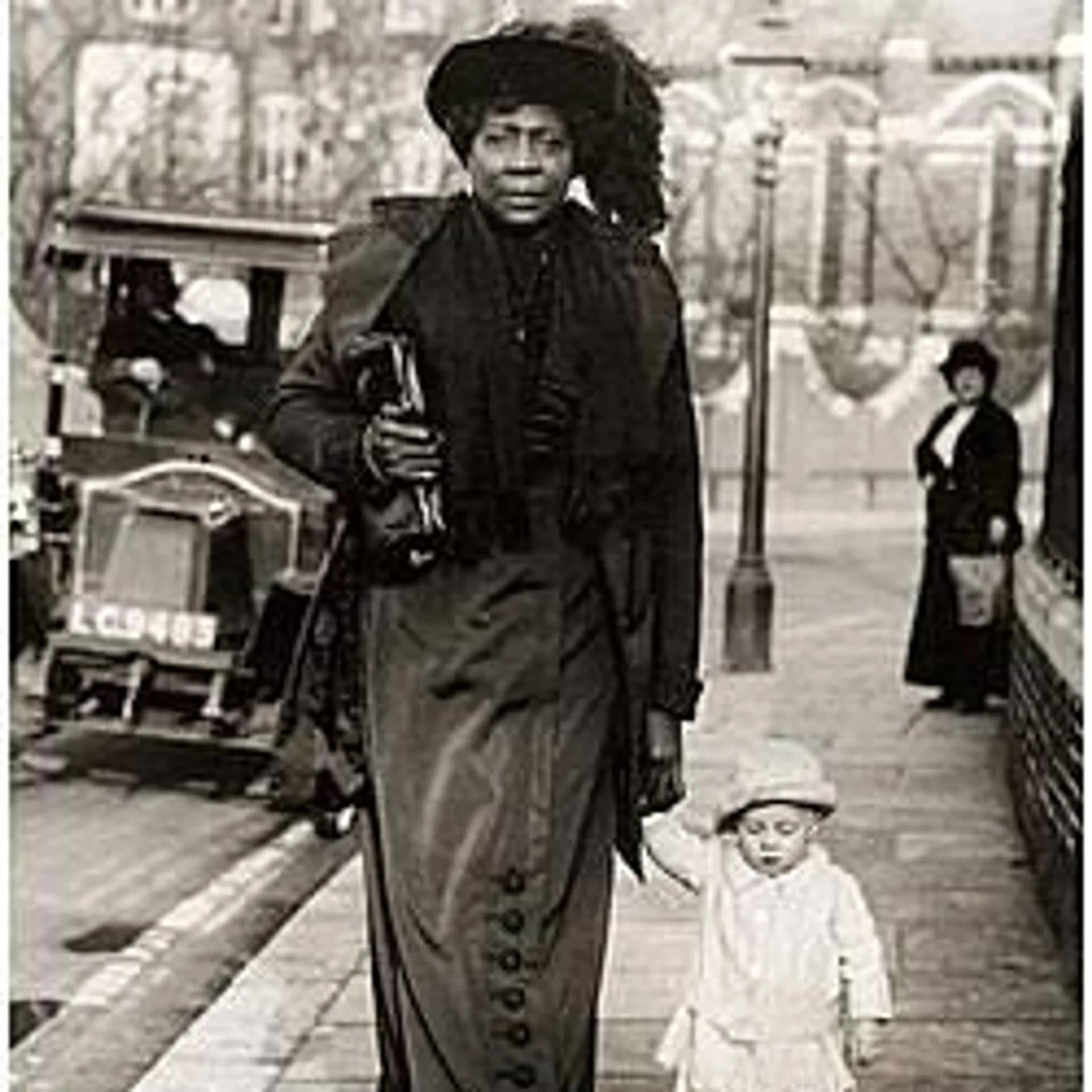
History has a habit of mislabeling powerful women. When their stories are told at all, they are often reduced to soft titles—maid, servant, assistant—words that hide the real strength they carried.
Ella Abomah Williams, better known as Madame Abomah, is one of those women history almost misunderstood.
She wasn’t just a maid.
She was a protector of kings.
⸻
From Africa to the Royal Court
Ella Abomah Williams was of African origin and lived during a time when Africa and Europe were deeply entangled through colonization, exhibitions, and royal diplomacy. Like many Africans of her era, she was taken to Europe under circumstances shaped by power imbalance and racial
hierarchy.
In European records, she was often casually described as a maid. But this label was misleading and incomplete.
Those who looked closely quickly
realized Madame Abomah was no
ordinary servant.
She was tall, physically imposing,
disciplined, and carried herself with unmistakable authority. Her presence alone commanded respect. This was not someone trained to clean rooms quietly in the background. This was someone trained to stand guard.
⸻
A King’s Shield, Not His Servant
Madame Abomah served in the household of King Behanzin of
Dahomey (present-day Benin), one of the most formidable African kings of the 19th century. King Behanzin ruled a powerful kingdom known for its
military sophistication and its elite
female warriors, often referred to as the Dahomey Amazons.
Within this context, Abomah’s role makes far more sense.
She was not merely attached to
royalty for appearance or domestic duties. She was a bodyguard, tasked with protecting the king, maintaining security, and ensuring his safety in hostile or unfamiliar territories,
especially while abroad.
In African royal tradition, bodyguards were chosen carefully. They had to be loyal, fearless, physically strong, and mentally disciplined. Abomah met all these standards.
Calling her a maid was convenient for outsiders but dangerously inaccurate.
⸻
Strength That Europe Couldn’t Ignore
In Europe, Madame Abomah attracted attention everywhere she went. Her height, strength, and commanding presence unsettled many who were used to seeing African women
portrayed as weak or submissive.
She didn’t fit the stereotype.
She stood upright, dressed regally, and carried herself like someone who knew her worth. Observers noted her confidence and authority—qualities that made it difficult to believe she was “just” domestic help.
In truth, Abomah represented
something Europe wasn’t ready to
fully acknowledge:
African women as warriors, protectors, and strategists.
⸻
Why History Softened Her Story
So why was her role minimized?
Part of the answer lies in colonial
storytelling. Admitting that an African king traveled with a powerful female bodyguard disrupted European ideas about race, gender, and hierarchy. It was easier—and safer—to call her a maid than to recognize her as a military figure.
By stripping her of her true role,
history made her easier to digest.
But not invisible.
⸻
Remembering Madame Abomah
Correctly
Today, Madame Abomah stands as a reminder that titles can lie but
presence never does.
She was not a background figure.
She was not powerless.
She was not ornamental.
Ella Abomah Williams was a protector, a symbol of African female strength, and living proof that women have always stood at the frontlines of power, even when history tried to push them to the side.
She wasn’t just a maid.
She was a king’s shield.