


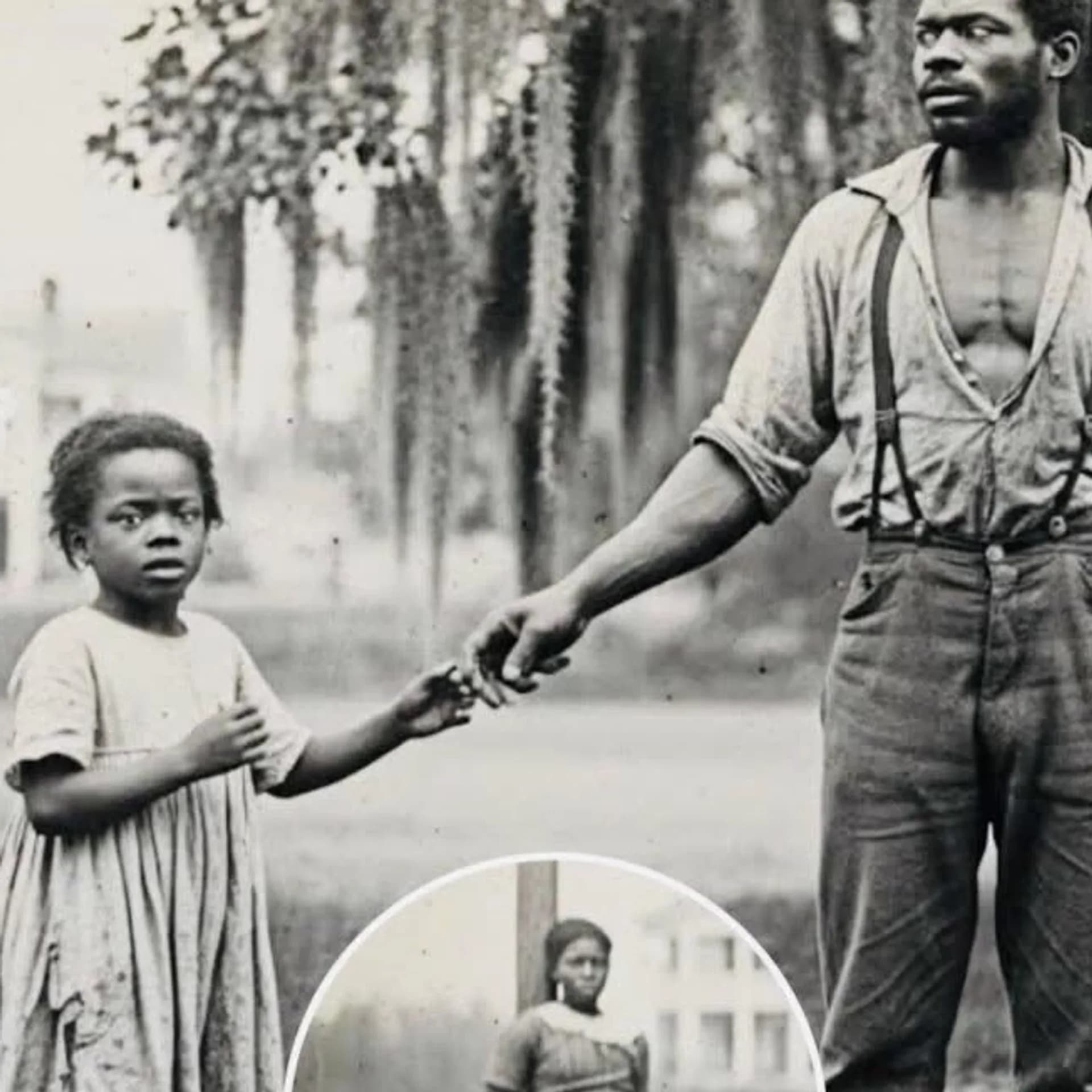
Virginia, 1845.
The evening air was thick and damp, heavy with the promise of rain and something worse. Eight year old Eliza Whitfield ran through the cotton fields barefoot, mud clinging to her legs, her chest burning as she cried out.
“Papa! They’re whipping Mama!”
Inside a small carpentry shed, Samuel froze. He had been carefully shaping a chair leg, his hands steady from years of practice. At her words, the tool slipped from his grip and struck the floor.
Distant thunder rolled, low and warning. Her voice had cut through the plantation’s usual silence, and nothing felt the same after it.
The Whitfield Plantation covered thousands of acres, its wealth built on forced labor. James Whitfield, the owner, liked to think of himself as reasonable. He believed cruelty worked best when it was controlled. Pain, to him, was a system, not an emotion.
The new overseer did not share that restraint.
Thomas Jenkins enjoyed power. He smiled while using it. Where Whitfield calculated, Jenkins indulged. He believed fear was the fastest way to obedience.
That afternoon, Samuel’s wife Ruth had begged for a short rest after hours in the fields. Jenkins called it defiance. He dragged her to the whipping post.
Samuel did not know the details. He only knew his daughter had never sounded this afraid.
He walked out of the shed slowly, but something deep inside him had already snapped awake.
When he reached the yard, he saw Ruth bound by her wrists, her back bare, Jenkins lifting the strap again. Her head was turned slightly, and her eyes met Samuel’s.
There was no plea in them. Only understanding.
She knew what that moment meant.
The thunder broke overhead. Rain began to fall.
Samuel stepped forward, calm and deliberate.
“Untie her,” he said.
Jenkins laughed. “You’ve forgotten your place.”
Samuel did not answer him. He turned to Eliza.
“Close your eyes.”
The strap was raised again, but it never came down.
What happened next became legend among the enslaved. Some said Samuel used a hammer from the shed. Others claimed he tore the whip away with his bare hands. Some believed the storm itself moved through him.
What is certain is this.
Ruth lived.
Samuel was chained and taken away the next morning. Before they led him off, he knelt in front of Eliza and gently touched her face.
“Your mother is free in here,” he said, pressing her hand to her chest. “So are you.”
She never saw him again.
But the plantation changed after that night. People stood taller. Jenkins kept his distance. Fear no longer moved as easily through the yard.
Twenty years later, after the war had ended, Eliza returned. She was educated, determined, and unafraid. She bought the small cabin where her childhood had fractured and healed all at once.
She named it Samuel’s Rest.
Because even when the world tries to break a person completely, courage can still echo long after they are gone.