Many people pick food products based on packaging, price, or familiarity. However, taking a few moments to read food labels can provide useful information that helps consumers make better choices.
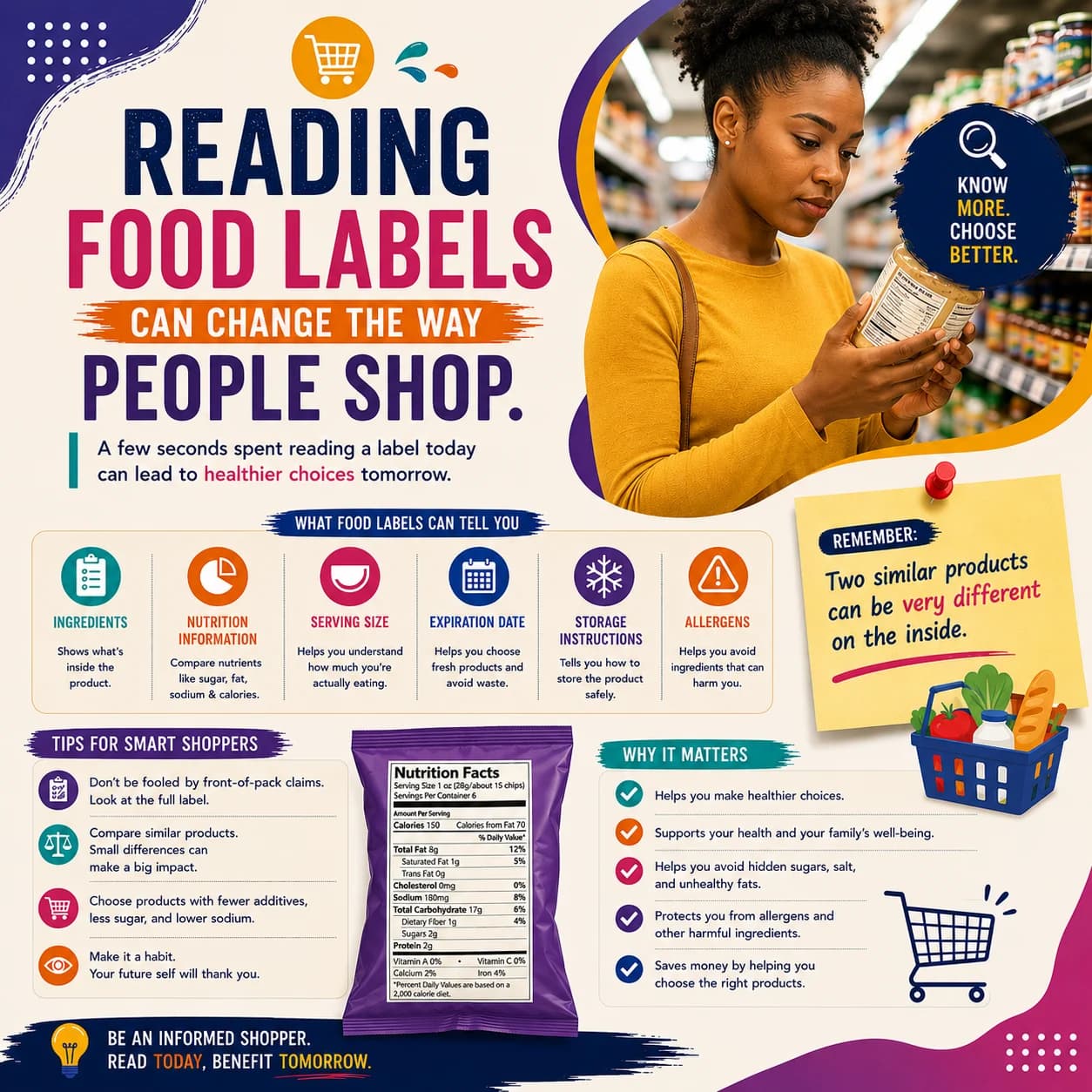
Food labels often contain details about ingredients, nutritional content, serving sizes, expiration dates, and storage instructions. These details can help people compare products and understand what they are buying.
For example, two products that appear similar may have very different amounts of sugar, sodium, or preservatives. Understanding these differences can support healthier eating habits and better meal planning.
Food labels can also help people identify allergens or ingredients they may want to avoid.
While labels do not tell the entire story, they provide valuable information that can support informed decisions.
Lesson: A few seconds spent reading a food label can help avoid surprises later.