By Oluwatobiloba Gideon Oludayomi
There was a season when my main business was struggling. I did not need a lecture. I needed a door. A small, quiet door opened, and it had long ears.
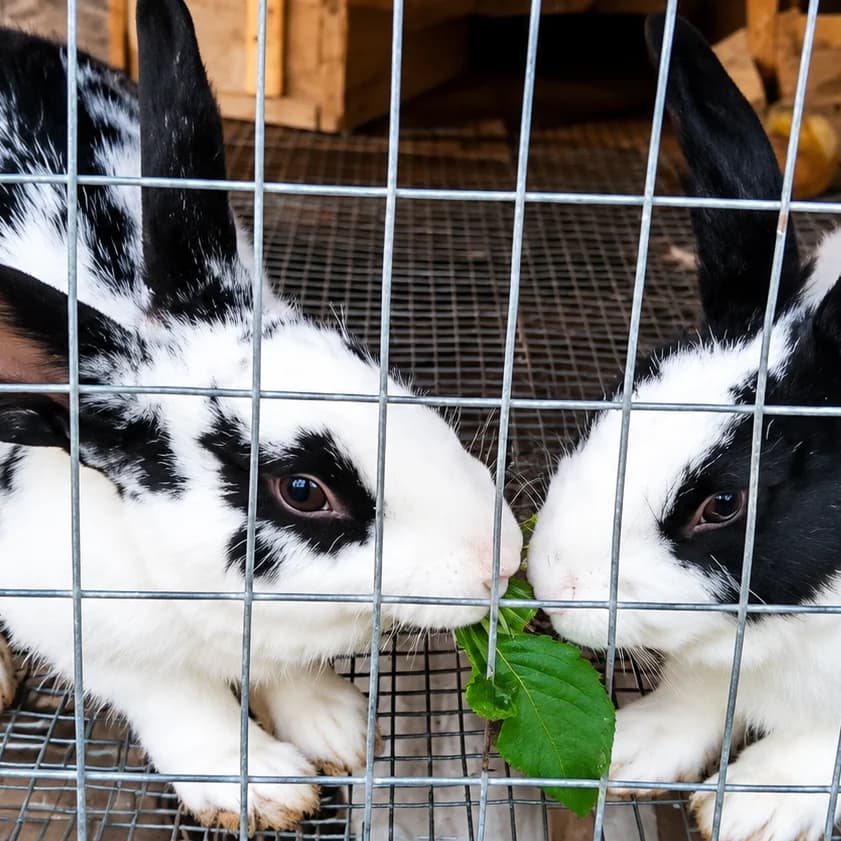
I am talking about rabbit farming. Today I want to ask you something. What if the answer to your income problem is not bigger, but smaller than you think?
With good hygiene, rabbits can be kept close to home without drama. They are quiet. They are easy to tend. Keep their space clean and even the smell will not announce them.
I tell people this sincerely. Every family should have a few. Not because rabbits are fashionable, but because they teach a lesson. Anyone who has raised rabbits in large numbers will tell you that scale brings stress. Disease, feeding, space, labour. That is why you rarely see very large rabbit farms. So the wise move is not to chase size on day one. It is to start small, learn well and grow with control.
Do not despise these small beginnings, for the LORD rejoices to see the work begin. Zechariah 4 verse 10, NLT.
Seven ways one rabbit can pay you.
Most people see one income stream. A rabbit has several. This is the pattern many people overlook.
1. Meat: Rabbit meat is very lean and rich in protein. Many who taste it once come back for more. It is often recommended for people who are watching their fat intake. How you cook it also affects the nutrients you keep.
2. Pets: Many people love keeping rabbits as companions. Some buyers do not want meat at all. They want a friend.
3. Breeding stock: There are over 100 breeds worldwide. Serious farmers must refresh their bloodlines from time to time. They need a strong, healthy buck from a different line. A quality buck can sell for as high as 100,000 naira. Your job is to keep pure lines, not mixed ones. Quality is a business plan.
4. Fur: It has uses and there is a huge market for it in the fashion industry. This market is still largely untapped in Africa.
5. Urine: You will make good money here too. With modern cage systems, the urine can be collected. It works as a natural foliar feed and helps keep pests away. Vegetable farmers growing tomatoes and cucumbers know its value and it is in high demand.
6. Droppings: Many call it manure. It is more than that. It is a soil conditioner. It helps soil hold its structure and keep water. It helps soil nutrients not to wash away easily. This is what makes it different from other animal droppings. Look where rabbit droppings gather and you will often find earthworms. Greenhouse farmers use it in their soil mix.
7. Knowledge: Once you have done it, you can teach it. Experience is also a product.
Now, let us do some numbers.
Suppose each rabbit gives only 100 grams of droppings daily. Ten rabbits then give about 1 kg a day, which is about 30 kg a month. Air dry it, grind it, bag it and sell it. Waste has become inventory.
Now breeding. A doe carries her young for about 28 to 31 days. If she kindles six litters a year with five kits each, that is 35 litters ones from one doe in a year. Three does give you 105. Add the manure, the urine and one quality breed sale. You can see why I say the money hides in the details.
So, how do you start?
You have three options. Intensive, which means cages. Semi intensive, which means a mix. Free range, which means open space.
Free range rabbits often do well because they can move freely. But the space must be fenced, because rabbits attract predators like snakes and cats. Cages give you better control, easier feeding and easier health checks. So if you have the money, go intensive. If you do not, start where you stand. Use the space you have. Then reinvest every little gain into proper housing. I won't lie to you, housing in rabbit farming is the most expensive capital.
Dishonest money dwindles away, but whoever gathers money little by little makes it grow. Proverbs 13 verse 11, NIV.
Here is what I have noticed. Most people are not stuck because they lack opportunity. They are stuck because they are waiting for a perfect version of it. The visible problem is not capital. The hidden problem is often a story we keep telling ourselves, that small is not serious.
Tomorrow is the most expensive word in business. It charges interest every day.
So begin today. Not with everything but with something that is already within your reach.
What small thing could you start this week? Have you ever kept rabbits, or another small livestock? What did it teach you? Share your story in the comments. Someone reading may need exactly your courage.
* * *
Oluwatobiloba Gideon Oludayomi is a life coach, a practical writer, a scripture addict, and a versatile entrepreneur creating wealth solutions through agriculture, real estate, and enterprise. He is the Convener of the Dominion Guild Network, an ecosystem of high value individuals, young and determined to becoming an empowered generation. He is the author of "Build It to Last", "I Thought I Married a Wife" (a novel), and "Practical Love".