
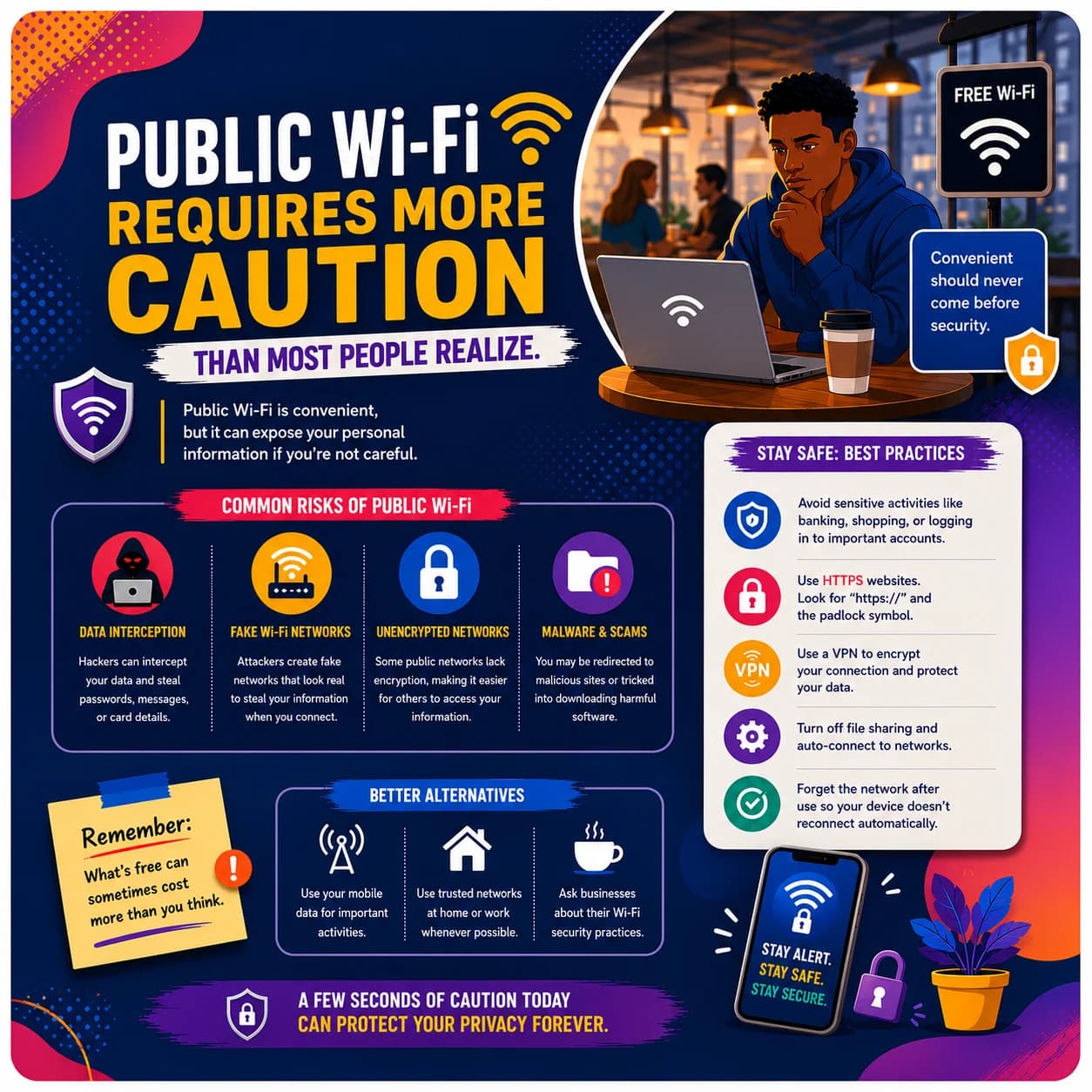
Free internet access is available in many public places, including airports, hotels, restaurants, shopping centers, and cafes. While public Wi-Fi can be convenient, it can also create security risks if used without caution.
Public networks often serve many users simultaneously. Depending on how the network is configured, cybercriminals may attempt to intercept information transmitted across the network. Sensitive activities such as online banking, financial transactions, or accessing confidential work information may be particularly vulnerable.
Another common risk involves fake Wi-Fi networks. A criminal may create a network with a name that looks legitimate, hoping users will connect without verifying its authenticity. Once connected, users may unknowingly expose information or be redirected to fraudulent websites.
Using secure websites, avoiding sensitive transactions on public networks, and enabling additional security features can reduce these risks. Mobile data connections may also be a safer option for important activities.
Public Wi-Fi is useful, but convenience should not replace caution. Understanding the potential risks helps users make better decisions when connecting to unfamiliar networks.
Lesson: Free internet access is valuable, but protecting personal information is even more important.