
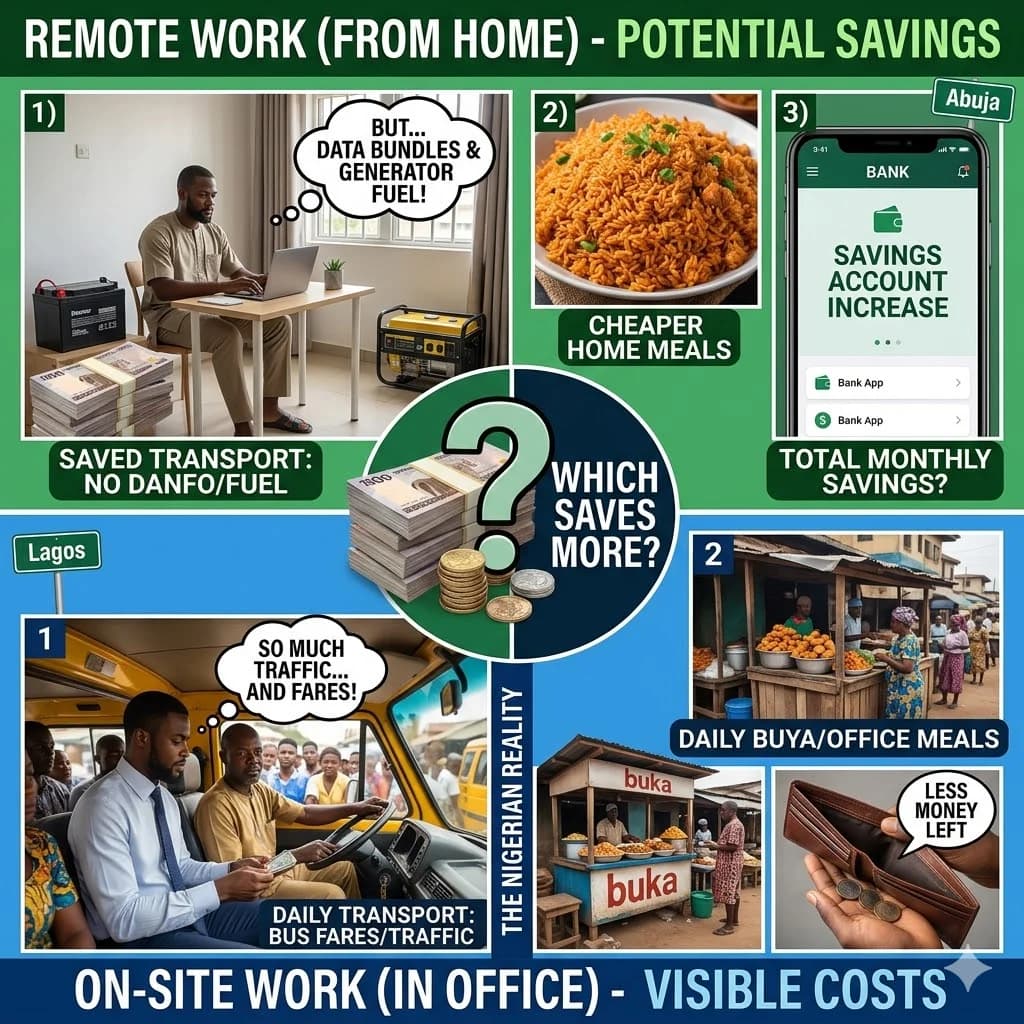
I used to leave my house in Lagos before 5 AM just to avoid traffic on my way to places like Victoria Island and Ikeja. Sometimes I took the BRT, other times a keke, and when things got tight, I would use a ride-hailing service. By the time I reached the office, I had already spent both money and energy.
Office days didn’t just involve transportation; they also meant grabbing breakfast on the road because I rushed out without eating. Lunch was often purchased because I didn’t bring food from home. Then there were small, untracked expenses. A typical day could easily cost between 3,000 to 5,000 naira for commuting and meals. Multiply that by 20 working days, and you feel the impact on your finances at the end of the month.
Remote work changed that pattern. There’s no daily commute, no fuel price surprises, and no need to rush out early. You can stay home, cook more meals, and have better control over your spending. However, it’s not without its own costs. Data usage can add up quickly, electricity can be unreliable, and you might find yourself snacking more often since the kitchen is so accessible.
The real difference lies in where the money leaks occur without you noticing. In office work, expenses leak through transportation, eating out, and the stress of daily commutes. In contrast, remote work leaks through data charges, electricity bills, and the temptations of home comforts.
Ultimately, most people still end up spending more on onsite work because transportation and external expenses are harder to manage than the costs associated with working from home.
If the amount you spent on transportation was added back to your salary, would you still prefer working on-site or working remotely?