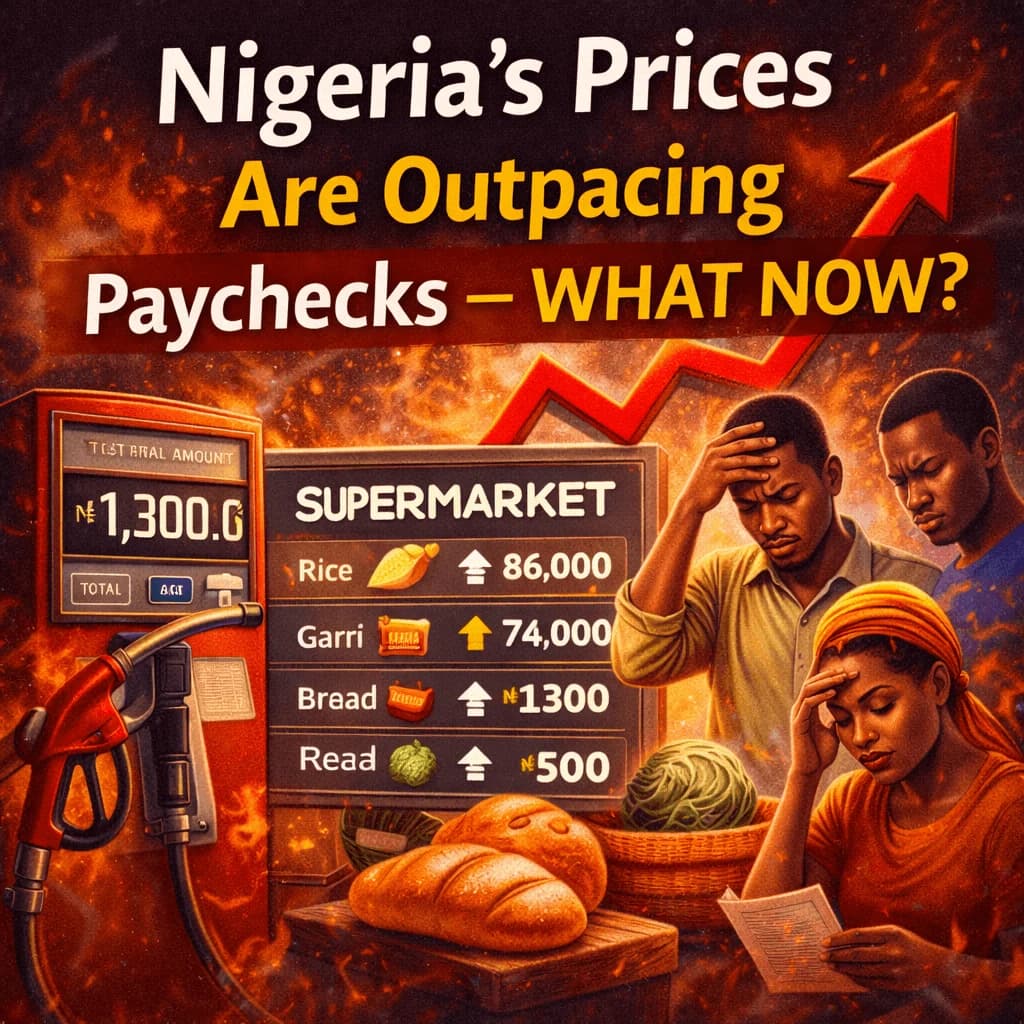
If you have stepped into a market or taken a bus ride lately, you already know the pressure Nigerians are under. Petrol prices have climbed above ₦1,200 to ₦1,300 per litre in many cities, including Ibadan, following multiple recent hikes at filling stations. This surge is part of a broader economic strain that is pushing transport fares, food costs, and everyday expenses higher almost every week.
The fuel price increases are not happening in isolation. Global crude oil prices have risen sharply due to geopolitical tensions, particularly the ongoing disruption in the Middle East, and these external shocks have a direct ripple effect in Nigeria. As fuel becomes more expensive, the cost of moving goods rises with it, and that pressure eventually lands on the plates and pockets of ordinary households.
For many Nigerians, this kind of inflation is not new. Even when official figures occasionally suggest a slight easing in headline inflation, most people feel no relief, because food prices, transport fares, and essential services continue to climb regardless. The conversations happening in markets, in traffic, and across WhatsApp groups tell a consistent story: the economy is pressing down on daily life from every direction.
Economic experts and organised labour have warned that rising fuel prices will trigger further inflationary pressure, causing costs across goods and services to climb even higher. Every naira earned now buys less than it did before, forcing low and middle-income earners in particular to stretch their budgets just to cover the basics.
The reality is stark. Transport, food, and housing are becoming harder to afford for a growing number of people. When prices rise faster than wages, households are squeezed from all sides with very little room to breathe. And what makes it worse is that there is no functional government stepping in to cushion the blow, no meaningful policy relief in sight, and no credible assurance that things will improve anytime soon. Ordinary Nigerians are largely on their own.
What is the hope of the common man?