Reminding the South Africans…
"Nigeria was one of the few countries that took a firm stand against apartheid. Nigeria's leader, General Murtala Mohammed, was a true friend of our struggle, and his country's support was a beacon of hope in our darkest moments." - Nelson Mandela, during a visit to Abuja, Nigeria in 1996.
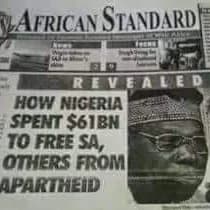
In the fight against apartheid, South Africa's neighbors played a significant role in shaping the country's future. As the Giant of Africa, Nigeria stands out for its courageous support of the anti-apartheid movement. This article delves into Nigeria's crucial contributions, from financial and diplomatic aid to humanitarian support, and how these efforts helped bring an end to the oppressive regime.
In the 1970s and 1980s, Nigeria's military government, led by Generals Yakubu Gowon and Olusegun Obasanjo, recognized the injustices of apartheid and pledged to support the African National Congress (ANC). This bond of solidarity was rooted in a shared African identity and a desire to combat racism. Nigeria's support was also influenced by the country's own experiences with colonialism and a desire to promote African liberation.
Nigeria provided significant financial aid to the ANC, helping fund their operations, arms procurement, and training. In 1976, Nigeria donated $1 million to the ANC, a substantial amount at the time. This support was crucial in keeping the organization afloat during difficult times, including the aftermath of the Soweto Uprising in 1976.
Nigeria leveraged its position in international organizations to lobby for sanctions against the apartheid regime and support for the ANC. In 1977, Nigeria led the call for economic sanctions against South Africa at the United Nations General Assembly. Nigeria's diplomatic effort helped isolate South Africa and build global pressure for change.
Nigeria offered shelter, food, and medical care to ANC refugees and exiles, saving countless lives and providing hope to those fighting against apartheid. Many prominent ANC leaders, including Thabo Mbeki and Oliver Tambo, found refuge in Nigeria during this period.
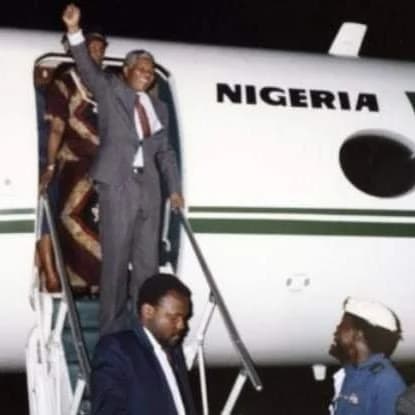
Nelson Mandela acknowledged Nigeria's support during a 1996 visit to Abuja, praising the country's contributions and recognizing the significance of their role in the fight against apartheid. Mandela stated, "Nigeria was one of the few countries that took a firm stand against apartheid."
On the 11th of February, 1990, the Deputy President of the African National Congress (ANC), Nelson Mandela, was released from prison after serving a long sentence for committing sabotage against South Africa’s apartheid government.
To show gratitude, Nelson Mandela visited all African nations that supported him in the anti-apartheid struggle. And of course, Nigeria was among. Back in 1962, Mandela had ran to Nigeria to avoid being arrested by the apartheid government of South Africa, and with the help of Nnamdi Azikiwe, he stayed in the house of the Nigerian Minister of Aviation in the First Republic, Chief Mbazulike Amaechi, for about six months before going back to South Africa.
Nigeria also provided military training to ANC fighters and hosted several ANC conferences on its soil. In 1985, Nigeria hosted the ANC's consultative conference, which helped unite the organization's factions and plan their future strategy.
Nigeria's support for South Africa during the anti-apartheid struggle serves as a testament to the power of African solidarity. As we reflect on this historic event, we honor the courage and conviction of those who fought for freedom and equality.
Olajide Ojeniyi.
Joint International Co-Chair (YPAB),
The Black Policy Institute. United Kingdom.